JACKSON, Miss. — Seven healthy habits can almost halve the risk of Alzheimer’s among people who carry genes that make them most susceptible, a new study reveals. These simple tips include being active, eating better, losing weight, and maintaining normal blood pressure.
Autoimmune diseases are a category of conditions where an individual’s immune system acts abnormally, often attacking and destroying healthy tissues by mistake. Many triggers can cause an individual’s body to start making components referred to as antibodies. Usually, antibodies help the body fight off infections. However, in patients with an autoimmune disease, they attack the body’s healthy tissues instead. These diseases include rheumatoid arthritis, lupus, psoriasis, or thyroid disease to name a few (possibly 80 of them) and usually affect women more than men. Symptoms vary, but can include pain, fatigue, skin problems, and other chronic conditions. A new study suggests that vitamin D and fish oil supplements may offer over 50 protection.
Study Methods
The study called the VITAL study was published Jan 26, 2022 in the BMJ and was a randomized controlled trial that included 25,871 racially diverse people over the age of 50 who were split into two groups. One group took 2,000 IU of vitamin D3 each day; those in another group took 1000 mg of fish oil and a third group took both. Another group took two placebos. The study was blinded – i.e. no one knew which group they were in.
Results
“During a five-year follow-up, participants reported any diagnoses of any autoimmune disease that were verified with medical records.
Compared with a placebo, vitamin D supplementation was associated with a 22% reduced risk of autoimmune disease overall. The improvement was greater (39%) after the first two years of treatment. Fish oil alone showed less robust results, but still showed fewer participants with confirmed autoimmune diagnoses compared with placebo.”
Toxicity
Both vitamin D and fish oil may have some effects due to the ability of each to regulate or tame the inflammatory response that “drive autoimmune disorders.” It is too soon based on one study to make recommendations that people take either vitamin D or fish oil supplements – but those with a strong family history should consult with their primary health care provider about these decisions. The vitamin D dose used in the study is more than twice the recommended daily intake of 600 IU or 800 IU for people 71 and older. The consequences of overdoses or toxicity can occur at 10,000 IU daily.
Harvard Women’s Health Watch, Volume 29, Number 10 June 2022.
From the Blue Zones: 9 Lessons for Living Longer from the people who’ve lived the longest by Dan Buettner, page xxii. “Scientific studies suggest that only about 25% of how long we live is dictated by genes, according to famous studies of Danish twins. The other 75% is determined by our lifestyles and the everyday choices we make.” What we drink is only one of them.
Adding more olive oil to your diet may help prevent an early death.
A recent study from the researchers at the Harvard T.H. Chan School of Public Health was published online Jan. 10, 2022 by the Journal of the American College of Cardiology. Data from 90,000 men and women, free of cardiovascular disease and cancer were asked to complete a dietary questionnaire every four years. At the end of the data collecting, 36,856 of the participants had died.
From the diet questionnaires, it was found that those who routinely consumed the most olive oil – averaging more than one half a tablespoon a day – had the lowest risk of dying during the 28 – year old follow-up period compared with people who rarely or never consumed olive oil.
Olive oil consumers had :
A 19% lower overall risk of death
A 19% lower risk of cardiovascular disease
A 17% lower risk of cancer-related disease
A 29% lower risk of death related to a neurodegenerative condition
A 18% lower risk of death related to a respiratory disease
This may explain why olive oil as a major component of the Mediterranean diet has consistently shown health benefits in numerous studies. The results also suggest that when used as a substitute for products containing animal fat such as butter, we see the same healthy benefits. Bon appetit!!
Most people have never heard of NAFLD, a.k.a. non-alcoholic fatty liver disease, HOWEVER, nearly one in four adults in the U.S. has NAFLD. NAFLD is more common in obesity and diabetes type 2.
In the long term, NAFLD can cause fibrosis (scarring) of the liver that eventually can cause impairment of normal liver function. Advanced scarring can lead to cirrhosis, an irreversible condition that can lead to liver failure. The only long-term treatment is a liver transplant. No drugs are currently approved to treat it.
The emphasis should then be on prevention with the usual recommendations: Eat less processed foods, lose a little weight if necessary, and more exercise comes to mind – healthier lifestyles in general, e.g. less alcohol.
Normally most of the blood draining from the GI tract (gut) travels directly to the liver before entering general circulation. This exposes the liver to toxins that may cause oxidative stress and chronic inflammation.
There are new clinical trials on subjects diagnosed with NAFLD to investigate the influence of probiotics on the microbiome residing in the GI tract. These findings suggest that the probiotic – prebiotic blends can stop the progression of liver disease, liver damage and liver inflammation when compared to a placebo. Interesting???
Richard Moore. Life Extension: The Science of a Healthier Life, May, 2022.
Lately there’s a lot of buzz about taking probiotics that is becoming a household word on food labels; everyone wants to get in on the claims made to benefit them and the microbiome with a simple pill.
First of all what is the microbiome ? Everyone has one that is individual to them. It refers to our personal colony of micro -organisms, mostly bacteria, in our body that outnumbers our human cells. It is crucial to our digestion and integrity of the intestinal lining; it determines how and when and where things are absorbed into the bloodstream, participates in our metabolism and plays a role in our immune defenses. In the gastrointestinal tract the bacteria in the microbiome digest things we couldn’t digest otherwise like high fiber foods.
Mark Bittman and David L. Katz, MD – How to Eat: All Your Food and Diet Questions Answered. 2020
Eat probiotic foods along with prebiotic foods since rebiotics are the food that bacteria eat and what sustains good bacteria long-term. They include foods like oatmeal, bananas, berries, asparagus and beans.
Carrie Daniel-MacDougall, Ph.D, M.P.H., a nutritional epidemiologist at MD Anderson who studies diet and the microbiome says:
“Unless your doctor is prescribing probiotics for a specific person purpose, stick to getting them from foods like yogurt that may have other nutrients like calcium.”
In some cases, probiotics from food or supplements may help individuals with irritable bowel syndrome or Crohn’s disease. There is also potential for harm if used improperly or in combination with other medications. Your doctor or a certified nutritionist can help you find the one that’s right for you. Sometimes the probiotic could even disrupt or displaced some of the good bacteria you already have. McDougall says.
We’re Number One: In Morbidity, Mortality, and Expense
“U.S. has the best doctors, hospitals, and medical technologies, the most innovative surgery, the newest drugs and spends the most per capita on healthcare of all the countries on the globe.”
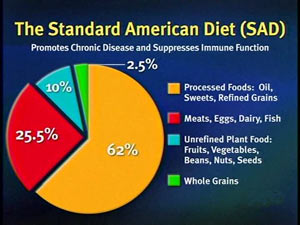
Are Americans healthier? Do we enjoy better healthcare? Do we live longer? The answer to each of these questions is an unequivocal NO. In fact, it’s quite the opposite. Americans have the worst health out comes of any country of the 37 richest countries – the Organization for Economic Cooperation and Development (OECD). In several of the most lethal chronic diseases, Americans rank amount the worst of the developed countries in the world: #1 in diabetes, #2 in Alzheimer’s disease, #5 in cancer, and #6 in cardiovascular disease.
What is metabolic (met) syndrome?
It started to “rear” its head in the 1980’s – every one is at risk for three noncommunicable diseases associated with the met syndrome – hypertension, diabetes and heart disease are due to abnormal metabolism in different cells in different organs.
For example: What about diabetes –in 1976, diabetes was rare; only 5% of people in the US over age 65 had it, and the prevalence in the general population was 2.5%. By 2000, estimates said 151 million diabetics were walking the planet and the prediction was, by 2010, there would be 221 million. In fact there were 285 million. By 2014, 422 million, 2019, 463 million- predictions 568 million by 2030.
Lustig, Robert, MD, MSL Metabolical: The Lure and the Lies of Processed Food, Nutrition, and Modern Medicine, 2021
How are we doing? Not so well. Metabolical is a wonderful book to begin to understand why diet with its predominance on processed foods makes a difference in our quest for heath.
A Mediterranean-style diet could protect against memory loss and dementia, according to a study published in the journal, Neurology.
The 512 participants, with an average age of 70, completed food frequency questionnaires and then given brain scans to determine brain volume, and neurological tests to examine their cognitive abilities and biomarkers for beta amyloid and tau proteins that are thought to characterize Alzheimer’s disease.
People who ate an unhealthy diet (not identified in abstract) had higher markers of amyloid beta and tau proteins in their cerebrospinal fluid, compared to those who followed a Mediterranean diet.
The unhealthy –diet eaters also performed worse on memory tests than those who ate healthy foods.
Editor’s Note:
Participants who did not eat a healthy, Med-style diet were also found to have a smaller hippocampus volume (the area of brain responsible for thinking and memory) than those who did. The hippocampus is known to atrophy (shrink) in those with Alzheimer’s disease.
Source:
Life Extension, September, 2021
Eating Fish for Brain Health
A study published in Neurology found that 1623 people over the age of 65 who eat more fish have lower risks of brain disease like vascular dementia, stroke, and a lower incidence of brain vessel damage. The researchers analyzed MRI brain scans and completed a diet questionnaire. Note: This association was strongest in people ages, 65-69, compared to older participants in the study.
Neurology, 2021.
Diabetes Screening Age Lowered from 40 to 35 for Overweight and Obese People.
The U.S. Preventive Services Task Force has lowered the age at which overweight and obese people should begin screening for diabetes from 40 to 35. According to the Task Force, there is a spike in the prevalence of both diabetes and prediabetes around age 35. Lowering the screening age could help identify or prevent diabetes by adopting a healthier diet, exercise more, and lose weight.
Note: Diabetes is the leading cause of kidney failure and new cases of blindness among adults in the U.S.
“QUESTION: Humans aren’t genetically designed to eat three meals a day?
“In the Stone Age, people would eat what they could find when they could find it. Sometimes they couldn’t find much of anything.
We have good reason to believe that intermittent feast (and famine) was native to the human condition. We are actually quite well adapted to periods of fasting.
A word of warning: Fasting is not safe for everyone, especially those on medication, e.g. insulin or blood pressure meds”,
Check with your doctor when you change your diet or take any supplements. The supplements are not regulated by the FDA. (SJF).
Mark Bittman, and David Katz, MD. “How to Eat: All Your Food and Diet Questions Answered. 2020.



 FOOD, FACTS and FADS