Grass-fed Beef: Is It Safer?

by foodworksblog 15 Comments

A typical feedlot

Grass-fed beef comes from cattle that eat only grass and other foraged foods. Usually, beef and dairy cows eat a diet of processed grain, such as corn.  There has been an increased interest in grass-fed or pastured beef because of its health claims when compared to cattle from commercial feedlots.  Grass-fed beef may have some heart-health benefits that other types of beef don’t have. When compared with other types of beef, grass-fed beef may have:

  • Less total fat
  • Higher levels of heart-healthy omega-3 fatty acids
  • Higher levels of another type of fat (conjugated linoleic acid) that’s thought to reduce heart disease and cancer risks
  • Lower levels of a dangerous strain of E. coli bacteria

Due to the almost continuous news of recalls of beef contaminated with a dangerous strain of E. coli 0157:H7 or often just called O157 bacteria, grass-fed beef purveyors have often promoted the idea of safer beef than conventionally-grown or grain-fed beef.  What does the science say?

Work conducted at Cornell University by Russell and Diez-Gonzalez in the late 1990s showed that cattle that were fed hay had far fewer E. coli concentrations than when they were fed a standard feedlot diet based on grain. (Microbes Infect 2, No. 1 (2000): 45-53.)  However, earlier studies did not look at the levels of the dangerous strain 0157 apart from other strains.

The researchers hypothesized that when grain is fed to cattle, their digestive tracts become more acidic.  Over time, the E. coli in their intestines become resistant to this acid environment.  When we ingest them, a high percentage will survive the high acid content of our digestive juices and increase the risk of E. coli food poisoning.  Theoretically few E. coli from grass-fed cattle will survive because they have not become acid-resistant.

Since this original work, other researchers have explored the link between cattle feed and E. coli with more attention paid to the presence of 0157:H7.  Some have confirmed the work by Russell and Diez-Gonzalez but the majority has disputed the finding.  For example, in 2003, at the University of Idaho, a study found no difference in the levels of E. coli 0157:H7 in grass-fed and grain-fed.  In both cases, acid resistance was high.  Other studies have come to the same conclusion.

Grass-fed growers point out that even if there is not much evidence that diet can affect the number and acidity of E. coli in the intestines of cattle, grass-fed beef may be safer in the long run than feedlot beef.  Simply, grass-fed cattle are cleaner at time of slaughter.

Feedlot animals often stand all day in dirt and manure and careless and dangerous practices in the slaughterhouses increases the risk of manure contamination of the meat.  For a graphic depiction of slaughterhouse practices, read “Fast Food Nation” by Eric Schlosser. A cleaner animal upon entering the facility will lessen this possibility.  In the magazine Meat Marketing and Technology, the associate editor stated: “pasture-raised animals are much easier to clean because they come form smaller herds raised in relatively cleaner pastures.”

From the www.onlygrassfed.com webpage:

“It (grass-fed) is usually processed in a small local meat processing operation by skilled butchers who are careful to avoid fecal contamination of the beef.  When you buy grass fed ground beef from a reputable local farmer, you can be assured it is not “frankenbeef.”  In fact, the ground beef probably came from one cow.  Rest assured, it was processed from quality, uncontaminated ingredients.”

In 2009, there were 4,643 cases of Shiga-toxin producing 0157:H7 E. coli illnesses; In 2010, the number rose to 4, 757.  Fortunately there were few deaths, but this strain can cause a condition known as hemolytic uremic syndrome (HUS) often with lasting kidney damage for a lifetime.

Choosing whether to buy grass-fed or grain-fed beef is a personal decision based on taste, price, ethical and environmental issues.  Some grass-fed beef purveyors will say that it is OK to consume the beef raw as in steak tartar, for example based on the myth of less E. coli contamination.  If you choose grass-fed beef it is important to realize that you should practice all the safe-handling techniques recommended for grain-fed beef based on the current scientific evidence.

Related article

:

“Hurrah” for the Pumpkin Pie

by foodworksblog Leave a comment

When you think of Thanksgiving, the pumpkin pie (aside from the turkey) first comes to mind. In fact, when else do you make a pumpkin pie even though canned pumpkin is available all year around?

In Medieval times, squash, gourds, and other fruits were stewed with sugar, spices, and cream wrapped in pastry. During the Colombian Exchange in the 16th century “new world” foods that included pumpkins, potatoes, tomatoes, peanuts, and corn were introduced into European cookery. Pumpkins became a favorite almost immediately whereas most other foods took several generations to be totally accepted. This was more than likely due to their similarity to “old world” gourds and squashes and they were easy to cultivate. They were called pompions, after French “pompon.”

Pumpkins were first cultivated in Central America around 5,500 B.C. The Northeastern Indians used squash more than other Indians in early America and did favor pumpkin the most. They baked them by putting them in the embers of a fire, then moistened them with maple syrup or honey or some type of fat and then turned it into a soup. It was likely that pumpkin was on the first Thanksgiving table in some form. By the 1700’s, it became a popular item to celebrate the holiday. In 1705, the town of Colchester, Connecticut postponed the holiday for a week due to a molasses shortage to make the pies.

Pumpkins have been in American history for centuries and recipes for its preparation began appearing in cookbooks. The first known American cookbook was American Cookery by Amelia Simmons in 1796 that included a recipe for “pompkin” pie. She made two versions. Both had pumpkin, ginger, and eggs. One used cream and sugar with Old World spices, mace and nutmeg; the other used milk and molasses with New World allspice.

Later in 1805, a recipe for pumpkin pie appeared in the Art of Cookery Made Plain and Simple by Mrs. Hannah Glasse.

“Take the pumpkin and peel the rind off, then stew it till is quite soft and put thereto one pint of pumpkin, one pint of milk, one glass of malaga wine one glass of rose-water, if you like, seven eggs, half a pound of fresh butter, one small nutmeg, and sugar and salt to your taste:”

By the 1800’s, pumpkin pie was a necessity at most Thanksgiving celebrations. If you have ever heard the famous poem about Thanksgiving by Lydia Maria Child in 1842:

“Over the river and through the wood, to grandfather’s house we go” ends with “Hurrah for the pumpkin pie”.

In 1929, Libby’s meat-canning industry made pumpkin preparation easier by offering its famous canned pumpkin with its traditional recipe on the label. My mother would have appreciated the Libby’s version. I remember her talking about making her first pumpkin pie and neglecting to strain the stringy pulp from the pumpkin itself. Needless to say it was a disaster. Next time you open a can, please think kindly of her and in her day, there may not have been canned pumpkin.

The only problem is the sugar content found in pies – as for my pumpkin disaster, I forgot the sugar one year and it was awful. But who is counting sugar grams on Thanksgiving?  No one. (for the few that are – 1 serving has 253 cals, 3 grams of fiber, 32 grams of carbohydrate and about 19.7 grams of sugar (5 tsp). Pumpkin is also loaded wtih vitamin A in the form of beta-carotene (a powerful antioxidant).

Eating in America: A History, Waverly Root & Richard de Rochemont William Morrow, New York 1976, (p. 41).

The Art of Cookery Made Plain and Easy, Mrs. Hannah Glasse, 1805 .

Cuisine and Culture: A History of Food and People, Linda Civitello, 2nd Edition, Wiley

Living in a Blue Zone

By Sally J. Feltner, M.S.,  Ph.D


Ponce de Leon began his quest for the fountain of youth in 1531 and humans have been seeking magical solutions for keeping us younger and living our later years in relatively good health.

In 2009 with the backing of the University of Minnesota School of Public Health, AARP and the National Geographic, Dan Buettner established the Blue Zone Project and authored The Blue Zones: 9 Lessons for Living Longer from the people who lived the longest, He interviewed those who were either centenarians or those in their later years and began to investigate what factors may have contributed to these long lives. He identified five regions that for various reasons had populations meeting this criteria:

  • Sardinia in Italy with the highest concentration of centenarian men.
  • Seventh Day Adventists in Loma Linda, California, where some residents live ten more healthy years than the average American.
  • The Nicoya Peninsula in Costa Rica that has the world’s lowest rates of middle-age mortality and the second highest concentration of male centenarians.
  • Ikaria, Greece that has one of the world’s lowest rates of middle age mortality and lowest rates of dementia. Only 20 percent of people over 80 showed any signs of dementia, whereas a similar study of long-lived people near Athens showed an almost 50 percent rate of dementia.
  • Okinawa, Japan home to the world’s longest living women.


Remarkably, all the regions had common characteristics that included family and purpose, community and spirituality, stress reduction and physical activity..

One major practice was that all their diets, though not vegan, were predominantly based on plants. Meat and other animal products were either the exception or used as a condiment. Okinawans, practice a philosophy called hara-hachi bu regarding food; they only eat until they are 80% full.

In the Costa Rican Zone, everyone feels like they have a plan de vida or life plan. Even at ages above 60 and 70, inhabitants don’t stop living. They keep themselves busy; they love to work. It provides them a “reason to waking up in the morning” called ikigai. There is no word for “retirement” in Okinawa.

The book introduces some very interesting longevity “superstars.”

  • Marge Jones, at 100 years old from Loma Linda begins every day with a mile walk, a stationary bicycle ride, and some weight lifting. “I’m for anything that has to do with health”, she says.
  • Kamada Nakazitam, 102 years old from Okinawa says “To be healthy enough to embrace my great – great grandchild is bliss.”
  • Ellsworh Wareham, age 91 from Loma Linda, assists during heart surgery procedures, something he does about two or three times a week.
  • Abuela Panchita, 100 year old Costa Rican woman whose 80 year old son, Tommy bicycles to see her every day, spends every day cooking, splitting logs and using a machine to clear brush from her yard.
  • The notion of moai in Okinawa stands for “a social support network. Says 77 year old Klazuko Mann, “each member knows that her friends count on her as much as she counts on her friends.”
  • Tonino Tola, 75 said that “Sardinian men can shed stress by often joking at the expense of one another.” Science tells us a belly laugh a day may reduce stress and actually keep the doctor away.

The final chapters of the book boil it all down into nine lessons and a cultural distillation of the worlds’ best practices in longevity. Beuttner provides credible information available for adding “years to your life and life to your years.”

However, there is a downside. From the author: “Sardinians today have already taken on the trappings of modern life. For example, junk foods are replacing whole-grain breads and fresh vegetables traditionally consumed here. Young people are fatter, less inclined to follow tradition, and more outwardly focused.”

From the author: “I once pressed a 101-year-old woman in Ikaria, Greece to tell why she thought people there lived so long. ‘We just forget to die,’ she said with a shrug. None of them went on a diet, joined a gym, or took supplements. They didn’t pursue longevity – it simply ensued”

Since the first book, Mr. Buettner has published two other books that continue to describe the lifestyles of these regions. They include The Blue Zones Solution and The Blue Zones of Happiness. I’ve enjoyed these books immensely and have often referred to them in various tweets and posts. The first book concludes with a chapter on Your Personal Blue Zone. Other books give us more explicit ways to establish Blue Zones in other areas in the U.S.

From the back cover of The Blue Zones Solution – “Propagating the Blue Zones would not only prevent a rise in the prevalence of diabetes (and other such misfortunes); it would allow us to eliminate more than 80 percent of the burden we have now. That’s revolutionary.”

David Katz, M.D., Director of the Yale-Griffin Prevention Research Center

All these books are highly recommended, in my opinion. They not only teach us valuable information to remain healthy in our later years, i.e. a longer lifespan of optimal health,  but they also present a relatively comprehensive and colorful glimpse of their individual lives and culture.

Working for an extension of a Healthy Lifespan

Extra Virgin Olive Oil Benefits

Large Human Trial Demonstrates Extra Virgin Olive Oil Reduces Cardiovascular and Breast Cancer Risks

Results of a large clinical trial published in two prestigious medical journals JAMA an the New England Journal of Medicine demonstrate that a diet supplemented with extra Virgin olive oil provides health benefits.

The PREDIMED study enrolled adults age 55 to 80 who are considered at high risk for cardiovascular disease based on various factors.

Participant participants were assigned to a Mediterranean diet, one with supplemental extra virgin olive oil at least 4 tablespoons and the other supplemented with mixed nuts. The third group was assigned to a control, low fat diet.

Over almost five years of follow-up, cardiovascular outcomes including heart attack, stroke, and death from any cardiovascular cause, were noted. The Mediterranean diet groups had a significantly lower rate of negative cardiovascular outcomes. This association was particularly strong for the supplemental extra virgin olive oil group, which had a 31 percent reduction in risk for cardiovascular disease outcomes compared to the control diet group.

The researchers also observed data of new breast cancer in the women enrolled. Here too, the diet supplemented with extra virgin olive oil was most protective, reducing rates of breast cancer by nearly 70% compared to the control diet. Interesting, the group that supplemented with mixed nuts did not show a significant benefit in terms of breast cancer risk. The study’s authors report that this was the first human trial to find a beneficial effect of a dietary intervention on breast cancer risk. Together, these results suggest that a Mediterranean diet with supplemental extra virgin olive oil is protective against both cardiovascular disease and breast cancer in older adults with existing risk factors

The American Plate: Dining in the 70’s

Updated 10/2/2020

West Coast Cuisine: Alice Waters

The 1970’s ushered in many new innovations in the world of food. In 1971, Alice Waters opened Chez Panisse restaurant in Berkley, California and changed the definition of salad. Instead of the old iceburg lettuce wedge of previous times, she used everything from fresh mixed greens to goat cheese. A three-course meal costs less than $8.00.

She also had a passion for Mediterranean cooking, not yet popular in the U.S. She went against the previous decades of prepackaged foods and her mantra was fresh foods, simply prepared. She promoted a new concept dubbed “California Cuisine” which spread through the rest of the country. She shunned factory farms, and promoted food that come from the farm to the table as quickly as possible. This philosophy is growing currently as a national movement.

A standard at health food restaurants across the country, carrot cake was ubiquitous, Grated carrots made it  a nutritious choice, or so the thinking went.

Another landmark in food in 1971 began when three friends opened a coffee house in Seattle, Washington. They named it after a character in Herman Melville’s 19th century novel, Moby Dick – Starbucks, the chief mate on the Pequod, a whaling ship .

Fat Attack and Veganism

In 1977, an American committee of the U.S. senate led by George McGovern published the first Dietary Goals For The United States in order to reverse the epidemic of heart disease in the country at the time. The trend still exists in that heart disease still is the number one “killer” in the U.S. The guidelines generally suggested that fat was the culprit in our diets; soon food manufacturers began removing the fat and when that happens, sugar is added. So carbs were in and fat was out.

A young doctor named Dean Ornish recommended that heart attack patients change their diets drastically and promoted “heart-healthy” recipes. The American Heart Association adopted these recommendations and soon restaurants were soon displaying heart symbols on menu items that were approved to be healthy. Dr. Ornish stressed a change in lifestyle approach to treat and prevent coronary artery disease (CAD).  Beginning in 1977, he conducted clinical research studies showing that lifestyle changes could not only stop the progression of CAD but could actually reverse it. These lifestyle changes included plant-based diet, smoking cessation, moderate exercise, stress management techniques including yoga and meditation, and psycho-social support.

In 1973, the Moosewood Restaurant, a collectively owned vegetarian restaurant opened in Ithaca, New York. It featured vegetarian cooking that was spicy, ethnic and exciting. Cookbooks such as The Moosewood Cookbook and The Enchanted Broccoli Forest soon followed. These new innovations gave vegetarianism a new life since its first boost of energy at the end of the 19th century.

For meat eaters, one very popular dish of this decade was Beef Wellington, a fillet of beef tenderloin coated with pate de foie gras and a duxelles of mushrooms all wrapped up in a puff pastry crust. Dinner parties with friends featured more complicated menus and Wellington was considered the most difficult because of its preparation.

heirloom

The War of the Diet Books and a Murder

The weight loss craze was in full swing and the “diet wars”and books  began to appear in earnest. In 1972, Dr. Atkins introduces his “Diet Revolution” featuring a high protein, high fat, low carbohydrate diet. The anti-fat gurus were appalled.  In 1978, Dr. Herman Tarnover introduces the “Complete Scarsdale Medical Diet”, another version of the high protein low carb diet. “The book would have been quickly forgotten if Tarnover hadn’t been shot four times and killed by his 56-year old female companion, Jean Harris on March 11, 1980, a few days before his 70th birthday”.  The murder became the subject of numerous books and two films.

“Harris was a headmistress of an exclusive school for girls and a summa cum laude graduate of Smith College. On February 25, 1981, a trial began that caused a media frenzy.  Harris was found guilty of second-degree murder and sentenced to 15 years in prison. At the time of his death, Tarnover had just begun outlining a new book about how to achieve and enjoy longevity.” All he would have had to say was,  “Stay clear of zealous  jealous mistresses” seeking revenge. (note from me who saw one of the films).

SOURCE: The Hundred Year Diet: America’s Voracious Appetite for Losing Weight, Susan Yager. As of this writing,  Yager is a adjunct instructor in the Department of Nutrition, Food Studies, and Public Health at New York University.

Potpourri

The decade of the 70’s was also time for indulging our tastes with eclectic appetites. We indulged in Buffalo chicken wings, Pasta Primavera to goat cheese salads to Crock-Pot Chili in the course of a week. Brunches with quiches became Sunday morning fare, but soon men rebelled by saying “real men don’t each quiche.” We worked our way through the Vietnam War, rampant inflation, Watergate, and President Richard Nixon’s resignation. Jerry Ford became the President.

New At the Market

Hamburger Helper, Redenbacher’s Gourmet Popping Corn, Celestial Seasoning Herbal Teas, Snapple fruit juices, Cup O’ Noodles, Stove Top Stuffing, Miller Light, Yoplait Yogurt, Perrier, Ben and Jerry’ s Ice Cream, Resses’s Pieces

Trivia Timeline:

1970 The first overseas Dunkin’ Donuts opens in Japan. Later, MacDonald’s opens its first international site in Tokyo.

1970  Resealable plastic bags and Reynolds Oven Bags are introduced.

1970  Morton introduces Salt Substitute and, in 1973, brings out Lite Salt.

1971  The nation’s first salad bar is laid out at R.J. Grunts, a singles bar and Chicago restaurant. Wendy’s hamburger chain introduces salad bars in 1979.

1971  Rival trademarks the Crock – Pot.

1972  “He likes it! Hey Mikey!” Two older brothers get Mikey to try the family’s new cereal, Life, in a commercial that ran for 12 years on TV.

1973  MacDonald’s introduces the Egg McMuffin, the first fast-food breakfast item.

1973  When introducing the expensive ($140) Cuisinart food processor, it was viewed as an indulgence. It soon became mandatory equipment for anyone who considered themselves a good cook. The product becomes so hot during  the 1976 Christmas season that retailers sell empty boxes as promises for future delivery.

1975 American consumption of soft drinks surpasses that of coffee.

1976  Tom Wolfe calls the 1970s the “Me Decade” and Burger King follows with the “have it your way” campaign.

1977  The term “comfort food” first appears in the Washington Post magazine. The author uses the term in reference to grits, but by 1980, the food has grown to encompass the food of childhood such as meatloaf, mashed potatoes, macaroni and cheese, and gelatin dessert.

1977  The plastic grocery bag is introduced to the supermarket industry. It is now an environmental nightmare.

1978  General electric offers the first over the range microwave oven, the SpaceMaker.

1978  For the first time, more women then men enter college.

Ancel Keys – Big Fat Confusion ?

Leave a comment

An early picture of Ancel Keys, This image is ...

An early picture of Ancel Keys, (Photo credit: Wikipedia)

Time Magazine 1961. Ancel Keys appears on the cover to claim that saturated fat in the diet clogged arteries and caused heart disease.

Time Magazine, 2014. Eat Butter. Scientists were wrong about saturated fat. They don’t cause heart disease.

How did the low saturated fat message begin?  How, when and why did this confusion begin?

Ancel Benjamin Keys was born in 1904 in Colorado Springs, Colorado to teenage parents. In his younger years he had various jobs including a clerk in a Woolworth store. He finished college in 3 years with Honors at Berkeley and earned a MS in Biology followed by a PhD from the Scripps Institute of Oceanography. In 1930 he traveled to Copenhagen to work with Nobel laureate, August Krogh where he studied the ability of eels to survive in both fresh and salt-water environments. He then went to Cambridge and obtained a second PhD in animal physiology from King’s College.

What made Keys famous was his Seven Countries Study, a study that remains controversial to this day. He initially observed that heart disease rates dropped in countries forced to alter their high fat diets because of the war rationing and reversed to higher rates when these diets returned.

He suspected dietary factors, particularly saturated fat, that might play a key role in atherosclerosis. After conducting some well-designed studies to support his theory, “he formulated an equation that simply showed a 2.7% mg/dl rise in cholesterol for every 1% of calories derived from saturated fat. The equation also suggested that polyunsaturated fat lowered serum cholesterol and dietary cholesterol raised serum cholesterol but to a lesser extent than saturated fat. “ Journal of Clinical Lipidology, page 435

Keys had based his theory on when he had previously visited Italy and Spain. He observed in Naples, Italy that only heart disease patients in hospitals were wealthy men. In Madrid, Spain he took blood samples from some men in one of the poorer districts where heart disease was rare and compared them to samples of more well-off patients with heart disease. What he found were differences in their serum cholesterol values with the higher levels in the wealthy and lower values in the poorer population. The diets of the two groups also differed with the poorer diets lower in fat than those of the wealthy. These observations were central to his theory that saturated fat or animal fat and dietary cholesterol contributed to heart disease.  Levenstein, Harvey, Junk Science Week: Lipophobia and the Bad Science Diet, Financial Post, June 11,2012.

The theory gained some steam when in 1955, President Dwight David Eisenhower had a heart attack at age 64, “ Over the next six weeks, twice-daily press conferences were held on his condition. After his attack, he dieted religiously with a low-fat diet and had his cholesterol measured ten times a year (it had been 165 mg initially)”. Taubes, Gary. Good Calories, Bad Calories, page 1-4.   The low-fat diet had little effect and his cholesterol continued to rise as well as his weight.

Between 1955 and 1958, Keys began to study the male population aged 40 to 59 in rural areas in certain countries. He used electrocardiograph data to detect heart abnormalities and cardiovascular disease. The countries included Yugoslavia, Italy, Greece, Finland, the Netherlands, the U.S. and Japan. The countries he had chosen represented varied intakes of saturated or animal fat; lower levels were found in some populations in Yugoslavia, Italy, Greece, and Japan. Finland, the Netherlands, and the U.S. represented higher levels of animal fat in their diets. Five and ten years later, the researchers returned to identify those who had experienced heart attacks. The lowest rates were found in Crete and Japan with the lowest levels of animal fat; the highest was found in East Finland and the U. S. with the highest levels of animal fat. All in all, Keys studied nearly 13,000 men.  From this study, he concluded that “saturated fats as a percentage of calories was the most powerful lifestyle predictor of heart disease. “Blood cholesterol was the important physiological variable. “ Journal of Clinical Lipidology, page 437.

In 1961 Keys appeared on the cover of Time magaine with the Seven Countries Study’s alleged link between fat, cholesterol and heart disease that fueled the fear of dietary fat in America. Two weeks later the American Heart Association (AHA) endorsed the theory.  With this announcement, the vegetable oil producers could not get their advertisements out fast enough. Wesson Oil said: “polyunsaturated Wesson is unsurpassed by any leading oil in its ability to reduce blood cholesterol.” Nutrition scientists jumped on the bandwagon. For example, Harvard nutritionist, Frederick Stare advised swallowing three tablespoons of polyunsaturated oil each day. Lipophobia had begun in earnest. Levenstein, Harvey, Lipophobia and the bad science.

Consumption of margarine doubled from 1950 to 1972 and that of vegetable oil rose by over 50% in the 10 years from 1966 to 1976. Ironically, based on the thesis of Keys that saturated fat was the culprit, the AHA and other agencies had urged food processors to use trans fats to replace the alleged deadly saturated fat. Ironically, the most common source of trans fats turned out to be the very margarine they had promoted as heart healthy. From 1956 to 1976, per-capita butter consumption fell by over half.

Key’s hypothesis strengthened in 1977 with Senator George McGovern’s publication of the First Dietary Goals for the U.S., which was the first time that any government group had told Americans to eat less fat and cholesterol to improve health. The document became gospel and had a tremendous impact on consumers and the food industry. In 1980, Hegsted and McGinnis produced the USDA Dietary Guidelines for Americans that concurred with “avoiding too much fat and cholesterol and eating more foods with adequate starch and fiber.”

However, three major studies failed in their support for Key’s hypothesis and without going into the details, each one raised doubts about the  hypothesis.

The Key’s Seven Countries Study, so pivotal in lipophobia has been debunked by many, particularly those who favor the idea of eating meat.. On the other hand, vegans favor the thesis. Here is what the critics of the study say: First, Keys did not randomly choose countries but is accused of picking those countries most likely to support his theory. He excluded France whose diet has been notoriously rich in saturated fat along with a low heart disease rate (The French Paradox). He also excluded Switzerland, Sweden, and West Germany with the similar higher saturated fat intakes but with lower rates of heart disease. He originally gathered data from 22 countries.   However, some point out that even when all 22 countries are analyzed, the trend that fat intake is associated with heart disease still weakly exists.

Ancel Keys died in November of 2004 at the age of 100 years old.

Key’s thesis is still hotly debated to this day because of its limitations and lack of  conclusive support from the research community. There are still adherents of the efficacy of the low fat diet, particularly in its effects on atherosclerosis regression or prevention.  The debate has now switched to which diet is heart healthy – a low-fat or a low-carbohydrate diet. However, that is another story.

I truly don’t know if Keys was right or wrong. The purpose of this post is to point out that his legacy remains as one of the leading food crusaders that changed the American plate.  Is the low fat craze finally coming to an end?  Has this national experiment failed?  Will the low carbohydrate diet help curb the obesity epidemic or prevent heart disease?  Sounds like a “soap opera, doesn’t it?  One thing is certain – atherosclerosis is a complicated disorder and until its origin and pathology is conclusively determined, no one will know who was right.


The Pros and Cons of the Paleolithic Diet

The Paleolithic diet has been around for a few years and in my opinion is a pretty good diet, but alas as with every restrictive diet, there are caveats.

The following article comprehensively covers the pros and cons of this eating pattern. It is based on the facts (as we know them) that our ancestors only had access to certain foods and that our genetic development is presumed to have evolved from inclusion and exclusion of these foods into our current dietary pattern. Evidence for this is presumed to be accurate – however, we truly do not know what our Paleo ancestors really ate.  Our ancestors lived in diverse environments; therefore, their diets were dependent on the foods found there. There is a great deal of controversy about the possibility that some ate a diverse plant-based diet, e.g. hunting was not so reliable.

Most evidence is based on our contemporary hunter-gatherer societies which exhibit less chronic disease than those populations that follow the current American diet. For example, there are no Hadza adults diagnosed with diabetes in Tanzania, while the Tsimané people in Bolivia have an 80 percent lower rate of atherosclerosis compared to people in the U.S. The Maasai community in Kenya that relies on red meat, blood and milk is also known for little to none cardiovascular diseases.

The Pros and Cons

Our ancestors and modern-day hunter-gatherers ate more animal-based foods, which contain good amounts of high-quality protein, calcium, iron, omega-3 fatty acids and vitamins B12 and K2. Such nutrients are commonly found in seafood, red meat, pastured eggs and liver.

An ancestral diet removes refined sugar, grains and seed oils from one’s daily meals. Avoiding these modern products helps reduce markers of inflammation, leading to improvements in blood pressure, waist circumference and lipid profiles, components of the metabolic syndrome.

One study showed that people who consumed less added sugar, refined grains and processed foods could significantly reduce weight in 12 months. The ancestral diets provide foods that are more satiating, which help people consume fewer calories.

The Paleo diet excludes extremely calorie dense foods (starchy foods) as well as many processed and snack foods.

However the diet eliminates two major food groups (dairy and grains (enriched or whole).  This puts at risk adequate vitamin D and calcium levels as well as the other nutrients found within these foods.

The Paleo diet provides some essential nutrients and may appeal to some people that are not interested in a total plant based eating pattern, i.e., dedicated carnivores.

CLICK HERE.


The Rising Rate of Obesity and Its Consequences

“The headlines this week broadcast the following research:  Doctors at NYU Langone Health center conducted the largest study so far of US hospital admissions for COVID-19, focused on New York City. They found obesity, along with age, was the biggest deciding factor in hospital admissions, which may suggest the role of hyper-inflammatory reactions that can happen in those with the disease.”

Just what are the latest facts and implications about our obesity epidemic in the U.S.?

This data is from the U.S. Centers of Disease Control and Prevention in February 2020 and presented in Life Extension Magazine, May 2020.

  • A startling result is that 42.4% of adults are obese. Additionally, 31.8% were overweight.
  • This situation is expected to not improve statistically. A study in the New England Journal of Medicine estimates that by 2030, the percentage of obese American adults will rise to 48.9%. These percentages reflect a total of $446 billion dollars of medical costs annually.
  • Women, African Americans, and those with a low socioeconomic status are affected at a significantly higher rate.

What are the medical implications?

  • Excess body weight increases the risk of developing and dying from a broad spectrum of cardiovascular diseases, cognitive disorders (e.g. Alzheimer’s) and at least 13 different types of cancers.
  • Obesity has been determined to be the underlying cause of approximately 20% of deaths in the United States.
  • An analysis of 57 studies encompassing 900,000 individuals published in Lancet found that for every 5 point increment in Body Mass Index was associated with a 30% increased mortality risk.
  • Additional negative effects of excess weight include fatty liver disease, sleep apnea, chronic pain syndromes like low back pain, IBS, osteoarthtis, depression, negative pregnancy outcomes, and chronic inflammation.

Foods that Kill

There are many factors that contribute to the rise in obesity rates; however, diet and lifestyle have recently been identified and collectively referred to as components of the Standard American Diet (SAD). One of these is processed food.

  • Processed foods tend to be high in added sugar, salt, oil and unhealthy fats are often mentioned as well as ultra-processed foods that are so altered that they hardly resemble their original whole-food state.
  • The food industry refers to them as an “industrial product” loaded with additives that attempt to enhance the food’s characteristics such as food stability, shelf life, textures, colors, and flavors. They are often referred to as emulsifiers, humectants, and sequestrants or others that have barely recognizable names.  Ultra-processed foods are often ready-to-eat, require minimal preparation and are highly marketed. Ultra-processed foods account for more than 60% of dietary energy in the U.S.
  • Populations that have the lowest intake of processed foods exist and have been recently studied and known as the Blue Zones. These are groups of individuals that live an average of 10 years longer than those in cultures who consume the SAD, otherwise known as the Western diet. These areas are found around the globe in Sardinia, Italy, Ikaria, Greece, Okinawa, Loma Linda, California, and Nicoya, Costa Rica.
  • An observational study of Spanish university graduates followed participants for a median of 10.4 years. Consumption of an average of 5.3 servings of ultra-processed food per day, compared to an average of less than 1.5 servings per day, was associated with a 62% increase for all-cause mortality. For each additional serving, this risk increased by 18%.

What Is the Optimal Diet?

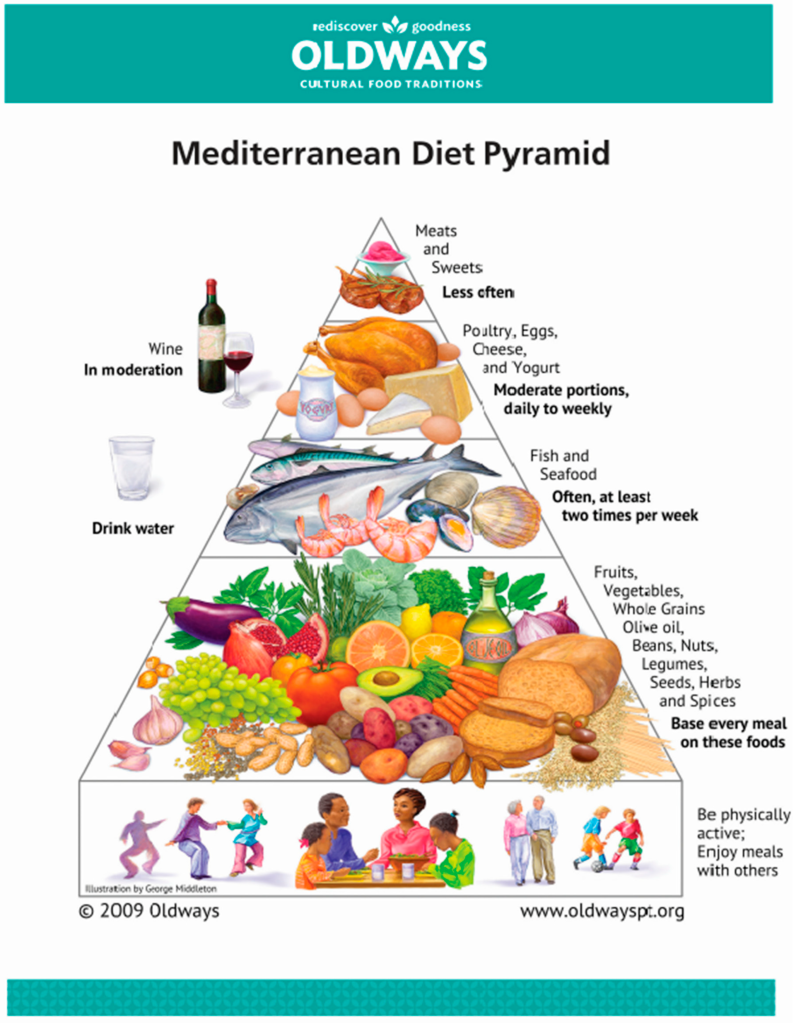
There are numerable reports on the health benefits of vegan, vegetarian, or plant-based diets. However, there is one diet that has been studied extensively for its healthy effects called the Mediterranean Diet. There is no one Mediterranean diet; however, it is usually associated with the intake of vegetables, fruits, whole grains, beans, nuts and seeds, extra-virgin olive oil, fish, seafood, moderate amounts of poultry, eggs, and dairy products. Red meat and sweets are limited as well as a low intake of processed foods.  A moderate intake of wine is acceptable. (moderate = 1-2 glasses).

Conclusions:
A possible molecular explanation for why overweight is harmful has been discovered by researchers. They suggest that overeating increases the immune response. This response causes the body to generate excessive inflammation  during the COVID-19 infection and that inflammation is at the core of many other chronic diseases.
University of Oslo. “Being overweight causes hazardous inflammations.” ScienceDaily, 25, August 2014.
If current trends continue and we find that 50% of our population is in the obese weight category, there will be alarming rates of catastrophic health consequences. Our health care costs will become unsustainable. It is a common belief that as long as you are not obese, you can be overweight and still be healthy. This is not always true. Many studies have found that a higher weight was associated with a higher risk of dying; however, this has remained  a major debate issue among obesity experts.

How to Avoid Overeating During the Coronovirus “Break”

Many of you are now working at home for the first time.  It becomes very easy to realize that when that happens,  food is not that far away and I am sure that avoiding snacking and even binge-eating is not that easy.  One sign, is that bag of chips always open and at your desk?  Before you buy that Peleton or tape the doors to the kitchen cabinets shut, try to exercise a little scheduling and practice the art of mindful eating.

Here is HELP:


Fiber: The Basis of a Plant-based Diet?


Such an important nutrient, but never the talk of the town. Actually it gets little attention on the large scale of “most talked about nutrition issues list”.  What is low in calories, prevents constipation, may lower the risk of heart disease, obesity and diabetes, and is generally underconsumed by people on the Standard American Diet (SAD)?  The answer? Fiber!!

Total fiber intake in U.S. children and adults is about 15 grams a day. When teaching nutrition, most students in my classes after diet analyses, were lucky if they went over 9 grams a day. The recommendation is 28 grams a day for women and 35 grams a day for men.

It was thought that fiber contributed little caloric value since it is not broken down by human digestive enzymes. Recent studies suggest that bacteria in the colon are able to break down many types of fibers to some extent (2 calories/gram). They excrete fatty acids as a waste product and then used as an energy source by the colon and the rest of the body. When you think about it, fiber may be responsible to a great extent for the health benefits of a plant-based diet.

There are two major classifications of dietary fiber – soluble and insoluble. Soluble fibers slow down glucose absorption and reduces fat and cholesterol absorption. They are found in oats, barley, fruit pulp, dried beans and psyllium.  They are fibers that are not fibrous.

Insoluble fibers are particularly beneficial for preventing constipation. They are found more in wheat bran,  legumes, seeds, and the skin on fruits and vegetables.

CLICK HERE.