
The aging process usually does not cause malnutrition in healthy, active adults, but nutritional health can be complicated by physical changes that occur with age, the presence of disease(chronic and acute), economic, psychological and social circumstances. Malnutrition then exacerbates some of these factors, contributing to a downward health spiral from which it is difficult to recover.
Category: Obesity/Diabetes
diebetes prevwntion
Poor Diets = Standard American Diet
“Poor diets in the US are a national security threat” – CNN
| By Gisela Crespo, CNN ! Updated 2:43 PM ET, Mon July 20, 2020 (CNN) — America’s poor diet isn’t just bad for us. It’s now considered a threat to national security. Diet-related illnesses are a growing burden on the United States economy, worsening health disparities and impacting national security, according to a white paper published Monday in the American Journal of Clinical Nutrition. Poor nutrition is the leading cause of illnesses in the US, with unhealthy diets killing more than half a million people each year, a group of experts who have formed the Federal Nutrition Research Advisory Group wrote in the paper. About 46% of adults in the country have an overall poor-quality diet, and this number goes up to 56% for children, according to the paper. Related Article: Add fruit, veggies and grains to diet to reduce type 2 diabetes risk by 25%, studies say for the most vulnerable Americans.” Meanwhile, US healthcare spending has nearly tripled from 1979 to 2018, from 6.9% to 17.7% of the gross domestic product. These increases in health spending, the advisory group said, affect government budgets, the competitiveness of the US private sector and workers’ wages. Diet-related health disparities affect minority, rural and low- income communities. “While social and economic factors such as lower education, poverty, bias, and reduced opportunities are major contributors to population disparities, they are likewise major barriers to healthy food access and proper nutrition,” the paper reads. “Poor diets lead to a harsh cycle of lower academic achievement in school, lost productivity at work, increased chronic disease risk, increased out-of-pocket health costs, |
The paper’s authors called for the expansion of federal investment in nutrition science by creating a new Office of the National Director of Food and Nutrition or a new US Task Force on Federal Nutrition Research, with the goal of improving coordination within the agencies that budget for research in this topic.
The paper also called for “accelerating and strengthening” nutrition research within the National Institutes of Health by creating a new National Institute of Nutrition.
“Every day, our country suffers massive health, social, and economic costs of poor diets,” said Dr. Dariush MozaWarian, co-author of the paper and dean and Jean Mayer Professor of Nutrition at the Friedman School of Nutrition Science and Policy at Tufts University.
What are epigenetics and why do we care?
What are epigenetics?
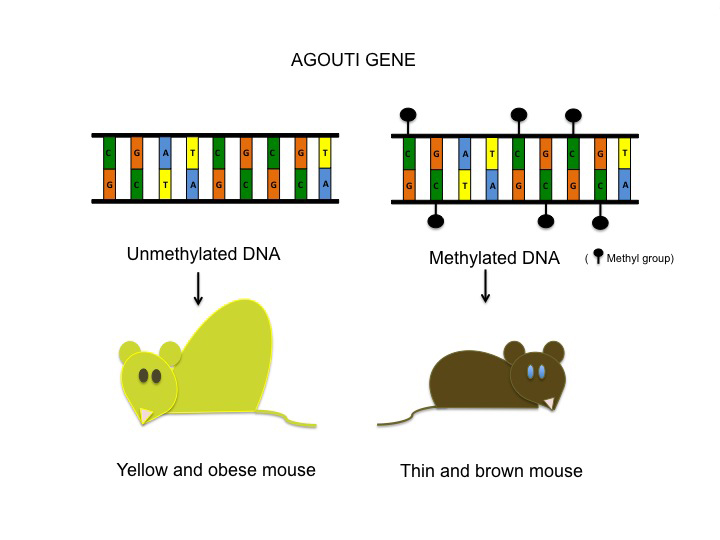
“With its prefix from the Greek word epi, which means “in addition to,” this word relates to factors in addition to DNA base sequence that influence the function of genes”
Epigenetic tags are chemical tags, e.g. methyl groups, added to DNA that record the effects of experience, changing the gene expression.
“DNA sequencing is the order in which the four nucleotides (A, C. T, or G) are strung together on the DNA molecule.”
Epigenetics is a hot topic right now and appears more in news articles as science makes further associations. It is becoming more obvious that our lifestyle and experiences can affect our genes and can be passed down to our children and grandchildren through genetic pathways.
DNA is the blueprint for the instructions for the entire body, but chemical tags called methyl groups make up what is called the epigenome to decide which genes are active – this is called methylation or gene expression. It is often referred to as an “on and off switch” that turns on or off certain genes. It is what makes identical twins different over time. Although our DNA code does not change, the epigenome is flexible and reacts to our environment. Our experiences help shape how genes are expressed.
DNA methylation works by adding a chemical group to specific places on the DNA as “tags” where it blocks the proteins that attach to the DNA to “read the gene”. This chemical group can be removed through a process called demethylation. Typically, methylations turn genes “off” and demethylation turns genes “on”.
Women are not solely responsible for the health of their future children. Science is finding that the health of a man’s unborn children can be affected by things like the man’s diet, life experiences and trauma, exposure to toxins and how old he is at conception.
Citation:
Why Should I Care About Epigenetics? Utah Valley Pediatrics, September 30, 2013
More bad news for processed meats
Hold the hot dogs, cheese puffs, soda, and French fries.
Weight Loss: The Good News
The Metabolic syndrome may not be a household phrase, but it should be. It’s been estimated that more than 30% of the U.S. population may have this disorder. It is defined as a cluster of symptoms that include excess fat around the waist, high blood sugar, high blood pressure, low levels of HDL and high triglyceride (blood fat levels). Diagnosis involves having at least three of these conditions.
The good news is that even a small weight loss (at least 10% of your current weight) may have a positive effect on your health.

What Healthy Eating Means Now

After years of research on the subject, the consensus appears to be that there is no single diet that’s right for all of us. However, we have learned that we have a better idea of what healthy eating looks like.
The key is your overall eating pattern, not so much how many grams of carbohydrate, fat or protein you eat, or whether it is animal or plant protein. The choices are many: vegetarian?, vegan?, low fat?, low carb? Or perhaps flexetarian ( a little of both?)
The general healthiest pattern is emerging that consists mostly of nutrient dense whole foods that come from nature and includes few, if any highly processed foods. A closer look at this pattern recommends lots of vegetables and avoid sugar and refined grains.
When assessed for weight control, studies show that when individuals are divided into two major groups either low fat or low carbohydrate…
View original post 265 more words
Alzheimer’s Disease Prevention?
What Do We Know About Diet and Prevention of Alzheimer’s Disease?
Changes in the brain can occur years before the first symptoms of Alzheimer’s disease occur. It also should be noted that the focus of diet factors on diseases should be the prevention or delay of the disease in question and not a “cure.” Unlike other risk factors for Alzheimer’s that we cannot change such as age and genetics, the current thought is that with lifestyle choices such as diet, exercise and cognitive training, many chronic diseases can possibly be avoided adding health to our lifespans.
How could our diet affect our brains?
“It’s possible that certain diet patterns affects biological mechanisms, such as oxidative stress and inflammation that underlie many chronic diseases. Or perhaps diet works indirectly by affecting other disease risks, such as diabetes, obesity, and heart disease. A new avenue of research focuses on the relationship between gut microbes in the digestive system and aging-related processes that lead to Alzheimer’s.”
Several diet patterns show some promise. One is the Mediterranean Diet or its variations, the MIND diet (Mediterranean-DASH Intervention for Neurodegenerative Delay) or the DASH diet. (Dietary Approaches to Stop Hypertension), a risk factor for Alzheimer’s disease. All are based on leafy green vegetables and colorful vegetables, berries, fish, poultry, beans, nuts, wine (1 glass a day), whole grains and preferably olive oil.
“For example, two recent studies suggest that, as part of the Mediterranean diet, eating fish may be the strongest factor influencing higher cognitive function and slower cognitive decline. In contrast, the typical Western diet increases cardiovascular disease risk, possibly contributing to faster brain aging.”
The problem with the research is that most is called observational (subject to recall from the participants). To rectify this, several organizations like National Institute of Aging are conducting clinical trials (considered the gold standard of medical proof to shed more light on any cause and effect.
What About Supplements?
Clinical trials in humans have had mixed results, some with positive effects, others with negative results. These types of studies often attempt to measure the effects of omega-3 fatty acids in the diet. However, at this time:
Despite early findings of possible benefits for brain health, no vitamin or supplement has been proven to work in people. Overall, evidence is weak as many studies were too small or too short to be conclusive.
Note: I personally conducted animal research using high or low omega-3 or omega-6 diets on breast cancer incidence. The study was repeated two times and no significant differences in breast cancer incidence, tumor weight or immune system parameters were found between the study groups. (SJF)
Note: A deficiency in vitamin B12 or folate due to aging or strictly following a vegan diet may cause memory problems that are reversible with proper treatment. Please consult with your physician.
Reference: National Institute on Aging
This content is partly provided by the NIH National Institute on Aging (NIA) scientists and other experts review this content, so it is accurate and up to date. This content was reviewed November 27, 2019.
Vegans, Longevity, Weight
Vegans, Longevity, Weight LOSS
Sally Feltner MS, PhD Aging and Lifestyle, Diet and Health, Food and Culture, Nutrition Research, The American Plate, Vegetarianism, Weight Loss June 9, 2022 2 Minutes
Lose weight and live longer on a vegetarian diet.? From the Harvard Medical School Health Guides
There is a lot of attention being paid to switching to a plant-based diet. There are many published articles on plant-based diets to achieve a lower body mass index, lower blood pressure, and reduced risks for heart disease, diabetes type 2, cancer, and longevity. Plenty of attention is being paid to the health benefits of those centenarians living in the Blue Zones, particularly ones that live with a vegan diet as well as those with a modified vegetarian approach.
The predominant American Blue Zone is represented by the Seventh – Day Adventists in Loma Linda, California. “The first Adventist Health Study (AHS-1) was funded by the National Institutes of Health followed 34,000 Adventists in California for 14 years. It was found that the Adventists who most strictly followed the religions’ teachings lived about 10 years longer than people who did not.
“The practices most likely to yield that longevity were narrowed down to five, each adding about two years to life expectancy.” Dan Buettner, The Blue Zones Solution: Eating and Living Like the World’s Healthiest People.
- Eating a plant-based diet with only small amounts of dairy or fish
- Not smoking
- Maintaining a medium body weight
- Eating a handful of nuts four to five times a week
- Doing regular physical activity
Diet Options:
- A flexitarian diet – meat is limited as a condiment and not considered the main attraction. Use vegetables, appetizers instead.
- Semi vegetarian diet (no red meat)
- Pescetarian – avoid meat and poultry but eat fish and seafood.
- Lacto -ovo -vegetarian – skip all meat, fish, and poultry but include dairy and eggs in your diet.
If you’re trying to lose weight -go heavy on fruits, vegetables, and whole grains but limit foods high in saturated fats (ice cream, whole milk, and cheese.)
An important aspect of losing weight is often not what you eat – but how much you eat to keep daily calories in check.
Our meals and snacks are taking on gargantuan proportions. The food industry decided they had to make portions larger to stay competitive and people got used to larger sizes very quickly. “Today, normal sizes seem skimpy,” says Marion Nestle,PhD, MPH, Professor of Nutrition and Food Studies at New York University.
When eating out, the transition to a plant-based diet is easier than thought. Fill your plate with vegetables – cooked, raw, or in a salad. Check out the sides that are offered. Then gradually introduce all vegetarian meals once or twice a week and if you like, increase it until you are as “vegan” as you want to be.

Childhood Obesity Rising?
Childhood obesity is rising again and seems to have few programs or solutions that address the issues. Many factors contribute to this epidemic such as genetics, unhealthy habits, lack of physical activity and environmental difficulties. Children are often unaware of the patterns or conditions that cause obesity, therefore, placing the responsibility on adults to lead them in the right direction. Obesity in childhood may lead to the same conditions and associated problems when these children reach adulthood.
Where are the programs????? Perhaps successful approaches should start with the food industry itself. A simple beginning is to check the “Added Sugar” on Nutrition Labels and limit sweetened soft drinks.
“The recommendation is that at most 10% of calories can come from added sugar. But 5% would obviously be better. That ‘s about five teaspoons a day. In terms of 2000 calories per day, that’s a small soda, or a teaspoon of sugar in each of five cups of coffee, or some ice cream or sweetened yogurt … We’re not saying “don’t eat sugar”. We’re saying “don’t eat a lot of sugar.” (Mark Bittman, David L. Katz, MD. How to Eat: All Your Food and Diet Questions Answered. p. 178-9.)

The Epigenetics of Obesity
Obesity is a chronic condition characterized by excess body fat. Its origins are mulfifactorial including heredity, behavior and environment. Obese people are at risk of developing many diseases. In fact, obesity is the second most important predictor of cancer, preceded only by tobacco use.
Epigenetics refers to those elements of the genetic code that you are able to change without altering your DNA sequence. It includes which genes you express, to what degree and at what time. Consequently, epigenetic processes determine whether a specific gene is active or not at any given time. In the absence of further studies. Genes can be expressed or not expressed.
Your epigenetics develop in the uterus and continues to change throughout your life. A study in the Netherlands during the famine period of 1944-1945 demonstrated how genetics affects obesity. Fetuses of mothers exposed to extreme hunger experienced more glucose intolerance, dyslipidemia, early coronary heart disease, and obesity. Therefore, starving could cause some of the diseases that are prevalent in society today. These genes can be transmitted from generation to generation. Unlike the genome (the complete set of genes in a cell), the epigenome is reversible. Epigenetic marks can be modified throughout life. However, modificationss at critical periods of prenatal development have greater effects on the results. So DNA is not your destiny!!
Lead a healthy lifestyle prior to conceiving a baby, especially the mother; however, there are some indications that the father’s lifestyle can also be influential. Ideally, both expectant parents and the offspring should maintain good lifestyle habits to include healthy diets, physical activity, adequate sleep, stress reduction, and avoidance of inflammation.

 FOOD, FACTS and FADS