
The Blue Zone diet is based on populations in the world that live the longest. The study was pioneered by Dan Buettner, a National Geographic best-selling author. After many years of interviews with centenarians, he and his team discovered five zones of the world that exhibited the most longevity: Okinawa, Japan, Sardina, Italy, Ikaria, Greece, Loma Linda, California and Nicoya, Costa Rico. They called these areas “Blue Zones” and here is just one of their stories:
Category: Food and Culture
Unhappy Meals
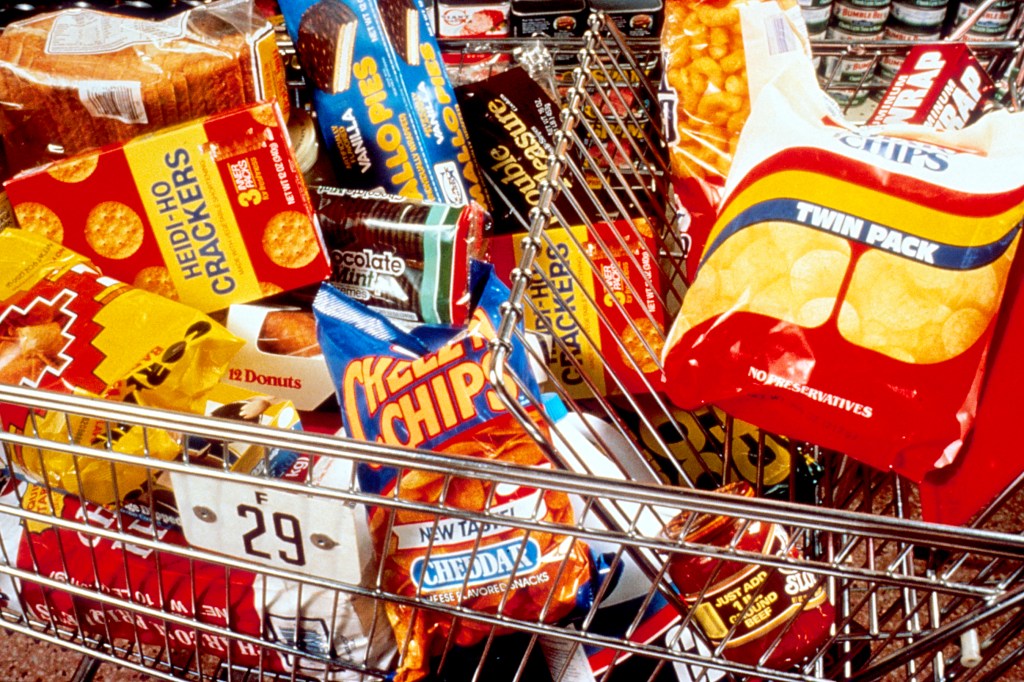
Food: there is plenty around and we all love to eat. But unfortunately, a lot of it we are consuming today is really not food. We eat it in the car after purchasing it at our favorite fast food establishment, or in front of the TV and often alone. We grab a bag of some kind of “healthy -sounding” food on the package and we call it lunch and sometimes even dinner.
Michael Pollan wrote a book a few years ago (2008) called In Defense of Food: An Eater’s Manifesto. I highly recommend that every American who eats read this book. He refers to our current food choices as “not real” and describes them as “edible food like substances”. Many come with false health claims promising the same benefits as their “real” counterparts, but as Pollan says: “30 years of nutrition advice has only made us sicker and fatter. In the so-called American or Western diet, these foods are nowhere near being nutritious with their long lists of ingredients that are impossible to pronounce.
“Pollan’s manifesto shows us “how we can relearn which foods are healthy and to develop simple ways to return eating to its proper context -out of the car and back to the table.”
A portion of Pollan’s book In Defense of Food, first appeared in the New York Times Magazine under the title, “Unhappy Meals” and can be found online. The article requires a subscription but does allow a limited number of free articles.
If you want a book full of “straight talk” about our food culture, the book is a must read. The book should be available at reduced used book prices. Check Amazon.
Staying Healthy the French Way
To safeguard one’s health at the cost of too strict a diet is a tiresome illness indeed.
Francois Duc de La Rochefoucauld (1613 – 1680’s) French writer and moralist
“In a study of four countries, food psychologist Paul Rozin at the University of Pennsylvania found the following:
The French are the most food-pleasure oriented and the least health-oriented. In contrast, Americans had the worst of both worlds: They had the greatest worry over their health and had greater dissatisfaction with what they ate. Americans scored the highest on worrying about the fattening effects of food.
Interestingly, Rozin concluded that the negative impact of worry and stress over healthy eating may have a more profound effect on health than the actual food consumed. Indeed, it is widely accepted that stress triggers a biological chemical assault in our bodies, which is harmful to our health.”
“More information about the French reveals that the US currently has twice the incidence of overweight people compared to France for both adults and children. The French have a longer life expectancy, take less medication, and have a markedly lower rate of heart disease. Yet the French eat a diet that appears to be less healthy this is popularly known as the French paradox. Notably, France has the highest per capita dairy fat consumption up of any industrial nation (think cream, butter and cheese.)
Just as important, the French have fewer eating disorders and don’t engage in dieting as much as Americans. It has been speculated that wine consumption and eating smaller portions of food may explain the French paradox, we believe it could be the relationship that the French have with food the French have a more positive attitude toward eating dash it is viewed as one of life’s pleasures not his poison. Food is something to be revered.
Even when the French eat fast food, they take more time to eat compared to the eating pace of Americans.
“According to the calorie control council, 43% of dieters in the United states say that they that snacking too much is the reason they haven’t sustained their desired weight. Unlike north Americans who typically consume as many as three snacks a day, the French don’t usually partake in this between meal ritual this non habit may contribute to the comparatively higher proportion of slimmer figures found in France.
“French children may have an after-school snack which can be a croissant with a hidden dollop of dark chocolate to tide them over until dinner, but regular snacking just isn’t part of the adult French culture. Their substantial lunch often usurps the need for an afternoon snack. Snacks are a novelty in France where in America snacks appear to be a necessity.”
Sources: Steven Jonas, M.D., Sandra Gordon. 30 Secrets of the World’s Healthiest Cuisines, 2000.
Evelyn Tribole, M.S.,R.D.and ElseResch, M.S.,R.D.,F.A.D.A., C.E.D. R.D.
Intuitive Eating: A Revolutionary Program That Works, 2012.
NOTE: Although this data may seem a bit dated, the numbers reflect how the French ate a few decades ago. Unfortunately, many of the younger French population has been influenced by a more current French Diet that has incorporated many characteristics of the Standard American Diet leading to a loss of some of original health benefits. For example:
- Obesity rates in France are among the lowest in the OECD , but have been increasing steadily. About 1 in 10 people is obese in France, and almost 40% are overweight (including obese). OECD projections indicate that overweight rates will increase by a further 10% within ten years.
Reference:
Obesity and the Economics of Prevention: Fit not Fat – France …
Health Indicators in France Versus the United States. Tribole and ElseResch
| Indicator | United States | France |
| Obesity and Overweight (adults) | 62% | 32% |
| Life Expectancy | 78 years | 81 years |
| Medication costs per capita | $897 | $607 |
| Heart Disease death rates per 100,000 -Women | 79 | 21 |
| Heart Disease death rates – Men | 145 | 54 |
| Incidence of Dieting | 26% | 16% |
| Use of snacks and beverages | 76% | 48% |
| Use of low-fat products | 68% | 39% |
| Duration of minutes eating at McDonald’s | 14 minutes | 22 minutes |
Source: OECD Health Data, 2009-2010; Calorie Control Council National Surveys 1992. Rozin, 2003.
What Did We Learn from Covid?
Have we learned anything from Covid-19? I would hope so and that some good will come of it – although it’s hard to believe that it will happen at times as we are still fighting its many battles.
In his latest book, Metabolical, Dr. Robert H. Lustig, MD, MSL, author of the best selling book, ‘Fat Chance, “insists that if we do not change the way we eat, we will continue to court chronic disease, bankrupt our health care, and threaten the planet. But there is hope.” Metabolical: The Lure and Lies of Processed Food, Nutrition, and Modern Medicine. 2021.
The Bottom Line: If (and it’s a big IF), we change our ways even in small steps that reflect a healthier body, we may be able to better withstand the consequences of an infectious disease like COVID. Make sense???
CLICK HERE. https://www.aarp.org/health/healthy-living/info-2020/nutrition-after-age-50.html?intcmp=AE-FOD-DN-BB-ART
The Blue Zones: A Short Course
Dan Beuttner has gathered some of the top scientists in the world to study these remarkable places called the Blue Zones where many people live to 100 years or more. They not only live long, healthy lives, but serve as teachers to the rest of us on a series of “food rituals’ ‘ that along with other healthy lifestyle factors contribute to this scenario.
In our evolutionary history, we as hunter-gatherers lived at a time where we sought calorie-loaded foods in order to simply survive. Needless, to say, many of us don’t have this added stress to simply feed our families. On the other hand, many of us in the world today are living in a time when obesity is now called a pandemic and we are faced with the possibility of dying from abundance and not scarcity. We refer to our food choices as part of a conglomerate of industries referred to as big Ag, big Food the Standard American Diet or more realistically as the SAD diet.
What Can We Learn and How?
Centenarians in the Blue Zones follow daily rituals around food and meals that help them stay on course – practicing them in your own lives are the keys to longevity. Here is a brief guideline.
MAKE BREAKFAST THE LARGEST MEAL OF THE DAY.
“Include complex carbohydrates, healthy fats and plant or animal protein.
Expand your choices beyond cereal or eggs. In certain Blue Zone countries, some include beans, tortillas, miso soup.”
COOK YOUR MEALS AT HOME.
Plan and prep ingredients for dinner in the morning. Use your slow cooker often, so dinner cooks all day and is ready for you late afternoon.
HARI HACHI BU
Plan to stop eating when you’re close to 80% full, based on a 2500 year old Confucian adage and practiced by the Okinawans. “ Try saying it before a meal by simply pausing for a moment of silence or saying thanks is a way to recognize the appreciation of your food.
FAST FASTS
“Recent evidence shows that fasting, even for a day, can recalibrate insulin release, temporarily lower blood pressure and lower cholesterol. Research has suggested that calorie restriction may slow aging.
Try eating only two meals a day; a big late-morning brunch and a second meal around 5 p.m.”
EAT WITH FAMILY AND FRIENDS
“Most people in the Blue Zones often have three-hour dinner affairs with a succession of many small courses. They never eat standing up or while driving. Avoid reading, watching TV or using your phone.”
Celebrate and Enjoy Food
“We eat about 1100 meals a year. If we celebrate a couple of times a week and enjoy what we love to eat, that still leaves almost 1,000 meals a year to eat the Blue Zones way.”
Pick one day of the week and make it your celebratory day to splurge on a meal with your favorite foods.”
Diets that use restrictions, limitations or deprivations never work.
Source:
Dan Buettner. The Blue Zones Solution: Eating and Living Like the World’s Healthiest People, 2015,
Three Decades of Food Milestones: 1990- 2021
Three decades of Food Milestones 1990 – 2020
Food timelines are invaluable for taking a brief look at what has happened and how it has influenced our eating behaviors.
1990 Food labels mean something: the Nutrition Labeling and Education Act passes, requiring standardized nutrition labels on most food packages. The food industry is not happy; they particularly protest adding “Added Sugars” and win their case this time.
1992 King Arthur introduces white whole wheat flour, enabling bakers to make their whole grain baking healthier. The United States Department of Agriculture releases the Food Guide Pyramid, visually confirming nationwide carbohydrate domination with 6-11 servings of carbohydrates a day. Carbs are not separated into refined vs. complex.
Snackwells low fat cookies are introduced and fly off shelves. Later, the “Snackwells affect becomes shorthand for all that is wrong with the low fat, high carb diet fad. People mistakenly assume you can eat all the refined carbs you want.
1993 Chipotle Mexican Grill is founded in Denver, marking the beginning of the “fast casual restaurant” category. The TV Food Network (now the Food Network) premieres, elevating chefs like Bobby Flay to celeb status.
1994 the Food and Drug administration approves the first genetically modified food, the long shelf -lived Flavr Savr tomato, followed a year later by GMO canola, corn, soy beans and squash, marking the anti GMO movement. It was met with considerable safety concerns., especially in European countries.
1996 The FDA approves Olestra, a fat – free fat substitute with the unfortunate side effect of inducing “anal leakage”. Lays Wow potato chips made with olestra even sport a warning label. After its demise in food processing, olestra found new life as an industrial lubricant.
1998 Sucralose, made from sugar but is noncaloric, is introduced but the obesity rate is not impressed by its contribution to sugar-free foods.
2002 low carb guru Robert Atkins, MD, releases Doctor Atkins New Diet Revolution,” establishing further the popularity of the low carb diet he promoted 30 years with his first book. This “diet” began to slowly replace the ill-advised low fat diet for “hardcore” dieters.
In other news, organic labels finally have more attention. The USDA national organic programs, Certified Organic Labeling, rules, some 12 years in the making, go into effect.
2004 Facebook arrives and enabling you to share what you had for breakfast with 1000 of your closest friends. Photos of foods (homeccoked, however, appear in many posts.
2006 in April, Michael Pollan releases the Omnivore’s Dilemma, making terms like food system, high fructose corn syrup and Concentrated Animal Feeding Operation (CAFO) household words.
2007 The Human Microbiome Project (HMP) was a United States National Institutes of Health (NIH) research initiative to improve understanding of the microbial flora involved in human health and disease. Prebiotic and probiotics became familiar terms and the yogurt industry blossomed. Source: Wikipedia
2008 Chobani launches and the cult of Greek yogurt begins. Now we no longer have to strain regular yogurt through a coffee filter to make it.
2009 The White House kitchen garden is planted in March and an interest in vegetables and sustainable eating skyrockets. Gluten free foods become a thing with $1.56 billion dollars in US sales, and projections of continuing breakneck growth.
2010 Welcome, instant pot! Now we can cook slow, fast or steam vegetables, make rice, etc, etc.
2011 in June, the USDA replaces the Pyramid guide with My Plate, where vegetables and fruits fill half the dish and nudge grains to a smaller portion. First lady Michelle Obama announces it. Instagram arrives.
2013 Blue apron and other meal kit delivery services kickoff, making home cooking as easy as opening a box.
Jay-Z announces he’s doing a 22 day vegan challenge. Veganism officially becomes cool.
2016 Restaurant delivery services go mainstream: 50% of Americans report using apps like Grubhub and DoorDash to purchase meals from casual dining outlets, with 26% ordering at least once weekly.
2017 The Regenerative Organic Alliance releases its Regenerative Organ Certification Program, which incorporates soil health, animal welfare, and social justice in its eligibility criteria.
2018 Plant based milk sales have exploded, growing 61% in the last five years. The dairy industry is disturbed.
2019 the eat Lancet Commission releases its food in the Anthropocene report in January, linking our red meat and sugar heavy diets to climate change, and recommending we slash our consumption and eat more plant- based foods.
And now , Googling “nutrition” today gets over 1 billion hits but alas, 72% of Americans are overweight or obese based on Body Mass Indexes. Obesity becomes a risk factor for infectious disease, primarily COVID-19.
2020 Covid – 19 sweeps the world. Many Americans line up for miles at food distribution sites. Restaurants offer take out and deliveries, and small businesses teeter. Yet perseverance is everywhere, chefs, nonprofits, entire communities find ways to offer hope, and nourishing food. Restaurants rebound and talk dominates with who should wear masks; should schools open; are vaccines effective, should vaccinated people only have privileges?
This takes us to the present – 2021. The food culture will probably be changed forever.
Bugs for Breakfast?
Bugs for Breakfast ?
Bone marrow soup and sautéed snails are favorite food choices of some people in France; however, what pleases the palate of some people can be absolutely disgusting in others.
Horsemeat is a favorite food in a large area of North Central Asia. but Is rigidly avoided by many people in Islamic countries. Dog is a popular food in Borneo, New Guinea, the Philippines whereas snake is a delicacy in China. In some countries, people enjoy insects while others consider it fit only for animal feed. And then there are steamed clams and raw oysters, food passions for some, but absolutely disgusting to others.
A highly influential Jewish philosopher in the Middle Ages, Maimonides, included pigs on his taboo list due to rapid spoilage of pork in in hot climates and in their despicable habit of rooting garbage, declaring them “unclean”. However other animals have the same habit, for example, goats.
Pork attained its unique status in 165 B.C when the Syrian monarch, Antiochus, slaughtered pigs in the Temple of Solomon. The Jews who were so enraged organized an army and reestablished the Temple and ended with a triumphant revolt that is celebrated at Hanukkah.
The fledging Christians pointed instead of Roman rules to the book of Matthew in the New Testament.;” “It’s not what goes into the mouth that defiles a man, but that what comes out”, Jesus said.
“Burger chomping Americans express incomprehension over the sacred status of cattle in India, where their 1947 Constitution spells out the right of cows. Yet those same Americans would never think of eating whale, monkey, dog, cat or parrot that Americans consider companion animals.
All cultures have their comfort foods, “super foods”. In Russia and Ireland its potatoes; in Central America, it’s corn and yucca and in Somalia, it’s rice.
In the U.S food choices can be regional. Southern cooking is considered “soul food” and provides comfort in the form of grits. A tasty bowl of chili is in the “soul” of Texans while in New England, there’s nothing better than a bowl of clam chowder or a lobster roll in Maine.
“However, hunger still overrides food aversions from any type or origin. When German armies laid siege to Paris in 1870 cutting off this city from traditional country farms and gardens, many bourgeois restaurants offered such delicacies such as rat ragu and saddle of cat.
Many simply said “tastes just like chicken”
Sources:
Judith E. Brown, Nutrition Now. 7th Edition
Patrician Harris, David Lyon, and Sue McLaughlin, The Meaning of Food, 2005.
UNPROCESSED FOOD?
“Unprocessed or minimally processed foods are whole foods in which the vitamins and nutrients are still intact. The food is in its natural (or nearly natural) state. These foods may be minimally altered by removal of inedible parts, drying, crushing, roasting, boiling, freezing, or pasteurization, to make them suitable to store and safe to consume. Unprocessed or minimally processed foods would include carrots, apples, raw chicken, melon, and raw, unsalted nuts.”
Kathryn D. McManus, MS, RD, LDN
Harvard Health Publishing, 2020
We talk a lot about the bad stuff (processed foods) and not about the good stuff – unprocessed food. Good definition above. These are beginning to be hard to find in the supermarkets. The following article reports on a doctor’s experience of what it is like to eat Ultraprocessed foods for one month.
Living Longer with Carbohydrates: The Okinawan Way
“The traditional Okinawan diet was about 80% carbohydrate. Before 1940, Okinawans also consumed fish at least three times a week together with seven servings of vegetables and maybe one or two servings of grains a day. They also ate two servings of flavonoid-rich soy, usually in the form of tofu. Dairy and meat represented about 3% of their calories. They didn’t eat much fruit; they enjoyed a few eggs a week” They particularly had/have an affinity for sweet potatoes.
The Okinawan Clues to Longevity
Have a purpose in life – i.e. a reason to get up in the morning .
Rely on a plant-based diet .
Get gardening .
Eat more soy .
Maintain a social network.
Enjoy the sunshine.
Stay active.
Plant a medicinal garden with beneficial herbs.
Enjoy simple pleasures.
Source: Dan Buettner, The Blue Zones Solution, 2015
The following article explains much of the recent research as to why this culture has had so much success in living a relatively speaking healthy lifestyle – it is worth a read. It does not mean we all need to go buy pounds of sweet potatoes; however I think I may have one for dinner. (SJF).
Big Food?
“Robert Goldstein, a hedge fund manager in New York, was getting huge cravings for sweets when he came across a tropical plant called Gymnema sylvestre that works a little like methadone for heroin addicts.” What does that have to do with “big food”? Too much, I’m afraid.
 FOOD, FACTS and FADS