Our Health is Declining

Our Health is Declining.

The statistics are alarming. In 1960, one person in a hundred had diabetes, today it’s one in eight. It is now predicted that by 2050, one person in three will suffer from the condition if the trend continues. Even worse, 70 percent of people who get diabetes will develop heart disease.

So much of the time we hear about our Standard American Diet or SAD Diet. And a sad diet it is. I have borrowed a description of a fictional victim of the SAD food culture from an interesting book titled: The End of Alzheimer”s: the First Program to Prevent and Reverse Cognitive Decline by Dale E Bredesen, MD, MSL, Professor and Founding President, Buck Institute, Professor, UCLA. Quotes cited by Dr. Bredesen.

 Our fictional consumer begins early in the morning as “ he grabs a typical America breakfast – a sweet roll or doughnut, a large glass of orange juice, a big slug of low-fat  milk in his coffee.” His high refined carbohydrate diet sets him up immediately toward insulin resistance with an increased stress level brought about by the “stress hormone, cortisol.

Cortisol is a steroid hormone that is produced by the adrenal glands, which sit on top of each kidney. When released into the bloodstream, cortisol can act on many different parts of the body and can help:

  • the body respond to stress or danger
  • increase the body’s metabolism of glucose
  • control blood pressure
  • reduce inflammation

Cortisol is also needed for the fight or flight response, which is a healthy, natural response to perceived threats. The amount of cortisol produced is highly regulated by your body to ensure the balance is correct.

In order to prevent gastric reflux, he takes his daily proton pump supplement after he swallows his statin his doctor prescribes to prevent a rise in his  cholesterol and heart disease risk.

“When his blood sugar crashes around mid-day, he visits the office pantry, where a colleague has left a thoughtful box of chocolate chip muffins.” But he realizes that it’s almost time for lunch, so he proudly skips the muffins, declaring he’s starting to eat “healthy.”

“There’s no time for much of anything except a sandwich from the deli on refined white bread and spongy saline-injected turkey with hormones and full of antibiotics or how about a mercury-laden tuna sandwich. Either way he can wash it all down with a diet soda.”

“Sugar from the candy machine has helped to fuel his  “exercise today ( and every day) – who has time to get up and move around frequently? Finally, it’s time to hit the freeway, so he grabs a bag of Doritos to snack on to get him home. “He is soon heading home while screaming at the idiot riding his brakes in front of us, keeping his blood pressure up and making his blood-brain barrier as porous as the colander we plan to use for tonight’s gluten -filled pasta dinner.” Bredesen, M.D 2017.

“On second thought, he thinks he prefers something from the drive-thru. Start with large fries loaded with trans fats, oxidized reheated oils with little vitamin E .” Add the burger from corn and not grass-fed beef, high in omega-6 fats and low in omega-3s, slathered in high-fructose corn syrup ketchup, on a bun packed with gluten.” Now he has had a perfect inflammatory day. No wonder so many of the conditions that increase our risk of chronic disease (cardio, brain health, diabetes, and obesity) are becoming so prevalent even at younger ages). Are they the result of what we eat and exercise.” Research is beginning to say “yes”. Bredesen, 2017.

Dr. Robert H. Lustig MD writes in his current book, Metabolical: The Lure and the Lies of Processed Food, Nutrition, and Modern Medicine, “Are Americans healthier? Do we enjoy better healthcare? Do we live longer? The answer is an unequivocal and emphatic no. Americans have the worst health outcomes of any country in the Organization for Economic Cooperation and Development (OECD); the thirty – seven richest countries.  Americans have the worst rating of the developed countries of the world: #1 in diabetes, #2 in Alzheimer’s disease, #5 in cancer, and #6 in cardiovascular disease (CVD)”

“No doubt, of all the OECD countries, the U.S. is the sickest along with expensive drugs and expensive doctors. Lustig says: “America spends the most but gets the least.”

“The holy grail of Modern Medicine is you can’t fix healthcare until you fix health; and you can’t fix health until you fix the food. Everyone is talking about healthcare, few people are talking about health, and nobody is talking about food.” Lustig, Metabolical, 2021., p 25.   

“What can you do today? You have the vote in the form of not only a ballot box but with your fork.”

The next wave of the food revolution is long overdue. We have to make food a voting issue” Robert H. Lustig, MD 2021, page 375. Food, Facts and Fads agrees. (SJF)

THE STANDARD AMERICAN DIET (SAD)

Share this:

Customize buttonshttps://widgets.wp.com/likes/index.html?ver=20220105#blog_id=168488132&post_id=4035&origin=foodfactsandfadscom.wordpress.com&obj_id=168488132-4035-61fbf1e94421e&domain=foodfactsandfads.com

The Other Pandemic: ObesityApril 14, 2021In “Diet and Health”

The Pima Indians: A Study of Lifestyle and ObesityJune 25, 2020In “Diet and Health”

Diet and Aging: Can We Eat Meat?January 26, 2022In “Aging and Lifestyle”Edit “A Day in the Life of the Standard American Diet (SAD)”

Published by Sally Feltner MS, PhD

View all posts by Sally Feltner MS, PhD Published November 30, 2021

Post navigation

Previous Post Coffee, chocolate and wine? Oh My!!Next Post The Effects of Food on our Mind and Body

Leave a Reply

This site uses Akismet to reduce spam. Learn how your comment data is processed.

Archives

Recent Posts

Search for:

Pages

Categories

You are following this blog

Enter your email address to follow this blog and receive notifications of new posts by email.

Join 586 other followers

Email Address:

“The French Paradox”

The Way the French Eat: A Lesson to Keep in Your Mindful Mind

“In a study of four countries, food psychologist Paul Rozin at the University of Pennsylvania found the following:

The French are the most food-pleasure oriented and the least health-oriented. In contrast, Americans had the worst of both worlds: They had the greatest worry over their health and had greater dissatisfaction with what they ate. Americans scored the highest on worrying about the fattening effects of food.

Interestingly, Rozin concluded that the negative impact of worry and stress over healthy eating may have a more profound effect on health than the actual food consumed. Indeed, it is widely accepted that stress triggers a biological chemical assault in our bodies, which is harmful to our health.”

“More information about the French reveals that the US currently has twice the incidence of overweight people compared to France for both adults and children. The French have a longer life expectancy, take less medication, and have a markedly lower rate of heart disease. Yet the French eat a diet that appears to be less healthy and this is popularly known as the French paradox. Notably, France has the highest per capita dairy fat consumption up of any industrial nation (think cream, butter and cheese ( saturated fat.).

Just as important, the French have fewer eating disorders and don’t engage in dieting as much as Americans. It has been speculated that wine consumption and eating smaller portions of food may explain the French paradox, “we believe it could be the relationship that the French have with food.   Even when the French eat fast food, they take more time to eat compared to the eating pace of Americans.

“According to the Calorie Control Council, 43% of dieters in the United States say that snacking too much is the reason they haven’t sustained their desired weight. Unlike north Americans who typically consume as many as three snacks a day, the French don’t usually partake in this between meal ritual .

“French children may have an after-school snack which can be a croissant with a hidden dollop of dark chocolate to tide them over until dinner, but regular snacking just isn’t part of the adult French culture. Their substantial lunch often usurps the need for an afternoon snack. Snacks are a novelty in France where in America snacks appear to be a necessity.” Snack calories add up quickly – they not only contain  fat and  sugar,  but  they are often eaten mindlessly. ” Bon appétit.

Source: Steven Jonas, M.D., Sandra Gordon. 30 Secrets of the World’s Healthiest Cuisines, 2000.

Evelyn Tribole, M.S.,R.D.and ElseResch, M.S.,R.D.,F.A.D.A., C.E.D. R.D.

Intuitive Eating: A Revolutionary Program That Works, 2012.

Health Indicators in France Versus the United States.

 Indicators United StatesFrance
Obesity (adults)62%32%
Life Expectancy78  years81 years
Medication costs per capita$897$607
Heart Disease death rates per 100,000 -Women7921
Heart Disease death rates – Men14554
Incidence of Dieting26%16%
Use of snacks and beverages76%48%
Use of low-fat products68%39%
Duration of minutes eating at McDonald’s14 minutes22 minutes

Source: OECD Health Data, 2009-2010; Calorie Control Council National Surveys 1992. Rozin, 2003.

Diet and Aging: Can We Eat Meat?

Aging and Diet: Should We Eat Meat?

“Most of us have more control over how long we live than we think. In fact, experts say that if we adopted the right lifestyle, we could add a good 10 years and suffer a fraction of the diseases that kill us prematurely.”

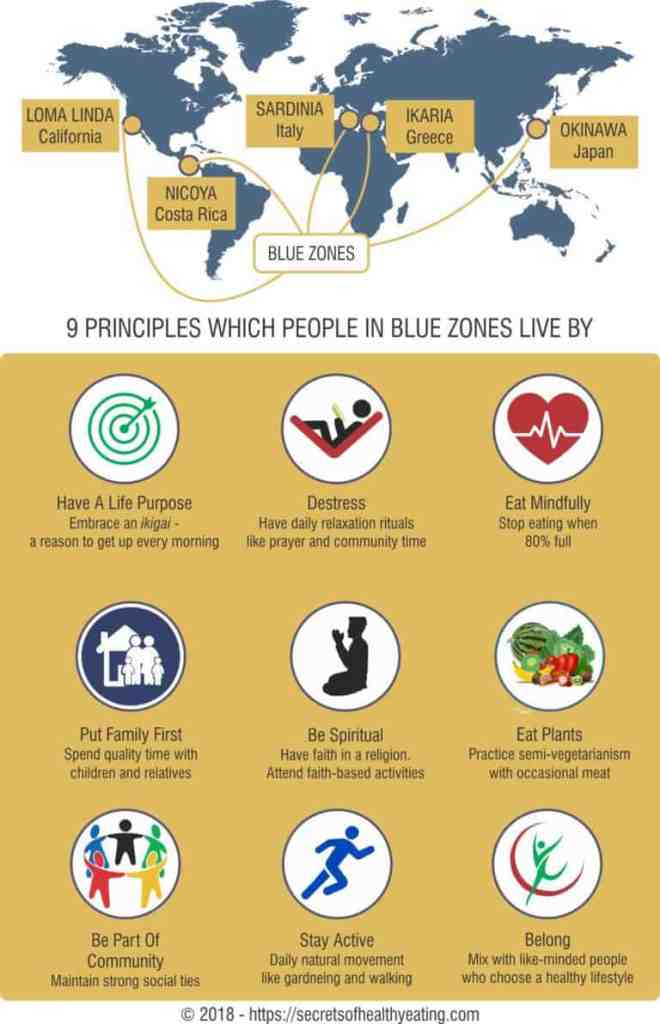
In his book, the Blue Zones, 9 Lessons for Living Longer, Dan Buettner and his team from the National Institute of Health set out to visit 5 regions on our globe that had a long record of longevity. From those lessons, a balanced diet became paramount in life extension. Here is what Robert Kane, MD, director of the Center on Aging at the University of Minnesota in Minneapolis said:

“One of the goals to a healthy lifestyle is moderation in all things. The best diet is basically one of moderation. You hear about all these people that live on legumes and plant foods and that’s probably okay, but I don’t think it’s necessary… as far as meat, it’s a question of eating meat a couple of times a week or are you eating it every day for two meals a day (typical of the Standard American Diet).  Are you eating processed meats that are filled with fat? Or are you eating good cuts of fairly lean meat?”

In Okinawa (one of the Blue Zones) “while centenarian Okinawans do eat some pork, it is traditional to only eat it in small amounts and for special occasions.

Reference: The Blue Zones: 9 Lessons for Living Longer from the people who’ve lived the longest. Dan Buettner, 2012.

Obesity: Deeply in need of an attitude change?

The obesity epidemic rages on with no end in sight. Unfortunately, as we focus more on weight control and body size, more people are affected by being the victims of fat shaming. Even health professionals are often guilty by not addressing the weight problem with their patients – patients become ashamed due to the lack of help they experience from their physicians or the professionals themselves may be victims of the epidemic. They may be crying out for help for weight loss advice and interpret the silence as a shameful topic. This can result in more cases of body dissatisfaction, more dieting attempts like yo-yo dieting and/or avoidance of reporting eating disorder symptoms such as bulimia.

“The lack of education about good nutrition, health-positive behaviors and attitudes, and human physiology; lack of exercise; and lack of a sense of responsibility and forethought about health all contribute to the epidemic.” (Susan Yager. The Hundred Year Diet: America’s voracious appetite for losing weight.)

There is an alternative approach – Health at Every Size (HAES). This concept focuses more on healthy weights rather than how much a person weighs. A study in 2011 called the Succeed Foundation conducted a Body Image Survey that aimed to improve body image and prevent eating disorders. The survey revealed the following:

  • “30 percent of women say would trade at least one year of their life to achieve their ideal weight and shape.
  • 46% of the women say have been ridiculed or bullied because of their appearance.”

In contrast let’s look at the French attitude on dieting and eating in general. There is no fat shaming there (from what I hear).

Savor the flavor. The French sit down to three leisurely meals each day. Even their fast-food meals are lengthy compared to the typical American’s. A study in Psychological Science found that Parisians who dined at McDonald’s spent an average of 22 minutes eating, while Philadelphian McDonald’s-goers were in and out in just 14 minutes. Our culture reinforces speed-eating, just as it encourages rushing through everything else. The problem is that faster eating leads to eating more. It takes an average of 15 minutes for your brain to get the message that your stomach is full, which means that eating slowly makes it more likely you’ll stop at a point where you’re “satisfied” as opposed to “stuffed.” are lengthy compared to the typical American’s. A study in Psychological Science found that Parisians who dined at McDonald’s spent an average of 22 minutes eating, while Philadelphian McDonald’s-goers were in and out in just 14 minutes. Our culture reinforces speed-eating, just as it encourages rushing through everything else. The problem is that faster eating leads to eating more. It takes an average of 15 minutes for your brain to get the message that your stomach is full, which means that eating slowly makes it more likely you’ll stop at a point where you’re “satisfied” as opposed to “stuffed.”

“ HAES approach briefly states: 

  • Accepting and respecting the natural diversity of body sizes and shapes.
  • Eating in a flexible manner that values pleasure and honors internal cues of hunger and satiety.
  • Finding the joy in moving one’s body and becoming more physically active.
  • Reference: https://haescommunity.com/pledge/

Citation

Evelyn Tribole, M.S.,R.D, Elyse Resch, M.S., F.A.D.A., C.E.D.R.D.

Intuitive Eating: A Revolutionary Program That Works.

The New Food Culture? Plant-based Diets

“So many people are confused about food; the eating plan of the moment changes and suddenly there are new rules to follow. But with plant-based eating, there is [more] freedom to eat what you want.” —Cassidy Gundersen, holistic nutritionist.

This article is quite long but worth reading to reflect on what type of food culture may be waiting for the future. Interesting topic!!

CLICK HERE.

“Hurrah for the Pumpkin Pie”

It’s Pumpkin time!! By the 1800’s, pumpkin pie was a necessity at most Thanksgiving celebrations. If you have ever heard the famous poem about Thanksgiving by Lydia Maria Child in 1842:

“Over the river and through the wood, to grandfather’s house we go” ends with “Hurrah for the pumpkin pie”.

Northeastern Indians used squash more than other Indians in early America and did favor pumpkin the most. They baked them by putting them in the embers of a fire, then moistened them with maple syrup or honey or some type of fat and then turned it into a soup. In 1705, the town of Colchester, Connecticut postponed the holiday for a week due to a molasses shortage to make the pies.

The first known American cookbook was American Cookery by Amelia Simmons in 1796 that included a recipe for “pompkin” pie. Later in 1805, a recipe for pumpkin pie appeared in the Art of Cookery Made Plain and Simple by Mrs. Hannah Glasse.

“Take the pumpkin and peel the rind off, then stew it till is quite soft and put thereto one pint of pumpkin, one pint of milk, one glass of malaga wine one glass of rose-water, if you like, seven eggs, half a pound of fresh butter, one small nutmeg, and sugar and salt to your taste:”

In 1929, Libby’s meat-canning industry made pumpkin preparation easier by offering its famous canned pumpkin with its traditional recipe on the label. My mother would have appreciated the Libby’s version. I remember her talking about making her first pumpkin pie and neglecting to strain the stringy pulp from the pumpkin itself. Next time you open a can, please think kindly of her and in her day, there may not have been canned pumpkin. Her first pie was probably around 1924.

The only problem is the sugar content found in pies – as for my pumpkin disaster, I forgot the sugar one year and it was awful. But who is counting sugar grams on Thanksgiving?  For the few that are – 1 serving has 253 cals, 3 grams of fiber, 32 grams of carbohydrate and about 19.7 grams of sugar (5 tsp). Pumpkin is also loaded with vitamin A in the form of beta-carotene (a powerful antioxidant). Happy Holiday!!!

Sally Feltner, www.foodfactsandfads.com

FOOD CHOICES: A HISTORY

Origins of food choices

Bone marrow soup and sautéed snails, delicacies in France, passions to many are absolutely disgusting to others. Horsemeat is popular in a large area of North Central Asia, but rigidly avoided by many people in Islamic countries. Sautéed snails eyes are delicacies in France; kidney pie is traditional in England. Dog is a popular food in Borneo, New Guinea, and the Philippines where snake is a delicacy in China. In some countries, People enjoying insects are fit only for animal feed in other cultures. And then there steamed clams and raw oysters, food passions for some, but absolutely disgusting to others. When did you first say Yuck! to the above list?

 A 12th century scholar, Maimonides included pigs on his taboo and declared them “unlean” list due to rapid spoilage of pork in in hot climates and in their despicable habit of rooting garbage. However other animals such as goats have the same habit. Pork attained its unique status  in 165 B.C as a taboo and enraged the Jews leading to war. As a result, they retook Jerusalem celebrating Hanukkah in the Roman world.  

The fledging Christians pointed instead of Roman rules, to the book of Matthew in the New Testament.;” It’s not what goes into the mouth that defiles a man, but that what comes out”, the good book says.

“Burger chomping” Americans express incomprehension over the sacred status cattle in India, where the 1947 Constitution spells out the right of cows. Yet those same Americans would never think of eating whale, monkey, dog, cat or parrot  that Americans consider companion animals. Many Americans would consider that the deepest food taboo of all.”

“However, hunger still overrides food aversions from any origin. When German armies laid siege to Paris in 1870, cutting off the cities from country farms and gardens, many bourgeois restaurants offered delicacies such as rat ragu and saddle of cat.  “Many simply say – “tastes just like chicken”

Sources: Judith E. Brown, Nutrition Now, 7th Edition

Harris, David Lyon, Sue McLaughlin. The Meaning of Food: The Companion to the PBS Television Series Hosted by Marcus, Samuelsson, 2005.

Alert: Meat, coffee and chocolate?

Nearly 50% of food influencers are actively seeking more plant-based options. Major retailers are asking their suppliers for more plant-based products for their shelves and restaurants that have added vegan options to menus have seen an increase in business while the competition has struggled. These are all signs that point to plant-based being more than just a trend. It is a blossoming cultural movement and we are still in the earliest stages!”

Reference: Plant-based World Newsletter, 2021

CLICK HERE.

Has anyone noticed the emphasis on plant-based food in the food magazines lately? Interesting!! Just saying – stay tuned. SJF (my opinion).

A Lesson from the “Limeys”

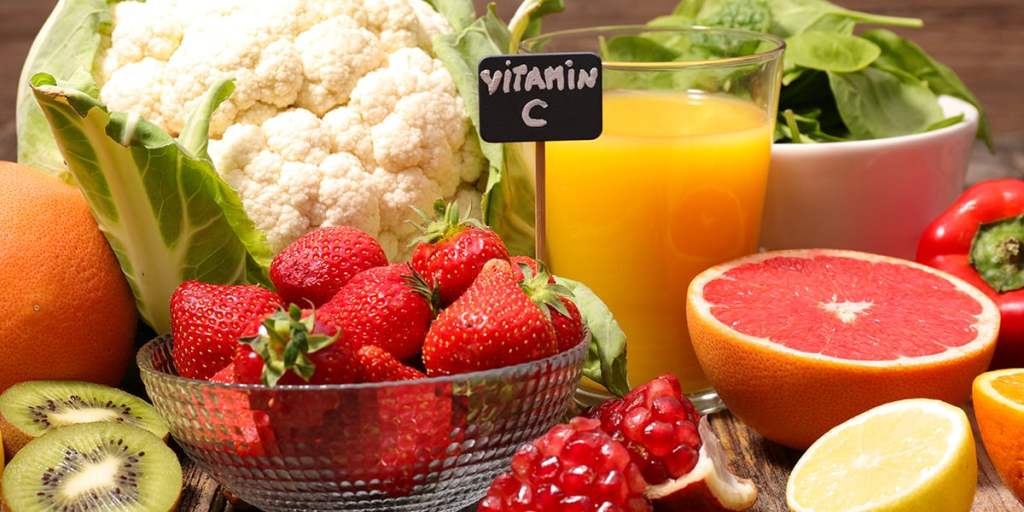
A Brief History of Vitamin C

The vitamin C deficiency disease, scurvy,  was the scourge of armies, navies, and explorers throughout history. It particularly affected those sailors on long voyages who had little access to fresh fruits and vegetables (high in Vitamin C). Despite some recommendations of transporting these foods on their voyages, 10,000 British sailors died of scurvy in 1594. A Scottish physician, James Lind serving in the British Navy had an idea and developed a “crude”experiment on an upcoming long voyage.

To set the stage for this experiment, a historic account is given us from a 16th century surgeon who describes the scourges of scurvy:

It rotted all my gums, which gave out a black and putrid blood. My thighs and lower legs were black and gangrenous, and I was forced to use my knife each day to cut into the flesh in order to release this black and foul blood. I also used my knife on my gums, which were livid and growing over my teeth…

William Faloon. Misconeptions about Vitamin C, Life Extension: The Science of a Healthier Life, November 2021

James Lind did his clinical trial aboard HMS Salisbury in 1847.  He took 6 groups of two sailors with scurvy and gave the following treatments:

Group 1: A quart of hard cider a day

Group 2: 25 drops of vitriol (sulphuric acid)

Group 3: Six spoonful’s of vinegar

Group 4: Half a pint of seawater

Group 5: Two oranges and a lemon (ran out of fruit in a week) but recovered from scurvy in six days. There were no signs of scurvy prevention in any of the other groups (to my knowledge).

Group 6: Spice blend

(The cure of scurvy should have been obvious but Lind wanted to fit his observation into the prevailing ideas of the model of humors as the basic model of disease (described above).   This idea of humors had been around since the Ancient Greeks and taught that the body contains four fluids (the humors – phlegm, blood, yellow bile, black bile) associated with certain personalities (phlegmatics, sanguine, choleric and melancholy). Lind thought that scurvy was associated with the build up of black bile due to blocked sweat ducts and downplayed the power of his discovery to a paragraph buried in the middle of a long book. Despite this the British Navy progressively eliminated  scurvy over the remainder of the century using lime juice and were called “limeys”. The rest  of the world did not heed the lesson of  the limeys. In the mid—19th century, during the U.S. Civil War, scurvy was rampant.  Science moves very slowly. (SJF)

“In the original timeline (OTL, our world), germ theory wasn’t even on the radar until 1847, when Ignaz Semmelweis made the connection between puerperal fever and doctor hygiene (or lack thereof). This was the first strong proof for germs being the cause of disease, but his theory was ridiculed by the scientific community. It took over ( at least) 30 years before the germ theory was accepted as fact.” Wikipedia.