Epigenetics is a hot topic right now and appears more in news articles as science makes further associations. It is becoming more obvious that our lifestyle and experiences can affect our genes and can be passed down to our children and grandchildren through genetic pathways.
Factors that can influence epigenetics can include: Diet, physical activity, sleep, stress, inflammation, chemicals products, UV rays, and environmental pollution.
DNA is the blueprint for the instructions for the entire body, but chemical tags called methyl groups make up what is called the epigenome to decide which genes are active – this is called methylation or gene expression. It is often referred to as an “on and off switch” that turns on or off certain genes. It is what makes identical twins different over time. Although our DNA code does not change, the epigenome is flexible and reacts to our environment. Our experiences help shape how genes are expressed.
DNA methylation works by adding a chemical group to specific places on the DNA as “tags” where it blocks the proteins that attach to the DNA to “read the gene”. This chemical group called a methyl group can be removed through a process called demethylation. Typically, methylations turn genes “off” and demethylation turns genes “on”.
Women are not solely responsible for the health of their future children. Science is finding that the health of a man’s unborn children can be affected by things like the man’s diet, life experiences and trauma, exposure to toxins and how old he is at conception.
DNA is not our destiny. Epigenetics is the study of how your behaviors and environment can cause changes that affects the way your genes work. Through epigenetic tags, parents’ experiences and lifestyle can affect the genes that are passed down to their children and grandchildren.
A proper lifestyle “turns on” protective genes and “turns off” disease-producing genes by their positive impact on the epigenome.
DNA
Citation:
Why Should I Care About Epigenetics? Utah Valley Pediatrics, September 30, 2013
Obesity is a chronic condition characterized by excess body fat. Its origins are mulfifactorial including heredity, behavior and environment. Obese people are at risk of developing many diseases. In fact, obesity is the second most important predictor of cancer, preceded only by tobacco use.
Epigenetics refers to those elements of the genetic code that you are able to change without altering your DNA sequence. It includes which genes you express, to what degree and at what time. Consequently, epigenetic processes determine whether a specific gene is active or not at any given time. In the absence of further studies. Genes can be expressed or not expressed.
Your epigenetics develop in the uterus and continues to change throughout your life. A study in the Netherlands during the famine period of 1944-1945 demonstrated how genetics affects obesity. Fetuses of mothers exposed to extreme hunger experienced more glucose intolerance, dyslipidemia, early coronary heart disease, and obesity. Therefore, starving could cause some of the diseases that are prevalent in society today. These genes can be transmitted from generation to generation. Unlike the genome (the complete set of genes in a cell), the epigenome is reversible. Epigenetic marks can be modified throughout life. However, modificationss at critical periods of prenatal development have greater effects on the results. So DNA is not your destiny!!
Lead a healthy lifestyle prior to conceiving a baby, especially the mother; however, there are some indications that the father’s lifestyle can also be influential. Ideally, both expectant parents and the offspring should maintain good lifestyle habits to include healthy diets, physical activity, adequate sleep, stress reduction, and avoidance of inflammation.
We have all heard about the rising crime rates occurring in the U.S. Our first inclination is to wonder what could be going on in our country to cause this – or at least what is contributing to this disturbing shift of behavior?
“The issues of diet and criminal behavior are limited but intriguing. If you’ve ever found yourself in front of the TV after a bad day, mindlessly digging ice cream out of the container with a spoon, you know that mood and food are sometimes linked. But while stress eating is a verified phenomenon, the relationship between food and actual mood disorders, depression and even behavior needs some attention. Can dietary changes potentially improve our mental health.? What do the studies say?
Scientists looking for answers – Hints of a Link
Before, we jump into the science (research), some basics:
As we all know, our behavior is mostly controlled by our brain. Every organ in the human body requires nutrition to function properly and when it doesn’t get what it needs it functions abnormally. So, is there any reason that the brain should be an exception? The brain is a complex organ so that alone should be enough to assume that if it does not get the proper nutrition, it might just not work as well as it should.
Recent research offers a viewpoint that the brain and the gut “talk to each other” through the presence of the microbiome – the community of microorganisms that lives inside our digestive tract. When this communication channel is “out of whack” or missing essential nutrition, major health problems can crop up in both the mind and body, enabling food sensitivities, allergies, digestive disorders, obesity, depression, anxiety, and fatigue.
“A study indicated that when levels of the brain chemical serotonin decrease from stress or not eating, it affects the brain regions regulating anger, potentially resulting in “a whirlwind of uncontrollable emotions”.
“Prison studies suggest that many inmates have poor blood sugar control, compounded by a high-sugar diet. We all know how it feels when blood sugar drops – we feel moody, foggy. Apply that to someone from a disturbed backgound.”
In a randomized, placebo-controlled trial, Oxford criminologist Bernard Gesch found that giving prison inmates a multivitamin and fatty acid supplement led to violent offenses dropping 37% compared to 10% for those who were given a placebo – findings that were confirmed by a later Dutch study.
“In a large study of prison diets, Stephen Schoenthaler, Professor of Criminology and Sociology at California State University found that prisoner’s eating habits could be used to predict future violent behavior. Normally, past violent behavior is considered the best prediction of future violence. But professor Schoenthaler found that a poor diet is an even better predictor of violent behavior.”
He also found that that in a study of young offenders in California, young adult men receiving vitamin supplements showed a 38% drop in serious behavior problems.
The types of problems associated with poor diet, such as aggression, attention deficits and hyperactivity can make impulsive behavior more likely. Low levels of iron, magnesium and zinc can lead to increased anxiety, low mood, and poor concentration, leading to attention deficits and sleep disturbances. Omega-3 fatty acids, are often deficient in the U.S. diet and needed to improve cognitive functioning.
“No one blames a poor diet as a cause of crime, nor is it the only solution. But if better nutrition in general can bring about a substantial reduction in violent crime in and out of prisons, that would be something to cheer about. For isn’t a good diet, made up of good food, a better and less expensive solution than just hiring more police and building more prisons?”
Needless to say, The Standard American Diet (SAD) needs more attention for all of us, not just in our prison population. Simply, with the input of nutrition scientists, education of the consumer, and cooperation of the food industry, we desperately need more healthy food choices for our personal health and that of our food culture.
Schoenthaler, S.J., Ames, S. Dorax, W., et al (1997)
The effect of randomized vitamin mineral supplementation on violent and non-violent antisocial behavior among incarcerated juveniles. Journal of Nutritional and Environmental Medicine, 7:343-352.
The Conversation: Crime and Punishment – the link between food and offending behavior. Hazel Flight, John Marsden, Sean Creaney. 2018
The Guardian. Can Food Make You Angry? Rebecca Hardy. Wed.24 Apr 2013.
C. Bernard Gesch, Sean M. Hammond, Sarah E. Hampson, Anita Eves, and Martin J. Crowder
Influence of supplementary vitamins, minerals and essential fatty acids on the antisocial behavior of young adult prisoners.British Journal of Psychiatry 2002, 181, 22-28
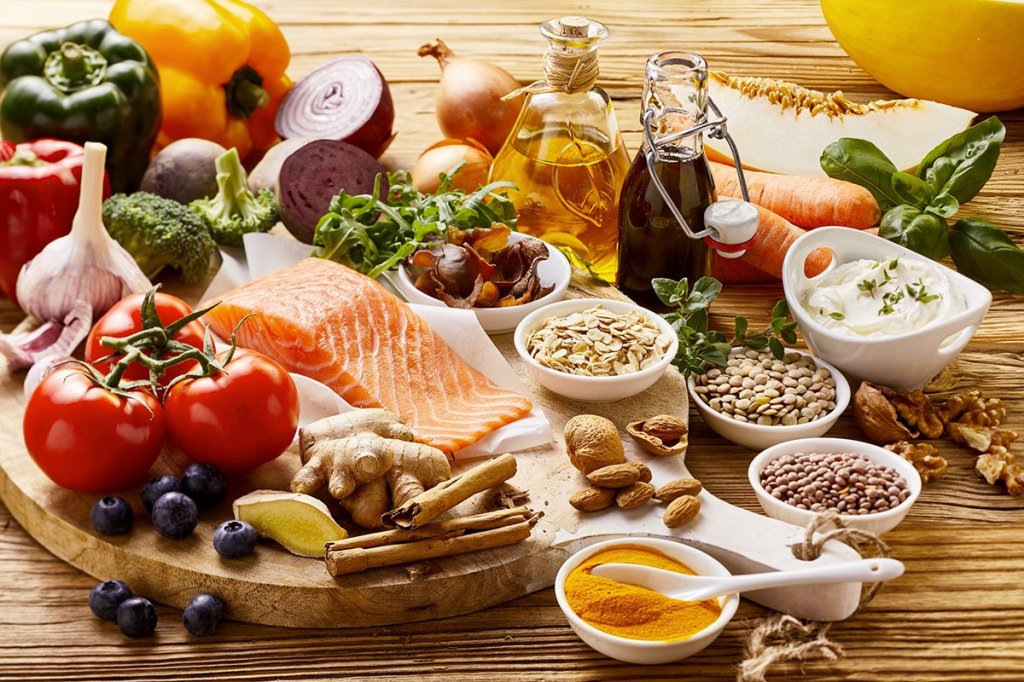
How to Live the Mediterranean Way and How to Feed Your Microbiome.
Each country around the Mediterranean Sea offers a rich bounty of delicious ingredients. Many authors have written about the Mediterranean Diet in terms of the health benefits that have been shown by an exhaustive array of scientific studies on its merits. The diet is now recognized as an “intangible cultural heritage” in Italy by the United Nations Educational, Scientific and Cultural Organization (UNESCO). It is a way of life and a way of eating, which the Italians call “Cucina genuina” or “cuisine of the poor”. This is the diet of those who work the land and feed themselves using seasonal ingredients grown in their small plots outside the kitchen”.
The following characteristics attempt to describe the “Americanized” version of how to live and eat the Mediterranean way – it is not just a diet but a gift to a healthier lifestyle.”
DIET:Eat food, not too much, mostly plants. (Micheal Pollan). Whole grains, unprocessed foods, fruits, and vegetables
Eat meat in moderation. Limit your saturated fat, sugar and salt intake. Snack on nuts. Reduces inflammatory foods
Practice mindfulness, smaller servings, early light dinners.
Biological Changes during Aging and Nutritional Consequences
S0URCE JUDITH E. BROWN, NUTRITION NOW, 7TH EDITION, 2013
The combined effects of poor diets, other risky behaviors, and biological aging increase the rates of serious diseases during adulthood. How soon a disease develops largely depends on the intensity of exposure to behavioral risks that contribute to disease development. These are often referred to as epigenetics (when the DNA is not altered, but environmental factors cause genes to be turned either on or off.)
What Are Some Nutritional Consequences?
Lowered stomach acidity may result in decreased absorption of vitamin B12? The consequences of getting less sun exposure may result in less production of vitamin D in the skin.
A person’s need for calories generally declines with age as physical activity, muscle mass, and basal metabolic rate decrease. However, when one chooses to continue their physical activity into their older years can maintain their muscle mass, experience less muscle, and bone pain, and gain less body fat than people who are inactive.
For the most part, the development of chronic disease in middle-age and older adults can be viewed as a chain that represents the accumulation over time of problems that impair cell functions. Each link that is added to the chain, or each additional insult to cellular function, increases the risk that a chronic disease will develop. The presence of a disease indicates that the chain has gotten too long – that the accumulation of problems is sufficient to interfere with the normal functions of cells and tissues.
Normal cell functions and health promotion are facilitated by healthful dietary lifestyles and other behaviors. For example:
Correcting obesity and stabilizing weight during the adult years tends to lengthen life expectancy.
Dietary intakes that correspond to the Dietary Guidelines for Americans (MyPlate) or following a healthily diet pattern like the Mediterranean Diet is related to a longer life expectancy.
Maintaining adequate calcium, vitamin D, and protein intake and engaging in regular physical activity during the adult years may prevent or postpone the development of osteoporosis and help maintain muscle mass and strength.
Above average intake of vegetables, fruits, and whole grains may delay the development or help prevent a number of types of cancer, heart disease, hypertension, and cataracts.
The health status of adults is not necessarily ‘FIXED” by age.; it can change for the better or the worst, or not much at all. It’s up to you.
“Certain foods encourage inflammation and an anti-inflammatory diet avoids these foods. The body makes compounds called prostaglandins (eicosanoids) that can either be pro-inflammatory or anti-inflammatory. Both saturated fat and omega-6 unsaturated fat are building blocks for pro-inflammatory prostaglandins. Omega-6 fat is abundant in ulltraprocessed foods (not a good thing); it can contribute to an excessive inflammatory response.” How to Eat, Mark Bittman and David Katz, MD., page 61.
” Diets high in inflammatory foods were linked with global markers of brain aging and cerebral small vessel disease, on MRI. Bottom line: Smaller brain volume seen with diet-driven inflammation” See study below. “Systemic inflammatory processes in the body, including the brain, can be influenced by diet leading to its important contributory role in brain aging, the researchers observed.”
Adding more olive oil to your diet may help prevent an early death.?
A recent study from the researchers at the Harvard T.H. Chan School of Public Health was published online Jan. 10, 2022 by the Journal of the American College of Cardiology. Data from 90,000 men and women, free of cardiovascular disease and cancer were asked to complete a dietary questionnaire every four years. At the end of the data collecting, 36,856 of the participants had died.
From the diet questionnaires, it was found that those who routinely consumed the most olive oil – averaging more than one half a tablespoon a day – had the lowest risk of dying during the 28 – year old follow-up period compared with people who rarely or never consumed olive oil.
The Olive Oil comsumers had:
A 19% lower overall risk of death
A 19% lower risk of cardiovascular disease
A 17% lower risk of cancer-related disease
A 29% lower risk of death related to a neurodegenerative condition
A 18% lower risk of death related to a respiratory disease
This may explain why olive oil as a major component of the Mediterranean diet has consistently shown health benefits in numerous studies. The results also suggest that when used as a substitute for products containing animal fat such as butter, we see the same benefits.
Phytochemicals are biologically or “bioactive” substances in plants that have positive effects on health. They are also called phytonutrients. More than 2,000 types of phytochemicals that can act as hormones, participate in gene function, while others provide pigments that provide flavor and color.
You can’t go wrong with increasing your intake of plants from the Brassica family – broccoli, cabbage, kale, cauliflower, and Brussel’s sprouts. There are many studies that have found them to provide valuable nutrients and even help to prevent cancer and heart disease. What makes them so powerful? They are high in dietary fiber, polyphenols (phytochemicals) and provide over 40 phenolic compounds labeled “cruciferous” meaning their leaves grow in a cross-pattern. Cruciferous means “cross”.
The red color of many cruciferous vegetables is significant. Anthocyanins are pigments that cause the red and purple coloring of many kales, cabbage, and other colorful vegetables. How do they lower blood cholesterol? One study found that healthy volunteers a fed a beverage of primarily broccoli and cabbage two times a day for three weeks showed a significant decrease in the so-called ‘bad” cholesterol, LDL. Follow up studies produced the same results.
What Foods Lower Blood Pressure? One important group is those who contain polyphenols – such as berries. They are a large family of phytochemicals particularly in cardiovascular health. Their benefits come from their antioxidant, anti-inflammatory and blood vessel dilating properties, and immune system functions. All fruits and vegetables contain polyphenols, but certain ones like berries, cocoa, tea, pomegranate, olives, and grapes contain especially high amounts.
The Best Cholesterol-Lowering Food: Cruciferous Vegetables.
Harvard researchers found that anthocyanins were the primary flavonoid associated with polyphenols’ benefits to blood pressure control. Just one serving of blueberries per week significantly reduced the risk of high blood pressure by 10% in those over age 60 compared with people in the same age group consuming no blueberries. Anthocyanins are present in other common fruits and berries such cranberries, blackberries, and strawberries.
Cruciferous vegetables
Source; Harvard Medical School, Best Foods for Women’s Health.
Can vitamin D and fish oil prevent autoimmune disease.? Autoimmune diseases are a category of conditions where an individual’s immune system acts abnormally, often attacking and destroying healthy tissues by mistake. Many triggers can cause an individual’s body to start making components referred to as antibodies. Usually, antibodies help the body fight off infections. However, in patients with an autoimmune disease, attack the body’s healthy tissues instead. These diseases include diabetes type 1, rheumatoid arthritis, lupus, psoriasis, or thyroid disease to name a few (possibly 80 of them) and usually affect women more than men. Symptoms vary, but can include pain, fatigue, skin problems, and other chronic conditions.
Study Methods
The study called the VITAL study was published Jan 26, 2022 in the BMJ was a randomized controlled trial included 25,871 racially diverse people over the age of 50 who were split into two groups. One group took 2,000 IU of vitamin D3 each day; those in another group took 1000 mg of fish oil and a third group took both. Another group took two placebos. The study was blinded – i.e. no one knew which group they were in.
Results
“During a five-year follow-up, participants reported any diagnoses of any autoimmune disease that were verified with medical records.
Compared with a placebo, vitamin D supplementation was associated with a 22% reduced risk of autoimmune disease overall. The improvement was greater (39%) after the first two years of treatment. Fish oil alone showed less robust results, but still showed fewer participants with confirmed autoimmune diagnoses compared with placebo.”
Toxicity
Both vitamin D and fish oil may have some effects due to the ability of each to regulate or tame the inflammatory response that “drive autoimmune disorders.” It is too soon based on one study to make recommendations that people take either vitamin D or fish oil supplements – but those with a strong family history should consult with their primary health care provider about these decisions. The vitamin D dose used in the study is more than twice the recommended daily intake of 600 IU or 800 IU for people 71 and older. WARNING: The consequences of overdoses or toxicity can occur at 10,000 IU daily. It is not necessary to take megadoses of any supplement unless your doctor approves it.
Harvard Women’s Health Watch, Volume 29, Number 10 June 2022.
The Best Cholesterol-Lowering Food: Cruciferous Vegetables.
You can’t go wrong with increasing your intake of plants from the Brassica family – broccoli, cabbage, kale, cauliflower, and Brussel’s sprouts. There are many studies that have found them to provide valuable nutrients and even help to prevent cancer and heart disease. What makes them so powerful? They are high in dietary fiber, polyphenols (phytochemicals) and provide over 40 phenolic compounds labeled “cruciferous” meaning their leaves grow in a cross-pattern. Cruciferous means “cross”.
The red color of many cruciferous vegetables is significant. Anthocyanins are pigments that cause the red and purple coloring of many kales, cabbage, and other colorful vegetables. How do they lower blood cholesterol? One study found that healthy volunteers a fed a beverage of primarily broccoli and cabbage two times a day for three weeks that showed a significant decrease in the so-called ‘bad” cholesterol, LDL. Follow up studies produced the same results.
What Foods Lower Blood Pressure? One important group is those who contain polyphenols – such as berries. They are a large family of phytochemicals particularly in cardiovascular health. Their benefits come from their antioxidant, anti-inflammatory and blood vessel dilating properties, and immune system functions. All fruits and vegetables contain polyphenols, but certain ones like berries, cocoa, tea, pomegranate, olives, and grapes contain especially high amounts.
Harvard researchers found that anthocyanins were the primary flavonoid associated with polyphenols’ benefits to blood pressure. Just one serving of blueberries per week significantly reduced the risk of high blood pressure by 10% in those over age 60 compared with people in the same age group consuming no blueberries. Anthocyanins are present in other common fruits and berries such cranberries, blackberries, and strawberries.
Source; Harvard Medical School, Best Foods for Women’s Health.
Healthy Eating Plate – Harvard T. H. Chan School of Public Health, The Nutrition Source.




 FOOD, FACTS and FADS