“Most of us have more control over how long we live than we think. In fact, experts say that if we adopted the right lifestyle, we could add a good 10 years and suffer a fraction of the diseases that kill us prematurely.”
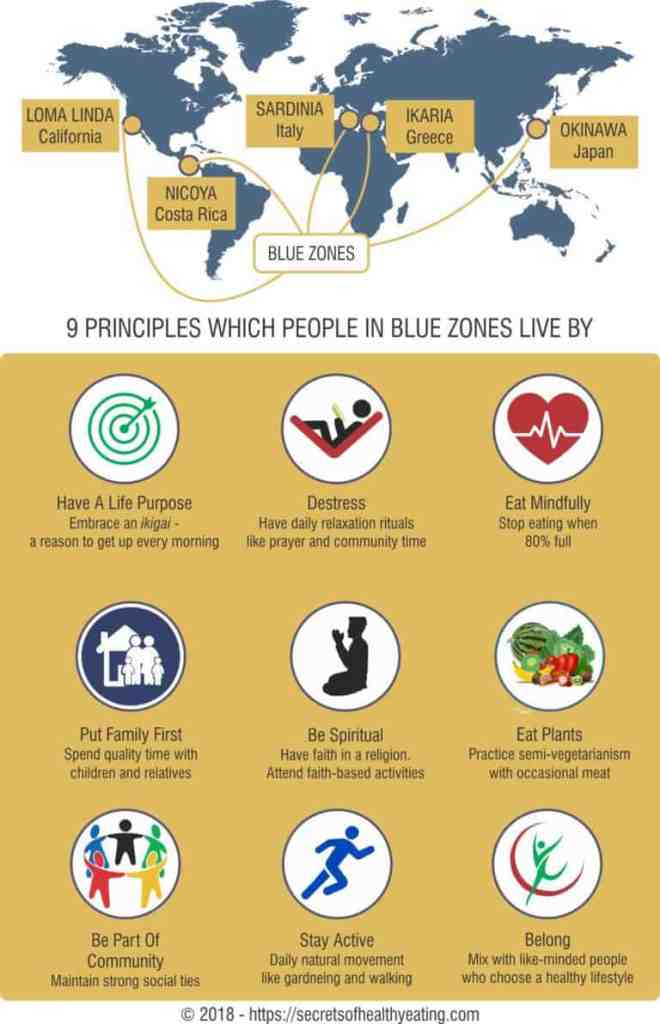
In his book, the Blue Zones, 9 Lessons for Living Longer, Dan Buettner and his team from the National Institute of Health set out to visit 5 regions on our globe that had a long record of longevity. From those lessons, a balanced diet became paramount in life extension. Here is what Robert Kane, MD, director of the Center on Aging at the University of Minnesota in Minneapolis said:
“One of the goals to a healthy lifestyle is moderation in all things. The best diet is basically one of moderation. You hear about all these people that live on legumes and plant foods and that’s probably okay, but I don’t think it’s necessary… as far as meat, it’s a question of eating meat a couple of times a week or are you eating it every day for two meals a day (typical of the Standard American Diet). Are you eating processed meats that are filled with fat? Or are you eating good cuts of fairly lean meat?”
In Okinawa (one of the Blue Zones) “while centenarian Okinawans do eat some pork, it is traditional to only eat it in small amounts and for special occasions.
Reference: The Blue Zones: 9 Lessons for Living Longer from the people who’ve lived the longest. Dan Buettner, 2012.
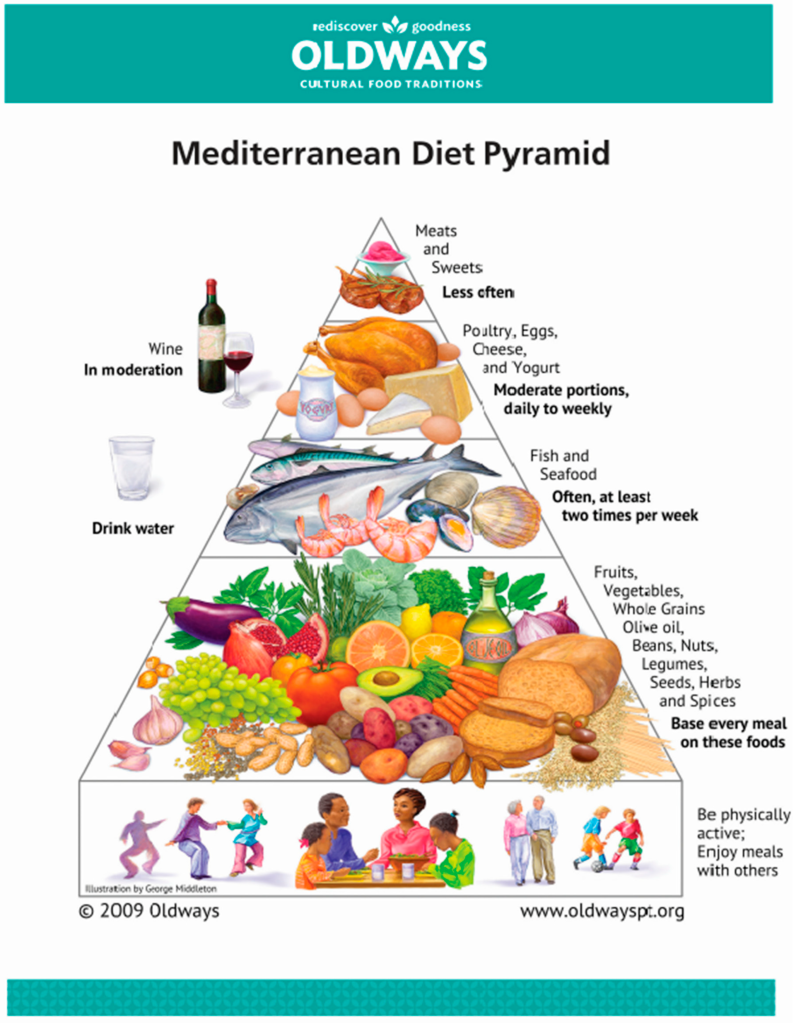
A healthy new YEAR’S RESOLUTION is simple; TRY THE MEDITERRANEAN DIET – a diet pattern that offers variety as well as many health benefits and a great way to begin the year.
Highlights of the Mediterranean diet – source Life Extension, Dec. 2021 Michael Ozner, MD
There is no one Mediterranean diet. In thousands of studies, the Med diet has been reported to be one of the best lifestyle strategies for extending longevity and avoiding the common disorders of aging, including heart disease and cancer.
In 1990s, the first Mediterranean Pyramid was created by a non-profit group called the Oldways Preservation Trust, in cooperation with the Harvard School of Public Health and the World Health Organization. It was based on food patterns seen in the Mediterranean areas of the olive-growing countries surrounding the Mediterranean Sea, Spain and southern France in the 1960’s.
A clinical trial showed that those who adhered most closely to a traditional Med diet appeared less likely to suffer sudden cardiac death than those who at least had a better chance of healthy aging, defined as living to 70 years or older with no major physical or mental impairments. For diet details, search this blog as Mediterranean Diet.
Components of the Med Diet to show proven health benefits:
Extra Virgin Olive Oil
Omega-3 Fatty acids
Vegetables and fruits
Whole Grains
Clinical trials and observational studies have found particularly strong evidence that the Med Diet protects the heart and lowers the risk of heart attacks, strokes, and cardiovascular death.
However, this diet pattern is beginning to show that the diet can reduce the risk for other chronic diseases associated with aging.
Metabolic Syndrome
A meta analysis of 50 studies including nearly 535 people found that following the Med Diet was associated with a reduced risk of metabolic syndrome. The metabolic syndrome is a cluster of symptoms associated with heart disease that include:
Decreased HDL (“good cholesterol”)
Increased waist circumference
Increased blood pressure
High glucose levels
Increased triglyceride levels
Diabetes type 2
Another study of subjects with a high cardiovascular risk showed that a Med Diet compared to a low fat diet reduced the risk of developing diabetes type 2 by 52% .
Alzheimer’s Disease
In a study lasting four years, in patients showing no signs of dementia at baseline, greater adherence to the Med Diet was associated with a significant reduction in risk of developing Alzheimer’s disease.
Cancer
In a meta-analysis of 83 studies that included 2, 130, 753 subjects, the highest adherence to a Med diet was associated with the lowest rates of many cancers, including colon, breast, stomach, liver, and prostate and a lowest risk of cancer mortality. The diet’s benefits were attributed to a higher intake of fruits, vegetables, and whole grains, i.e. a plant based diet.
Longevity
Several studies have specifically shown that the Med Diet increases longevity.
One study analyzed the diets of 10,670 women in mid-life with a median age of 59 years. Greater adherence to the Med Diet was related to 46% greater odds of surviving to 70 years or older with no major impairments in physical function or mental health.
Another study of adults 65 and over also found that closer adherence to the Med Diet was associated with prolonged survival. Many components of the Med Diet including omega-3 fatty acids from fish oil and polyphenols from fruits and vegetables have been shown to reduce chronic inflammation. Be sure and search Food, Facts, and Fads for diet and disease as well as the Mediterranean diet for more details about this powerful message.
Our bodies are constantly creating new cells through cell division. Unfortunately, the cells become “old’ and reach a state called senescence where they no longer replicate themselves.
The old cells do not die but linger in the body systems causing damage and inflammation to healthy cells.
But, during cell division, structures called telomeres (stretches of DNA protein) come into play. They are likened to the plastic tips at the end of shoelaces that prevent fraying. The are located at the ends of chromosomes (genes) to protect and keep cells stable. However, every time a cell divides, the telomeres shorten slightly. The length of telomeres and the rate at which they shorten have been linked to aging. An enzyme called telomerase is often referred to as “anti-aging helps maintain the telomeres, helping to keep them long.
Studies at this point have suggested that various nutrients could possibly influence the expression of a particular gene (TERT) that is linked with telomerase activity. These included genistein found in soy and broccoli; EGCG, a polyphenol in green and black tea, sulforophane found in vegetables such as cauliflower, kale, and collard greens. Data from the Nurses Health Study indicated that intake of dietary fiber was linked to longer telomeres in middle-aged and older women. But research is limited at this point and should be further investigated.
An interesting study indicates that telomere length is connected to the amount of soda we consume. Sugar sweetened beverages are thought to be a major contributor of sugar in the U.S. diet.
In 2024, researchers looked at a group of people who regularly consumed 20 ounces or more of soda daily. The study was published in the American Journal of Public Health, reported that the soda drinkers’ telomeres shortened much more quickly than the norm – the equivalent of more than four and a half years in addition to the normal aging that would occur over the course of a year. This is not good news.
The researchers had included only healthy adults with no history of diabetes or cardiovascular disease in their study. The potential connections with metabolic disease are fascinating.
Consider, for instance, that obesity is also associated with reduced telomere length – even for children. The authors of the study of course recommended that further research be done to examine any reasonable associations with dietary factors and telomere length.
Source: Findlayson, Judith. You Are What Your Grandparents Ate. Page 228, 2019.
“Most of us have more control over how long we live than we think. In fact, experts say that if we adopted the right lifestyle, we could add a good 10 years and suffer a fraction of the diseases that kill us prematurely.”
In his book, the Blue Zones, 9 Lessons for Living Longer, Dan Buettner and his team from the National Institute of Health set out to visit 5 regions on our globe that had a long record of longevity. From those lessons, a balanced diet became paramount in life extension. Here is what Robert Kane, MD, director of the Center on Aging at the University of Minnesota in Minneapolis said:
“One of the goals to a healthy lifestyle is moderation in all things. The best diet is basically one of moderation. You hear about all these people that live on legumes and plant foods and that’s probably okay, but I don’t think it’s necessary… as far as meat, it’s a question of eating meat a couple of times a week or are you eating it every day for two meals a day (typical of the Standard American Diet). Are you eating processed meats that are filled with fat? Or are you eating good cuts of fairly lean meat?”
In Okinawa (one of the Blue Zones) “while centenarian Okinawans do eat some pork, it is traditionally reserved only for infrequent occasions and taken only in small amounts.”
Reference: The Blue Zones: 9 Lessons for Living Longer from the people who’ve lived the longest. Dan Buettner, 2012.
“Poor diets lead to a host of medical issues: obesity, cardiovascular disease, diabetes, and certain cancers. But diet also influences the brain and can increase the risk for mental disorders and neurodegenerative diseases. Researchers are uncovering the details of how the foods we consume affect our cravings, our moods, and even our memories.”
We hear so much these days about omega 3-rich fish oils as well as omega-6 rich oils. Today we consume ten to 20 times more omega-6 fats and have dramatically reduced our intake of omega-3 fats. This goes against our hunter-gatherer evolutionary history of a 1:1 ratio. Recent research indicates that people who regularly consumed omega-3-rich oils such as flax seed, olive and walnut oils were 60 percent less likely to develop dementia than those who did not regularly consume such oils. Y. Zhang, et al. “Intakes of Fish and Polyunsaturated Fatty Acids and Milk-to-Severe Cognitive Impairment Risks…. American Journal of Clinical Nutrition 71, no.2 (2016):330-40.
Researchers found that people who maintained five healthy lifestyle factors lived more than a decade longer than those who didn’t maintain any of the five.
Americans don’t live as long as people in most other high-income countries.
Study led by Frank Hu at the Harvard T.H. Chan School of Public Health analyzed data from more than 78,000 women and 44,000 men who participated in two nationwide surveys (Nurses Health Study and Health Professionals Follow-up Study,)
Study was funded by NIH National Heart Lung and Blood Institute and National Cancer Institute and published in Circulation on April 30, 2018.
Data identified five different low-risk lifestyle factors and compared health outcomes for those who adopted all five with those who didn’t adopt any.
The factors:
1. Maintaining a healthy eating pattern (like the Mediterranean Diet)
Limiting beverages with added sugar, trans fats, and sodium
2. Moderate drinking
3. Not smoking
4. Getting at least 3.5 hours of moderate to vigorous physical activity each week
5. Maintaining a normal weight (18.5 to 24.9) BMI
Each participant’s medical history: heart disease, cancer, diabetes, age at death (when applicable).
Results:
At age 50, women who did not adopt any of the five healthy habits were estimated to live on average until they were 79 years old and men until they were 75.5 years.
In contrast, women who adopted all five healthy habits lived to 91.1 years and men lived to 87.6 years.
Independently, each healthy lifestyle factor significantly lowered the risk of total death, death from cancer, and death from heart disease.
Note: Epigenetics: With its prefix from the Greek word epi, which means “addition to,” this word relates to factors in addition to DNA base sequence that influence the function of genes.
Please search “Epigenetics” on this blog for more information.
Source:
Tianna Hicklin, PhD. Healthy habits can lengthen life. National Institutes of Health (NIH).
The Blue Zone diet is based on populations in the world that live the longest. The study was pioneered by Dan Buettner, a National Geographic best-selling author. After many years of interviews with centenarians, he and his team discovered five zones of the world that exhibited the most longevity: Okinawa, Japan, Sardina, Italy, Ikaria, Greece, Loma Linda, California and Nicoya, Costa Rico. They called these areas “Blue Zones” and here is just one of their stories:
Have we learned anything from Covid-19? I would hope so and that some good will come of it – although it’s hard to believe that it will happen at times as we are still fighting its many battles.
In his latest book, Metabolical, Dr. Robert H. Lustig, MD, MSL, author of the best selling book, ‘Fat Chance, “insists that if we do not change the way we eat, we will continue to court chronic disease, bankrupt our health care, and threaten the planet. But there is hope.” Metabolical: The Lure and Lies of Processed Food, Nutrition, and Modern Medicine. 2021.
The Bottom Line: If (and it’s a big IF), we change our ways even in small steps that reflect a healthier body, we may be able to better withstand the consequences of an infectious disease like COVID. Make sense???
The ability of the immune system to fight disease declines with age. As it does, the incidence of infections, cancers, and autoimmune diseases increase and the effectiveness of immunizations decline. In turn, the presence of infections and chronic disease contributes to malnutrition.
Nutrient deficiencies are common in older adults, including deficiencies of zinc, iron, beta-carotene, folic acid and vitamins B6, B12, C, D, and E. Supplements of some of these individual nutrients have been shown to increase certain aspects of the immune response, but have not been shown to reduce mortality from infections. High doses of some nutrients, including zinc, copper, and iron, depressed immune function, so supplement should not contain more than 100% of the daily value. There is little evidence that “megadoses” (over the Daily Value) of any vitamin or mineral is necessary for optimum health.
“The traditional Okinawan diet was about 80% carbohydrate. Before 1940, Okinawans also consumed fish at least three times a week together with seven servings of vegetables and maybe one or two servings of grains a day. They also ate two servings of flavonoid-rich soy, usually in the form of tofu. Dairy and meat represented about 3% of their calories. They didn’t eat much fruit; they enjoyed a few eggs a week” They particularly had/have an affinity for sweet potatoes.
The Okinawan Clues to Longevity
Have a purpose in life – i.e. a reason to get up in the morning .
Rely on a plant-based diet .
Get gardening .
Eat more soy .
Maintain a social network.
Enjoy the sunshine.
Stay active.
Plant a medicinal garden with beneficial herbs.
Enjoy simple pleasures.
Source: Dan Buettner, The Blue Zones Solution, 2015
The following article explains much of the recent research as to why this culture has had so much success in living a relatively speaking healthy lifestyle – it is worth a read. It does not mean we all need to go buy pounds of sweet potatoes; however I think I may have one for dinner. (SJF).



 FOOD, FACTS and FADS