Blog Feed

The Omega’s: 6 and 3

Are They Inflammatory?

Sally Feltner MS, PhD

Diet and Health, Diet Supplements, General February 23, 2021 5 Minutes

by foodworksblog Leave a comment

Fat is a key nutrient in our diet and is often the first thing you may note on a food label. Most foods contain a mixture of many different types of fat: the commonest are saturated, monounsaturated, polyunsaturated and trans fats. Polyunsaturated fats are divided into two major families: omega-6 and omega-3’s. Are some good and some bad.? This conundrum is often debated among nutritionists and still a definitive answer remains elusive.

What exactly are the omega-6 and omega 3 fats?

We have to begin with the polyunsaturated essential fatty acids, linoleic (omega-6) (LA)  and alpha linolenic acids (omega-three) (ALA). They are called essential because they cannot be made in the body and must be acquired from the diet.

Linoleic acid (LA) is required for growth, healthy skin and normal functioning of the reproductive system and is a structural part of cell membranes.  Foods high in omega 6 fats include unhealthy foods like processed snacks, fast foods, cakes, fatty meats, and cured meats. Other omega 6 foods are healthy including tofu, walnuts, and peanut butter. They are also prevalent in vegetable oils, like corn oil, safflower, sunflower and soybean oils. Linoleic acid is converted in the body to another fatty acid called arachidonic acid (AA). Food sources of AA include meat, poultry, and eggs. The adequate daily intake (AI) for omega 6 foods is 17000 mg per day.

Alpha linolenic acid (ALA) is also a structural compound of cell membranes and found in high amounts in the brain. Alpha linolenic acid is found in walnuts, dark, leafy green vegetables, flaxseed and chia seeds, canola and soybean oils.

ALA is converted in the body to two more fatty acids called eicosapentaenoic acid (EPA) and docosapentaenoic acid (DHA) which is what you find on fish oil supplement labels. This conversion rate of ALA to EPA can be slow and may depend on many factors, one being the ratio of omega-6 to omega-3 fatty acids.

EPA and DHA are found in fish, krill, and algae oil capsules as well as in fatty fish like salmon, tuna, sardines, mackerel, herring and trout. The AI for omega-3 fatty acids is 1.6 grams (men) and 1.1 g (women).

Arachidonic acid and EPA are necessary for making hormone-like compounds called eicosanoids, hormone-like compounds that participate in regulation of blood pressure, blood clotting, inflammation, and a host of other important body functions.

So, the major players so far are: LA, ALA, AA, EPA, and DHA.

What is the omega-6/omega-3 ratio?

It is not enough to consume adequate levels of omega-3 fats but to avoid over-consumption of omega-6 fatty acids. Most modern diets contain excessive amounts of omega-6s and insufficient amounts of omega-3s. Americans regularly eat vegetable oils but eat fish infrequently, so we end up in the SAD with many more omega-6s and fewer omega-3s. i

The optimal 6 to 3 ratio approaches 4:1 that may be difficult for some people in our current food environment to achieve, so we try for 4:1 in hopes of realistically attaining less than 10:1. On average in the U.S., the omega-6 to omega-3 ratio is a disastrous 16:1. Soybean oil, an omega-6 is so ubiquitous in the food supply that an astounding percent of calories from fat in the American diet (especially processed foods) are estimated to come from this single omega-6 source.

How Do Eicosanoids Affect Health?

Omega-6 fatty acids produce eicosanoids that tend to favor higher blood pressure, more blood clotting, and inflammatory compounds in the body.  They are often referred to as “bad” eicosanoids.

Omega-3 fatty acids produce eicosanoids with opposing healthier effects, i.e., lower blood pressure, less blood clotting, and anti-inflammatory effects.  They are often referred to a “good” eicosanoids.

Eicosanoids from omega-3 EPA can diminish the effects of the “bad” eicosanoids by producing opposing compounds that will help tip the ratio back to a more favorable eicosanoid environment in the cell.

Another way to improve the fatty acid ratio is to help block excess arachidonic acid formation. By making sure your body has an adequate amount of EPA that acts as an inhibitor of the enzyme that can produces the “bad” eicosanoids.   The higher the EPA in the diet, the more the enzyme is inhibited, and the less “bad” eicosanoids are produced.

The problem with vegetable oils

“Vegetable oils that turn rancid easily have been used since lard was designated as having a high saturated fat content when the low-fat craze to prevent heart disease was in full swing. The troubled history of these oils has never been resolved.  In a series of workshops in the 1980’s, it was observed that using diets high in soybean oil showed subjects dying of cancer at very high rates. Gallstones were also associated with diets high in vegetable oils. Subsequent research demonstrated that these oils that are high in omega-6, compete with the healthier omega-3’s found in fish virtually at important spots in every cell membrane throughout the body, including those in the brain.” (Nina Teicholz, The Big Fat Surprise).

The vast amount of omega-6 that has entered our food supply via vegetable oils appear to have literally swamped the omega-3’s (the supply of which has remained relatively constant over the past century. (Teicholz,  page 275-6). Conversely, the American Heart Association encourages Americans to eat more vegetable oils due to their ability to lower LDL-cholesterol (the bad cholesterol.)

Nonetheless, excessive intake of polyunsaturated fatty acids, including omega-3 and omega-6, has several risks. The double bonds in the fatty acid molecules are very reactive. They tend to react with oxygen, forming chain reactions of free radicals. These free radicals can cause cell damage, which is one of the mechanisms behind aging and the onset of cancer.

If you want to improve your ratio of omega-6 to omega-3, it’s probably a bad idea to eat a lot of omega-3 to compensate. Having a relatively low, balanced amount of each is best. Using olive oil in salad dressings and coconut oil for cooking is recommended. Olive oil contains monounsaturated fat and coconut oil is more stable since it has more saturated fat content. Neither are part of the omega-6 or omega-3 families.

What to Take Away from all this:

Linoleic acid (LA), an omega-6 fatty acid, and α-linolenic acid (ALA), an omega-3 fatty acid, are considered essential fatty acids because they cannot be made in the body by humans.

Both omega-6 and omega-3 fatty acids are important structural components of cell membranes, serve as precursors to eicosanoids and provide a source of energy. Long-chain omega-3 polyunsaturated fatty acids in particular exert anti-inflammatory effects; it is recommended to increase their presence in the diet.

The long-chain omega-3 fatty acids, eicosapentaenoic acid (EPA) and docosahexaenoic acid (DHA), can be synthesized from ALA, but due to low conversion efficiency, it is recommended to consume foods rich in EPA and DHA or consume fewer omega-6 foods.

Some but not all observational studies using supplements have found fish intake to be associated with lower risks of cognitive deterioration and Alzheimer’s disease, but it is not yet clear whether supplementation with marine-derived omega-3 PUFA can help prevent cognitive decline. There is a great need for intervention studies, especially with DHA to determine if improvements in brain health will occur. The Rancho Bernardo Study of Healthy Aging found a protective effect of DHA from diet on various aspects of cognitive decline and/or dementia.

Best to cut down on omega-6 foods (processed and junk foods), add a couple of fish meals a week, use olive oil for salads, coconut oil for cooking.

Top 10 Foods with the Highest Omega 3 to Omega 6 Ratio

FoodRatio of Three to Six 
Snow crab (3 oz)61:1
Atlantic cod (6 oz)29:1
Tuna (6 oz)25 :1 
Mussels (3 oz)25:1
Broccoli Rabe (1 cup)7:1
Spinach (1 cup)5:1 
Flax seeds (1 oz) 4:1
Mangos (1 cup)3;1
Lettuce (1 cup)2:1
Kidney beans (1 cup)2:1

Sources:

Judith E. Brown. Nutrition Now Seventh Edition, 2013.

Life Extension, October 2019

Linus Pauling Institute, Oregon State University

In the News: Updates

In the News: Updates

Mediterranean Diet Can Lower Risk Of Sudden Death by 25-26%.

Either a Mediterranean Diet (vegetables, fruits, legumes, cereals, and fish) or a U.S. Southern Diet pattern (added fats, fried food, eggs, organ meats, processed meats, and sugar-sweetened beverages) was given to 21, 069 men and women 45 years and older and compared for adherence to each diet using diet scores.

The results showed that 402 sudden cardiac deaths occurred during an average of 9.8 years of follow-up. People whose Mediterranean scores placed them among the top third of participants had a 25-26% lower risk of sudden cardiac deaths than subjects whose scores were among the lowest third. People whose Southern dietary pattern scores was among the top quarter of participants had a 46% higher risk of sudden cardiac than those among the lowest quarter.

J. Am Heart Association 2021 July 6;10:e019158.

At a Glance

  • A study found that a diet high in added fats, fried foods, processed meats, and sugary drinks was associated with a greater risk of sudden cardiac death, while a Mediterranean diet was associated with a lower risk.
  • The findings provide evidence that adopting a healthier diet may decrease the risk of sudden cardiac death.

Our Health is Declining

Our Health is Declining.

The statistics are alarming. In 1960, one person in a hundred had diabetes, today it’s one in eight. It is now predicted that by 2050, one person in three will suffer from the condition if the trend continues. Even worse, 70 percent of people who get diabetes will develop heart disease.

So much of the time we hear about our Standard American Diet or SAD Diet. And a sad diet it is. I have borrowed a description of a fictional victim of the SAD food culture from an interesting book titled: The End of Alzheimer”s: the First Program to Prevent and Reverse Cognitive Decline by Dale E Bredesen, MD, MSL, Professor and Founding President, Buck Institute, Professor, UCLA. Quotes cited by Dr. Bredesen.

 Our fictional consumer begins early in the morning as “ he grabs a typical America breakfast – a sweet roll or doughnut, a large glass of orange juice, a big slug of low-fat  milk in his coffee.” His high refined carbohydrate diet sets him up immediately toward insulin resistance with an increased stress level brought about by the “stress hormone, cortisol.

Cortisol is a steroid hormone that is produced by the adrenal glands, which sit on top of each kidney. When released into the bloodstream, cortisol can act on many different parts of the body and can help:

  • the body respond to stress or danger
  • increase the body’s metabolism of glucose
  • control blood pressure
  • reduce inflammation

Cortisol is also needed for the fight or flight response, which is a healthy, natural response to perceived threats. The amount of cortisol produced is highly regulated by your body to ensure the balance is correct.

In order to prevent gastric reflux, he takes his daily proton pump supplement after he swallows his statin his doctor prescribes to prevent a rise in his  cholesterol and heart disease risk.

“When his blood sugar crashes around mid-day, he visits the office pantry, where a colleague has left a thoughtful box of chocolate chip muffins.” But he realizes that it’s almost time for lunch, so he proudly skips the muffins, declaring he’s starting to eat “healthy.”

“There’s no time for much of anything except a sandwich from the deli on refined white bread and spongy saline-injected turkey with hormones and full of antibiotics or how about a mercury-laden tuna sandwich. Either way he can wash it all down with a diet soda.”

“Sugar from the candy machine has helped to fuel his  “exercise today ( and every day) – who has time to get up and move around frequently? Finally, it’s time to hit the freeway, so he grabs a bag of Doritos to snack on to get him home. “He is soon heading home while screaming at the idiot riding his brakes in front of us, keeping his blood pressure up and making his blood-brain barrier as porous as the colander we plan to use for tonight’s gluten -filled pasta dinner.” Bredesen, M.D 2017.

“On second thought, he thinks he prefers something from the drive-thru. Start with large fries loaded with trans fats, oxidized reheated oils with little vitamin E .” Add the burger from corn and not grass-fed beef, high in omega-6 fats and low in omega-3s, slathered in high-fructose corn syrup ketchup, on a bun packed with gluten.” Now he has had a perfect inflammatory day. No wonder so many of the conditions that increase our risk of chronic disease (cardio, brain health, diabetes, and obesity) are becoming so prevalent even at younger ages). Are they the result of what we eat and exercise.” Research is beginning to say “yes”. Bredesen, 2017.

Dr. Robert H. Lustig MD writes in his current book, Metabolical: The Lure and the Lies of Processed Food, Nutrition, and Modern Medicine, “Are Americans healthier? Do we enjoy better healthcare? Do we live longer? The answer is an unequivocal and emphatic no. Americans have the worst health outcomes of any country in the Organization for Economic Cooperation and Development (OECD); the thirty – seven richest countries.  Americans have the worst rating of the developed countries of the world: #1 in diabetes, #2 in Alzheimer’s disease, #5 in cancer, and #6 in cardiovascular disease (CVD)”

“No doubt, of all the OECD countries, the U.S. is the sickest along with expensive drugs and expensive doctors. Lustig says: “America spends the most but gets the least.”

“The holy grail of Modern Medicine is you can’t fix healthcare until you fix health; and you can’t fix health until you fix the food. Everyone is talking about healthcare, few people are talking about health, and nobody is talking about food.” Lustig, Metabolical, 2021., p 25.   

“What can you do today? You have the vote in the form of not only a ballot box but with your fork.”

The next wave of the food revolution is long overdue. We have to make food a voting issue” Robert H. Lustig, MD 2021, page 375. Food, Facts and Fads agrees. (SJF)

THE STANDARD AMERICAN DIET (SAD)

Share this:

Customize buttonshttps://widgets.wp.com/likes/index.html?ver=20220105#blog_id=168488132&post_id=4035&origin=foodfactsandfadscom.wordpress.com&obj_id=168488132-4035-61fbf1e94421e&domain=foodfactsandfads.com

The Other Pandemic: ObesityApril 14, 2021In “Diet and Health”

The Pima Indians: A Study of Lifestyle and ObesityJune 25, 2020In “Diet and Health”

Diet and Aging: Can We Eat Meat?January 26, 2022In “Aging and Lifestyle”Edit “A Day in the Life of the Standard American Diet (SAD)”

Published by Sally Feltner MS, PhD

View all posts by Sally Feltner MS, PhD Published November 30, 2021

Post navigation

Previous Post Coffee, chocolate and wine? Oh My!!Next Post The Effects of Food on our Mind and Body

Leave a Reply

This site uses Akismet to reduce spam. Learn how your comment data is processed.

Archives

Recent Posts

Search for:

Pages

Categories

You are following this blog

Enter your email address to follow this blog and receive notifications of new posts by email.

Join 586 other followers

Email Address:

Can We Reverse Aging?

Biological Age Reversed with Diet, Lifestyle

An 8 – week diet and lifestyle treatment that measures DNA methylation age (DNAmAge test) was given to 18  men, aged 50 to  72. The diet was a plant-based, low carbohydrate diet with limited animal proteins. The diet was supplemented with a vegetable and fruit powder and a probiotic.

The lifestyle group was advised to do a minimum of 30 minutes of physical exercise daily and to perform breathing exercises twice daily to reduce stress.

Note: DNA methylation is a chemical reaction that takes place when a methyl group attaches to DNA, changing the expression of a gene to which it is attached. The DNAmage test is considered the most accurate method to assess whether an intervention (s) is slowing or reversing biological aging.

The healthy diet/lifestyle group had scores averaging 1.96 years younger at the end of the program than at the beginning, while control participants averaged 1.27 years older at the end. It was not reported what treatment if any was given to the control group. The difference between the healthy diet/lifestyle group and the controls was 3.23 biological years. The results showed us that diet and other lifestyle factors (exercise, stress reduction) can affect human health and lifespan. This supports the science of epigenetics and that nature and nurture interact to affect many aspects of our lives. For more on DNA methylation, SEARCH THIS BLOG FOR DNA, METHYLATION, EPIGENETICS, GENE EXPRESSION.

Aging (Albany NY). 2021 Apr 12;13(7):9419-9432

You Are What Your Grandparents Ate: What You Need to Know About Nutrition, Experience, Epigenetics & the Origins of Chronic Disease.

“The French Paradox”

The Way the French Eat: A Lesson to Keep in Your Mindful Mind

“In a study of four countries, food psychologist Paul Rozin at the University of Pennsylvania found the following:

The French are the most food-pleasure oriented and the least health-oriented. In contrast, Americans had the worst of both worlds: They had the greatest worry over their health and had greater dissatisfaction with what they ate. Americans scored the highest on worrying about the fattening effects of food.

Interestingly, Rozin concluded that the negative impact of worry and stress over healthy eating may have a more profound effect on health than the actual food consumed. Indeed, it is widely accepted that stress triggers a biological chemical assault in our bodies, which is harmful to our health.”

“More information about the French reveals that the US currently has twice the incidence of overweight people compared to France for both adults and children. The French have a longer life expectancy, take less medication, and have a markedly lower rate of heart disease. Yet the French eat a diet that appears to be less healthy and this is popularly known as the French paradox. Notably, France has the highest per capita dairy fat consumption up of any industrial nation (think cream, butter and cheese ( saturated fat.).

Just as important, the French have fewer eating disorders and don’t engage in dieting as much as Americans. It has been speculated that wine consumption and eating smaller portions of food may explain the French paradox, “we believe it could be the relationship that the French have with food.   Even when the French eat fast food, they take more time to eat compared to the eating pace of Americans.

“According to the Calorie Control Council, 43% of dieters in the United States say that snacking too much is the reason they haven’t sustained their desired weight. Unlike north Americans who typically consume as many as three snacks a day, the French don’t usually partake in this between meal ritual .

“French children may have an after-school snack which can be a croissant with a hidden dollop of dark chocolate to tide them over until dinner, but regular snacking just isn’t part of the adult French culture. Their substantial lunch often usurps the need for an afternoon snack. Snacks are a novelty in France where in America snacks appear to be a necessity.” Snack calories add up quickly – they not only contain  fat and  sugar,  but  they are often eaten mindlessly. ” Bon appétit.

Source: Steven Jonas, M.D., Sandra Gordon. 30 Secrets of the World’s Healthiest Cuisines, 2000.

Evelyn Tribole, M.S.,R.D.and ElseResch, M.S.,R.D.,F.A.D.A., C.E.D. R.D.

Intuitive Eating: A Revolutionary Program That Works, 2012.

Health Indicators in France Versus the United States.

 Indicators United StatesFrance
Obesity (adults)62%32%
Life Expectancy78  years81 years
Medication costs per capita$897$607
Heart Disease death rates per 100,000 -Women7921
Heart Disease death rates – Men14554
Incidence of Dieting26%16%
Use of snacks and beverages76%48%
Use of low-fat products68%39%
Duration of minutes eating at McDonald’s14 minutes22 minutes

Source: OECD Health Data, 2009-2010; Calorie Control Council National Surveys 1992. Rozin, 2003.

Diet and Aging: Can We Eat Meat?

Aging and Diet: Should We Eat Meat?

“Most of us have more control over how long we live than we think. In fact, experts say that if we adopted the right lifestyle, we could add a good 10 years and suffer a fraction of the diseases that kill us prematurely.”

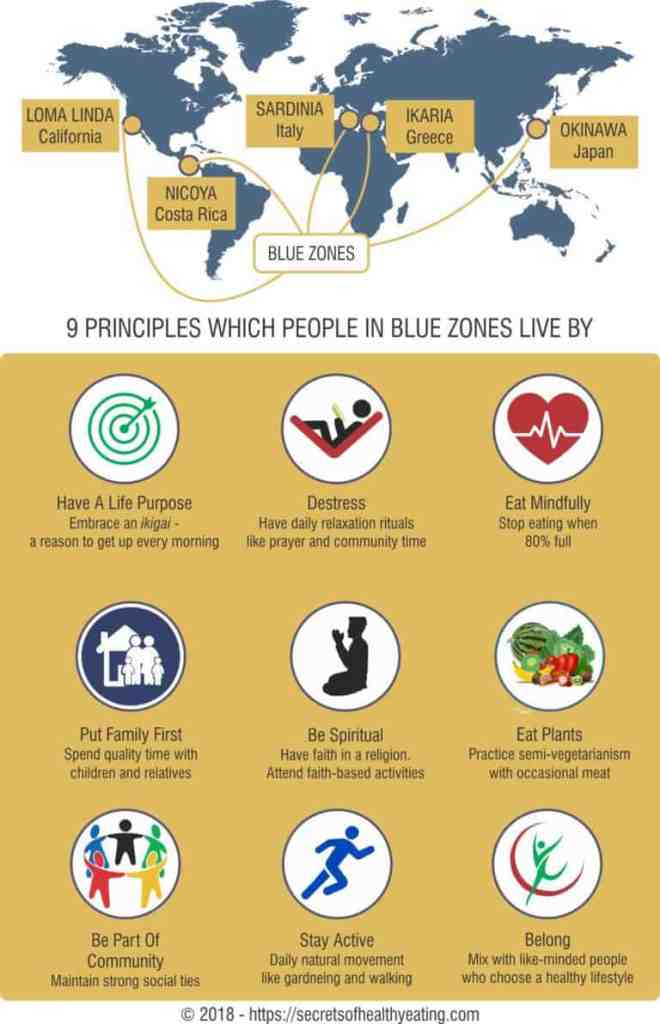
In his book, the Blue Zones, 9 Lessons for Living Longer, Dan Buettner and his team from the National Institute of Health set out to visit 5 regions on our globe that had a long record of longevity. From those lessons, a balanced diet became paramount in life extension. Here is what Robert Kane, MD, director of the Center on Aging at the University of Minnesota in Minneapolis said:

“One of the goals to a healthy lifestyle is moderation in all things. The best diet is basically one of moderation. You hear about all these people that live on legumes and plant foods and that’s probably okay, but I don’t think it’s necessary… as far as meat, it’s a question of eating meat a couple of times a week or are you eating it every day for two meals a day (typical of the Standard American Diet).  Are you eating processed meats that are filled with fat? Or are you eating good cuts of fairly lean meat?”

In Okinawa (one of the Blue Zones) “while centenarian Okinawans do eat some pork, it is traditional to only eat it in small amounts and for special occasions.

Reference: The Blue Zones: 9 Lessons for Living Longer from the people who’ve lived the longest. Dan Buettner, 2012.

Obesity: Deeply in need of an attitude change?

The obesity epidemic rages on with no end in sight. Unfortunately, as we focus more on weight control and body size, more people are affected by being the victims of fat shaming. Even health professionals are often guilty by not addressing the weight problem with their patients – patients become ashamed due to the lack of help they experience from their physicians or the professionals themselves may be victims of the epidemic. They may be crying out for help for weight loss advice and interpret the silence as a shameful topic. This can result in more cases of body dissatisfaction, more dieting attempts like yo-yo dieting and/or avoidance of reporting eating disorder symptoms such as bulimia.

“The lack of education about good nutrition, health-positive behaviors and attitudes, and human physiology; lack of exercise; and lack of a sense of responsibility and forethought about health all contribute to the epidemic.” (Susan Yager. The Hundred Year Diet: America’s voracious appetite for losing weight.)

There is an alternative approach – Health at Every Size (HAES). This concept focuses more on healthy weights rather than how much a person weighs. A study in 2011 called the Succeed Foundation conducted a Body Image Survey that aimed to improve body image and prevent eating disorders. The survey revealed the following:

  • “30 percent of women say would trade at least one year of their life to achieve their ideal weight and shape.
  • 46% of the women say have been ridiculed or bullied because of their appearance.”

In contrast let’s look at the French attitude on dieting and eating in general. There is no fat shaming there (from what I hear).

Savor the flavor. The French sit down to three leisurely meals each day. Even their fast-food meals are lengthy compared to the typical American’s. A study in Psychological Science found that Parisians who dined at McDonald’s spent an average of 22 minutes eating, while Philadelphian McDonald’s-goers were in and out in just 14 minutes. Our culture reinforces speed-eating, just as it encourages rushing through everything else. The problem is that faster eating leads to eating more. It takes an average of 15 minutes for your brain to get the message that your stomach is full, which means that eating slowly makes it more likely you’ll stop at a point where you’re “satisfied” as opposed to “stuffed.” are lengthy compared to the typical American’s. A study in Psychological Science found that Parisians who dined at McDonald’s spent an average of 22 minutes eating, while Philadelphian McDonald’s-goers were in and out in just 14 minutes. Our culture reinforces speed-eating, just as it encourages rushing through everything else. The problem is that faster eating leads to eating more. It takes an average of 15 minutes for your brain to get the message that your stomach is full, which means that eating slowly makes it more likely you’ll stop at a point where you’re “satisfied” as opposed to “stuffed.”

“ HAES approach briefly states: 

  • Accepting and respecting the natural diversity of body sizes and shapes.
  • Eating in a flexible manner that values pleasure and honors internal cues of hunger and satiety.
  • Finding the joy in moving one’s body and becoming more physically active.
  • Reference: https://haescommunity.com/pledge/

Citation

Evelyn Tribole, M.S.,R.D, Elyse Resch, M.S., F.A.D.A., C.E.D.R.D.

Intuitive Eating: A Revolutionary Program That Works.

FYI: What does certified organic actually mean?

Organic Foods– From the USDA

Organically grown and produced foods can be labeled four ways:

“100% Organic” if they contain entirely organic produced ingredients.

“Organic” if they contain at least 93% organic ingredients.

“Made with organic ingredients” if they contain at least 70% organic ingredients.

“Some Organic ingredients” if the products contain less than 70% organic ingredients.

What does any label that says “organic” mean? What are the criteria for organic certification?

USDA rules for qualifying as organic. 

Plants:

Must be grown in soils not treated with synthetic fertilizers, pesticides, and herbicides for at least three years

Cannot be fertilized with sewer sludge

Cannot be treated with radiation

Cannot be grown from genetically modified seeds or contain genetic modified ingredients

Animals:

 Cannot be raised in “factory-like” confinement conditions

Cannot be given antibiotics or hormones to prevent disease or promote growth.

Must be given feed products that are 100% organic.

Or you can make your own sign - not recommended.
Or you can make your own sign – not recommended

OBESITY AND COVID?

“It was the 1980’s. The average weight of Americans increased by fifteen to 20 pounds between 1980 and 2000. Clothing sizes grew bigger to accommodate bigger people: waistbands became elastic. How did this happen? The following article discusses the health implications of the “other epidemic” – that resulted by the time COVID struck an obese population in 2020.

CLICK HERE

Marion Nestle in Let’s Ask Marion: What you need to know about politics of Food, Nutrition and Health. 2020..