Diet and Inflammation

By Sally J. Feltner, MS, PhD

A lot of recent attention has been paid to the role of lifestyle in many chronic diseases (lately referred to as underlying causes of mortality in the Covid-19 viral pandemic).  Deaths due to this virus have been strongly associated with age, obesity, high blood pressure and diabetes to name a few. Many people with the viral infection have reported to have had at least one or two of these chronic conditions. Obesity alone has been known to be associated with low-grade inflammation.  

Recently, we have changed our ideas about diet and heart disease.  Many doctors still think the high fat, high cholesterol diet of the last decade was to blame.  However, this is a simplified view that dismisses the research that now supports the possibility that heart disease is mediated by other biological events other than cholesterol, including oxidative stress (free radicals), insulin sensitivity, endothelial dysfunction and blood clotting mechanisms and most importantly low-grade inflammation.

(FYI – endothelium is the tissue which forms a single layer of cells lining various organs and cavities of the body, especially the blood vessels, heart, and lymphatic vessels.)

We should be aware that inflammation is a double-edged sword. Inflammation in the body is necessary to protect us from infections and cancer and when appropriate from diseases. In its acute state as when you cut your finger, its reactions are self-limiting and resolve rapidly; the process is meant to heal and repair tissue damage.  However, when inflammation is inappropriate it can get out of hand and contribute to disease especially chronic diseases. That is when inflammation can become your enemy.  We call this low-grade inflammation. In this type, the inflammatory response needs be controlled or managed or at least short lived. Should it continue, persisting cytokines of the immune system can produce excessive damage, leading to a number of diseases.

(FYI cytokines are small protein chemical messengers used by immune defensive cells that affect other cells and the immune response to an infectious agent.

It is thought that accumulating degrees of oxidative stress, and low-grade inflammation can result in what is now commonly called the “cytokine storm.” Septic shock can result from a cytokine abundance, leading to death.

Recently, it is thought that positive dietary choices you can make can help to reduce low grade inflammation and prevent this process. Your inflammatory biomarker status can be measured by a simple blood test. The most used is one called high sensitivity C-Reactive protein (hsCRP).

The goal of this blog post is to guide us to the right anti-inflammatory foods to reduce our risk of illness. Consistently, pick the wrong ones, and you could accelerate the inflammatory disease process.

Foods that allegedly promote inflammation – try to limit these foods as much as possible:

Refined carbohydrates such as white bread and pastries; choose whole grains instead.

French fries and other fried foods

Soda and other sugar-sweetened beverages

Red meat (burgers, steaks) and processed meat (hog dogs, sausage)

Margarine, shortening, lard (high levels of trans fatty acids)

Foods that allegedly reduce inflammation –   include in the diet as much as possible

Tomatoes rich in lycopene and carotenoids – healthy phytochemicals

Olive oil – rich in monounsaturated fat and phytochemicals

Green leafy vegetables such as spinach, kale, collard and other greens – a randomized German study showed that 8 servings of fruits and vegetables for 4 weeks in men had lower levels of hsCRP.

Nuts like almonds and walnuts – high in monounsaturated fats

Fatty fish like salmon, mackerel, tuna, sardines – Diets rich in omega-3 fatty acids reduced inflammation.

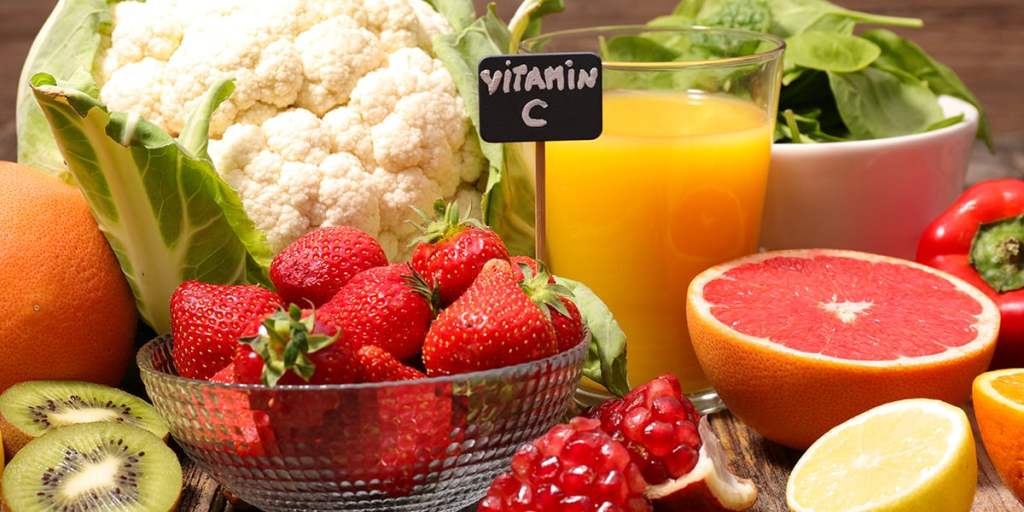
Fruits such as strawberries, blueberries, cherries, and oranges

Fiber consumption was associated with less inflammation in seven studies, using hsCRP as a biomarker.

Bottom Line:

No one food can be the “magic bullet” for good health. A Mediterranean diet is a good example of a diet that reduces low-grade inflammation and at the same time appears to reduce the risk of heart disease. It is a diet pattern that has been studied extensively and without a doubt scores high in the healthy column.
Alert: Meat, coffee and chocolate?

Nearly 50% of food influencers are actively seeking more plant-based options. Major retailers are asking their suppliers for more plant-based products for their shelves and restaurants that have added vegan options to menus have seen an increase in business while the competition has struggled. These are all signs that point to plant-based being more than just a trend. It is a blossoming cultural movement and we are still in the earliest stages!”

Reference: Plant-based World Newsletter, 2021

CLICK HERE.

Has anyone noticed the emphasis on plant-based food in the food magazines lately? Interesting!! Just saying – stay tuned. SJF (my opinion).

A Lesson from the “Limeys”

A Brief History of Vitamin C

The vitamin C deficiency disease, scurvy,  was the scourge of armies, navies, and explorers throughout history. It particularly affected those sailors on long voyages who had little access to fresh fruits and vegetables (high in Vitamin C). Despite some recommendations of transporting these foods on their voyages, 10,000 British sailors died of scurvy in 1594. A Scottish physician, James Lind serving in the British Navy had an idea and developed a “crude”experiment on an upcoming long voyage.

To set the stage for this experiment, a historic account is given us from a 16th century surgeon who describes the scourges of scurvy:

It rotted all my gums, which gave out a black and putrid blood. My thighs and lower legs were black and gangrenous, and I was forced to use my knife each day to cut into the flesh in order to release this black and foul blood. I also used my knife on my gums, which were livid and growing over my teeth…

William Faloon. Misconeptions about Vitamin C, Life Extension: The Science of a Healthier Life, November 2021

James Lind did his clinical trial aboard HMS Salisbury in 1847.  He took 6 groups of two sailors with scurvy and gave the following treatments:

Group 1: A quart of hard cider a day

Group 2: 25 drops of vitriol (sulphuric acid)

Group 3: Six spoonful’s of vinegar

Group 4: Half a pint of seawater

Group 5: Two oranges and a lemon (ran out of fruit in a week) but recovered from scurvy in six days. There were no signs of scurvy prevention in any of the other groups (to my knowledge).

Group 6: Spice blend

(The cure of scurvy should have been obvious but Lind wanted to fit his observation into the prevailing ideas of the model of humors as the basic model of disease (described above).   This idea of humors had been around since the Ancient Greeks and taught that the body contains four fluids (the humors – phlegm, blood, yellow bile, black bile) associated with certain personalities (phlegmatics, sanguine, choleric and melancholy). Lind thought that scurvy was associated with the build up of black bile due to blocked sweat ducts and downplayed the power of his discovery to a paragraph buried in the middle of a long book. Despite this the British Navy progressively eliminated  scurvy over the remainder of the century using lime juice and were called “limeys”. The rest  of the world did not heed the lesson of  the limeys. In the mid—19th century, during the U.S. Civil War, scurvy was rampant.  Science moves very slowly. (SJF)

“In the original timeline (OTL, our world), germ theory wasn’t even on the radar until 1847, when Ignaz Semmelweis made the connection between puerperal fever and doctor hygiene (or lack thereof). This was the first strong proof for germs being the cause of disease, but his theory was ridiculed by the scientific community. It took over ( at least) 30 years before the germ theory was accepted as fact.” Wikipedia.

Looking at a Blue Zone: Costa Rica

The Blue Zone diet is based on populations in the world that live the longest. The study was pioneered by Dan Buettner, a National Geographic best-selling author. After many years of interviews with centenarians, he and his team discovered five zones of the world that exhibited the most longevity: Okinawa, Japan, Sardina, Italy, Ikaria, Greece, Loma Linda, California and Nicoya, Costa Rico. They called these areas “Blue Zones” and here is just one of their stories:

CLICK HERE.

Your Brain on Processed Food

https://eladsi.medium.com/ultra-processed-food-is-messing-with-your-brain-2da37c98a09e

A real-life experiment -that speaks for itself. There is a great need for studies that attempt to measure the actual effects of the Standard American Diet (SAD) on the body. This study is not a clinical trial, and the results are somewhat subjective. It was only one subject but maybe more effective to everyone than obtaining food records from study participants relying on memory. The best way would be to measure metabolic parameters like LDL or HDL cholesterol, liver enzymes, hormones, blood pressure, e.g. This study did rely on brain scans and some lab work.

Many studies are often funded by the industry and the results are only for Big Food promotion of their own products. “Without understanding who paid for the research, it’s hard for anyone to know what dietary advice to follow.” Source: Marion Nestle, Unsavory Truth: How Food Companies Skew the Science of What We Eat, 2018.

Neverthless, I find the above study interesting and worth a read. (my opinion, SJF)

Do you remember what you ate last Tuesday?

CLICK HERE.

Unhappy Meals

Food: there is plenty around and we all love to eat. But unfortunately, a lot of it we are consuming today is really not food. We eat it in the car after purchasing it at our favorite fast food establishment, or in front of the TV and often alone. We grab a bag of some kind of “healthy -sounding” food on the package and we call it lunch and sometimes even dinner.

Michael Pollan wrote a book a few years ago (2008) called In Defense of Food: An Eater’s Manifesto. I highly recommend that every American who eats read this book. He refers to our current food choices as “not real” and describes them as “edible food like substances”. Many come with false health claims promising the same benefits as their “real” counterparts, but as Pollan says: “30 years of nutrition advice has only made us sicker and fatter. In the so-called American or Western diet, these foods are nowhere near being nutritious with their long lists of ingredients that are impossible to pronounce.

“Pollan’s manifesto shows us “how we can relearn which foods are healthy and to develop simple ways to return eating to its proper context -out of the car and back to the table.”

A portion of Pollan’s book In Defense of Food, first appeared in the New York Times Magazine under the title, “Unhappy Meals” and can be found online. The article requires a subscription but does allow a limited number of free articles.

If you want a book full of “straight talk” about our food culture, the book is a must read. The book should be available at reduced used book prices. Check Amazon.

Staying Healthy the French Way

To safeguard one’s health at the cost of too strict a diet is a tiresome illness indeed.

Francois Duc de La Rochefoucauld (1613 – 1680’s) French writer and moralist

“In a study of four countries, food psychologist Paul Rozin at the University of Pennsylvania found the following:

The French are the most food-pleasure oriented and the least health-oriented. In contrast, Americans had the worst of both worlds: They had the greatest worry over their health and had greater dissatisfaction with what they ate. Americans scored the highest on worrying about the fattening effects of food.

Interestingly, Rozin concluded that the negative impact of worry and stress over healthy eating may have a more profound effect on health than the actual food consumed. Indeed, it is widely accepted that stress triggers a biological chemical assault in our bodies, which is harmful to our health.”

“More information about the French reveals that the US currently has twice the incidence of overweight people compared to France for both adults and children. The French have a longer life expectancy, take less medication, and have a markedly lower rate of heart disease. Yet the French eat a diet that appears to be less healthy this is popularly known as the French paradox. Notably, France has the highest per capita dairy fat consumption up of any industrial nation (think cream, butter and cheese.)

Just as important, the French have fewer eating disorders and don’t engage in dieting as much as Americans. It has been speculated that wine consumption and eating smaller portions of food may explain the French paradox, we believe it could be the relationship that the French have with food the French have a more positive attitude toward eating dash it is viewed as one of life’s pleasures not his poison. Food is something to be revered.

 Even when the French eat fast food, they take more time to eat compared to the eating pace of Americans.

“According to the calorie control council, 43% of dieters in the United states say that they that snacking too much is the reason they haven’t sustained their desired weight. Unlike north Americans who typically consume as many as three snacks a day, the French don’t usually partake in this between meal ritual this non habit may contribute to the comparatively higher proportion of slimmer figures found in France.

“French children may have an after-school snack which can be a croissant with a hidden dollop of dark chocolate to tide them over until dinner, but regular snacking just isn’t part of the adult French culture. Their substantial lunch often usurps the need for an afternoon snack. Snacks are a novelty in France where in America snacks appear to be a necessity.”

Sources: Steven Jonas, M.D., Sandra Gordon. 30 Secrets of the World’s Healthiest Cuisines, 2000.

Evelyn Tribole, M.S.,R.D.and ElseResch, M.S.,R.D.,F.A.D.A., C.E.D. R.D.

Intuitive Eating: A Revolutionary Program That Works, 2012.

NOTE: Although this data may seem a bit dated, the numbers reflect how the French ate a few decades ago. Unfortunately, many of the younger French population has been influenced by a more current French Diet that has incorporated many characteristics of the Standard American Diet leading to a loss of some of original health benefits. For example:

  • Obesity rates in France are among the lowest in the OECD , but have been increasing steadily. About 1 in 10 people is obese in France, and almost 40% are overweight (including obese). OECD projections indicate that overweight rates will increase by a further 10% within ten years.

Reference:

Obesity and the Economics of Prevention: Fit not Fat – France

Health Indicators in France Versus the United States. Tribole and ElseResch

 IndicatorUnited StatesFrance
Obesity and Overweight (adults)62%32%
Life Expectancy78  years81 years
Medication costs per capita$897$607
Heart Disease death rates per 100,000 -Women7921
Heart Disease death rates – Men14554
Incidence of Dieting26%16%
Use of snacks and beverages76%48%
Use of low-fat products68%39%
Duration of minutes eating at McDonald’s14 minutes22 minutes

Source: OECD Health Data, 2009-2010; Calorie Control Council National Surveys 1992. Rozin, 2003.

New Research: Diet may affect risk of severity of COVID-19

Date: September 8, 2021

Source: Massachusetts General Hospital

Summary: A healthy-plant-based diet was linked to a lower risk of getting COVID-19, and among people with COVID-19 , a lower risk of experiencing severe symptoms.

“….our study suggests that individuals can also potentially reduce their risk of getting COVID-19 or having poor outcomes by paying attention to their diet” says co-senior author Andrew Chan, MD, MPH, a gastroenterologist and chief of the Clinical and Translational Epidemiology Unit at Massachusetts General Hospital.

CLICK HERE. 

Healthy Swaps

Want to make your recipes more nutritious – why not? Becoming an expert with food substitutions can save you calories or avoid undesirable ingredients (less healthy) and add better choices for a healthier diet.

For example: Most people do not get enough fiber. “In most recipes you can replace a high percentage of white flour with whole grain or bean flour. Another idea would be to grind up oats and nuts to use in place of some of the white flour. This works well in quick breads, muffins, and pancake/waffle batter.” Delicious, Nutritious, Pam Stuppy, MS, RD, LD in the Asheville Citizen Times, Tuesday, September 21, 2021.

CLICK HERE.

What Did We Learn from Covid?

Have we learned anything from Covid-19? I would hope so and that some good will come of it – although it’s hard to believe that it will happen at times as we are still fighting its many battles.

In his latest book, Metabolical, Dr. Robert H. Lustig, MD, MSL, author of the best selling book, ‘Fat Chance, “insists that if we do not change the way we eat, we will continue to court chronic disease, bankrupt our health care, and threaten the planet. But there is hope.” Metabolical: The Lure and Lies of Processed Food, Nutrition, and Modern Medicine. 2021.

The Bottom Line: If (and it’s a big IF), we change our ways even in small steps that reflect a healthier body, we may be able to better withstand the consequences of an infectious disease like COVID. Make sense???

CLICK HERE. https://www.aarp.org/health/healthy-living/info-2020/nutrition-after-age-50.html?intcmp=AE-FOD-DN-BB-ART