“It was the 1980’s. The average weight of Americans increased by fifteen to 20 pounds between 1980 and 2000. Clothing sizes grew bigger to accommodate bigger people: waistbands became elastic. How did this happen? The following article discusses the health implications of the “other epidemic” – that resulted by the time COVID struck an obese population in 2020.
“So many people are confused about food; the eating plan of the moment changes and suddenly there are new rules to follow. But with plant-based eating, there is [more] freedom to eat what you want.” —Cassidy Gundersen, holistic nutritionist.
This article is quite long but worth reading to reflect on what type of food culture may be waiting for the future. Interesting topic!!
“Most people try to do the best they can, given their circumstances,” Nestle adds, but there are lots of factors that shape our eating habits: “Education is an issue, but so is relentless food marketing.”
Does food affect our minds and bodies? According to a new self-imposed study, it sure does. The article is interesting and makes one wonder how different behaviors would be if more people were aware of this and changed their diets to a healthier approach.
In America today, even when food is abundant, fast-paced lifestyle and poor food choices made available through modern technology can contribute to a diet that contains too much of some nutrients and too little of others.
The statistics are alarming. In 1960, one person in a hundred had diabetes, today it’s one in eight. It is now predicted that by 2050, one person in three will suffer from the condition if the trend continues. Even worse, 70 percent of people who get diabetes will develop heart disease.
So much of the time we hear about our Standard American Diet or SAD Diet. And a sad diet it is. I have borrowed a description of a fictional victim of our food culture from an interesting book titled: The End of Alzheimer”s: the First Program to Prevent and Reverse Cognitive Decline by Dale E Bredesen, MD, MSL, Professor and Founding President, Buck Institute, Professor, UCLA. Quotes cited by Dr. Bredesen.
Our fictional consumer begins early in the morning as “ he grabs a typical America breakfast – a sweet roll or doughnut, a large glass of orange juice, a big slug of low-fat milk in his coffee.” His high refined carbohydrate diet sets him up immediately toward insulin resistance with an increased stress level brought about by the “stress hormone, cortisol.
Cortisol is a steroid hormone that is produced by the adrenal glands, which sit on top of each kidney. When released into the bloodstream, cortisol can act on many different parts of the body and can help:
the body respond to stress or danger
increase the body’s metabolism of glucose
control blood pressure
reduce inflammation
Cortisol is also needed for the fight or flight response, which is a healthy, natural response to perceived threats. The amount of cortisol produced is highly regulated by your body to ensure the balance is correct.
In order to prevent gastric reflux, he takes his daily proton pump supplement after he swallows his statin his doctor prescribes to prevent a rise in his cholesterol and heart disease risk.
“When his blood sugar crashes around mid-day, he visits the office pantry, where a colleague has left a thoughtful box of chocolate chip muffins.” But he realizes that it’s almost time for lunch, so he proudly skips the muffins, declaring he’s starting to eat “healthy.”
“There’s no time for much of anything except a sandwich from the deli on refined white bread and spongy saline-injected turkey with hormones and full of antibiotics or how about a mercury-laden tuna sandwich. Either way he can wash it all down with a diet soda.”
“Sugar from the candy machine has helped to fuel his “exercise today ( and every day) – who has time to get up and move around frequently? Finally, it’s time to hit the freeway, so he grabs a bag of Doritos to snack on to get him home. “He is soon heading home while screaming at the idiot riding his brakes in front of us, keeping his blood pressure up and making his blood-brain barrier as porous as the colander we plan to use for tonight’s gluten -filled pasta dinner.” Bredesen, M.D 2017.
“On second thought, he thinks he prefers something from the drive-thru. Start with large fries loaded with trans fats, oxidized reheated oils with little vitamin E .” Add the burger from corn and not grass-fed beef, high in omega-6 fats and low in omega-3s, slathered in high-fructose corn syrup ketchup, on a bun packed with gluten.” Now he has had a perfect inflammatory day. No wonder so many of the conditions that increase our risk of chronic disease (cardio, brain health, diabetes, and obesity) are becoming so prevalent even at younger ages). Are they the result of what we eat and exercise.” Research is beginning to say “yes”. Bredesen, 2017.
Dr. Robert H. Lustig MD writes in his current book, Metabolical: The Lure and the Lies of Processed Food, Nutrition, and Modern Medicine, “Are Americans healthier? Do we enjoy better healthcare? Do we live longer? The answer is an unequivocal and emphatic no. Americans have the worst health outcomes of any country in the Organization for Economic Cooperation and Development (OECD); the thirty – seven richest countries. Americans have the worst rating of the developed countries of the world: #1 in diabetes, #2 in Alzheimer’s disease, #5 in cancer, and #6 in cardiovascular disease (CVD)”
“No doubt, of all the OECD countries, the U.S. is the sickest along with expensive drugs and expensive doctors. Lustig says: “America spends the most but gets the least.”
“The holy grail of Modern Medicine is you can’t fix healthcare until you fix health; and you can’t fix health until you fix the food. Everyone is talking about healthcare, few people are talking about health, and nobody is talking about food.” Lustig, Metabolical, 2021., p 25.
Isn’t that a novel idea? “What can you do today? You have the vote in the form of not only a ballot box but with your fork.”
The next wave of the food revolution is long overdue. We have to make food a voting issue” Robert H. Lustig, MD 2021, page 375. Food, Facts and Fads agrees. (SJF)
It’s Pumpkin time!! By the 1800’s, pumpkin pie was a necessity at most Thanksgiving celebrations. If you have ever heard the famous poem about Thanksgiving by Lydia Maria Child in 1842:
“Over the river and through the wood, to grandfather’s house we go” ends with “Hurrah for the pumpkin pie”.
Northeastern Indians used squash more than other Indians in early America and did favor pumpkin the most. They baked them by putting them in the embers of a fire, then moistened them with maple syrup or honey or some type of fat and then turned it into a soup. In 1705, the town of Colchester, Connecticut postponed the holiday for a week due to a molasses shortage to make the pies.
The first known American cookbook was American Cookery by Amelia Simmons in 1796 that included a recipe for “pompkin” pie. Later in 1805, a recipe for pumpkin pie appeared in the Art of Cookery Made Plain and Simple by Mrs. Hannah Glasse.
“Take the pumpkin and peel the rind off, then stew it till is quite soft and put thereto one pint of pumpkin, one pint of milk, one glass of malaga wine one glass of rose-water, if you like, seven eggs, half a pound of fresh butter, one small nutmeg, and sugar and salt to your taste:”
In 1929, Libby’s meat-canning industry made pumpkin preparation easier by offering its famous canned pumpkin with its traditional recipe on the label. My mother would have appreciated the Libby’s version. I remember her talking about making her first pumpkin pie and neglecting to strain the stringy pulp from the pumpkin itself. Next time you open a can, please think kindly of her and in her day, there may not have been canned pumpkin. Her first pie was probably around 1924.
The only problem is the sugar content found in pies – as for my pumpkin disaster, I forgot the sugar one year and it was awful. But who is counting sugar grams on Thanksgiving? For the few that are – 1 serving has 253 cals, 3 grams of fiber, 32 grams of carbohydrate and about 19.7 grams of sugar (5 tsp). Pumpkin is also loaded with vitamin A in the form of beta-carotene (a powerful antioxidant). Happy Holiday!!!
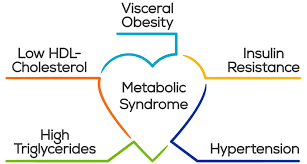
A collection of health risks, including high blood pressure, altered blood lipids, high blood glucose and a large waist circumference, that increases the chance of developing heart disease, stroke, and diabetes. The condition is also called insulin resistance.




 FOOD, FACTS and FADS