In the News

In the News: Updates

Mediterranean Diet Can Lower Risk Of Sudden Death by 25-26%.

Either a Mediterranean Diet (vegetables, fruits, legumes, cereals, and fish) or U.S. Southern Diet pattern (added fats, fried food, eggs, organ meats, processed meats, and sugar-sweetened beverages) was given to 21, 069 men and women 45 years and older and compared for adherence to each diet using diet scores.

The results showed that 402 sudden cardiac deaths occurred during an average of 9.8 years of follow-up. People whose Mediterranean scores placed them among the top third of participants had a 25-26% lower risk of sudden cardiac deaths than subjects whose scores were among the lowest third. People whose Southern dietary pattern scores was among the top quarter of participants had a 46% higher risk of sudden cardiac death than those among the lowest quarter.

J. Am Heart Association 2021 July 6;10:e019158.

At a Glance

  • A study found that a diet high in added fats, fried foods, processed meats, and sugary drinks was associated with a greater risk of sudden cardiac death, while a Mediterranean diet was associated with a lower risk.
  • The findings provide evidence that adopting a healthier diet may decrease the risk of sudden cardiac death.

What Do We Know About Diet and Prevention of Alzheimer’s Disease?

Changes in the brain can occur years before the first symptoms of Alzheimer’s disease occur.  It also should be noted that the focus of diet factors on diseases should be the prevention or delay of the disease in question and not a “cure.” Unlike other risk factors for Alzheimer’s that we cannot change such as age and genetics, the current thought is that with lifestyle choices such as diet, exercise and cognitive training, many chronic diseases can possibly be avoided adding health to our lifespans.

How could our diet affect our brains?

“It’s possible that certain diet patterns affects biological mechanisms, such as oxidative stress and inflammation that underlie many chronic diseases. Or perhaps diet works indirectly by affecting other disease risks, such as diabetes, obesity, and heart disease. A new avenue of research focuses on the relationship between gut microbes in the digestive system and aging-related processes that lead to Alzheimer’s.”

Reference: National Institute on Aging

Several diet patterns show some promise. One is the Mediterranean Diet or its variations, the MIND diet (Mediterranean-DASH Intervention for Neurodegenerative Delay) or the DASH diet. (Dietary Approaches to Stop Hypertension), a risk factor for Alzheimer’s disease. All are based on leafy green vegetables and colorful vegetables, berries, fish, poultry, beans, nuts, wine (1 glass a day), whole grains and preferably olive oil.

“For example, two recent studies suggest that, as part of the Mediterranean diet, eating fish may be the strongest factor influencing higher cognitive function and slower cognitive decline. In contrast, the typical Western diet increases cardiovascular disease risk, possibly contributing to faster brain aging.”

The problem with the research is that most is called observational (subject to recall from the participants). To rectify this, several organizations like National Institute of Aging are conducting clinical trials (considered the gold standard of medical proof to shed more light on any cause and effect.

What About Supplements?

Clinical trials in humans have had mixed results, some with positive effects, others with negative results. These types of studies often attempt to measure the effects of omega-3 fatty acids in the diet. However, at this time: despite early findings of possible benefits for brain health, no vitamin or supplement has been proven to work in people. Overall, evidence is weak as many studies were too small or too short to be conclusive.

Note: A deficiency in vitamin B12 or folate due to aging or strictly following a vegan diet may cause memory problems that are reversible with proper treatment. Please consult with your physician. If you are over 65, it may be prudent to have your Vitamin B12 status checked. Sometimes, the deficiency may be due to problems with absorption of the vitamin, not the intake. Also, healthy humans are equipped with a number of adaptive mechanisms that partially protect the body from poor health due to fluctuations in dietary intake. Vitamin B12 can be stored within body tissues for later use. Meats and seafood are good sources

Omega-3, Omega 6 and Breast Cancer

Note: I personally conducted animal research using high or low omega-3 or omega-6 diets on breast cancer incidence. The study was repeated two times and no significant differences in breast cancer incidence, tumor weight or immune system parameters were found between the study groups. This content is partly provided by the NIH National Institute on Aging (NIA) scientists and other experts review this content, so it is accurate and up to date. This content was reviewed November 27, 2019.

Influence of Type and Level of Dietary Polyunsaturated Fat on Incidence of Chemically-induced Mammary Tumors and on Selected Immune Responses in Rats. Sally J. Feltner, June, 1988.

The Mind-Gut Connection

The Mind-Gut Connection teaches us how to make simple changes to diet and lifestyle to achieve balance that can help us achieve optimal health.

The gut is a large storage area for specialized cells and signaling systems. It functions as a large sensory organ that when spread out fills the size of a basketball court. Its job is to communicate between the gut and the brain using hormones, bidirectional nerve communication channels, and inflammatory signaling molecules. When this communication channel is not functioning or suffers from dysbiosis, major health problems can occur in both the mind and body that can result in food sensitivities, allergies, digestive disorders, obesity, depression and anxiety.

“The gut and the brain are closely linked through pathways that include nerves, hormones, and inflammatory molecules. Rich sensory information generated in the gut reaches the brain (gut sensations) and the brain sends signals back to the gut to adjust its function (gut reactions). The close interactions of these pathways play a critical role in the generation of emotions and in optimal gut function. The two are intricately linked.”

Emeran Mayer, MD. The Mind-Gut Connection, How the Hidden Conversation Within Our Bodies Impacts ouor Mood, Our Choices, and Our Overall Healh. 2016. This book is highly recommended.

What is Nutrigenomics? What is epigenetics?

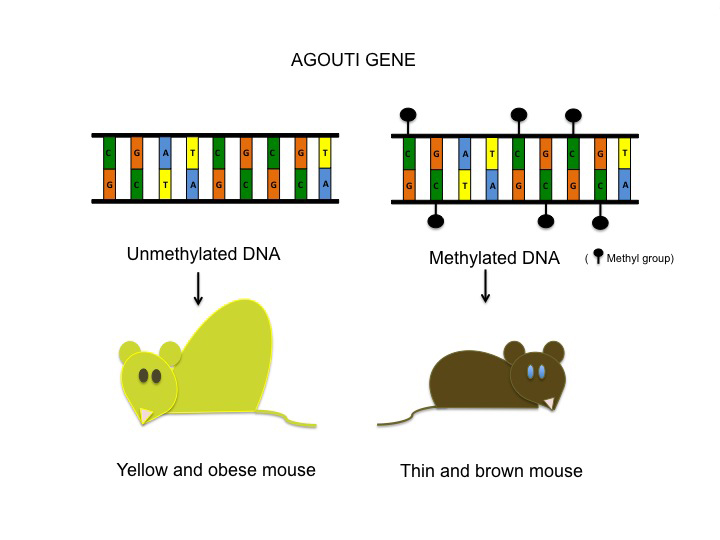
Nutrigenomics is the scientific study of the way specific genes and bioactive food components interact. It provides a basis for understanding how the health consequences of eating behaviors may vary across individuals. This information is key to a personalized approach to nutrition in a clinical environment. Because epigenetic events such as methylation can be changed, they offer another explanation for how environmental factors such as diet, can influence biological processes and phenotypes. Search Food,FactsandFads for more on Epigenetics.

CLICK HERE.

What is epigenetics? “Think of this way: Epigenetics is the on-off switch to the dimmer on your dining-room chandelier. The gene is the lightbulb, the epigene is the

light switch. If the lightbulb is defunct or the switch is frozen in the “off” position, the dimmer function is useless. Likewise, epigenes control the effect to which the gene turns on.

Altered nutrition also appears to be the primary driver of altered epigenetics. For example, the vitamin, folate is a necessary cofactor for the enzymes called DNA methyltransferases, which add a methyl group to DNA to alter whether genes are being activated. Folic acid is so important to normal fetal development in order to prevent the occurrence of spina bifida that the FDA and mandated to be added to store – bought bread.

Other nutrients at work here – vitamin B12, B complex vitamins, retinoic acid (vitamin A). circumin, sulforaphane, and polyphenols and others that moderate this process.”

Source: Lustig, Robert, H. MD. Metabolical, 2021, Page 120.

The New Food Culture? Plant-based Diets

“So many people are confused about food; the eating plan of the moment changes and suddenly there are new rules to follow. But with plant-based eating, there is [more] freedom to eat what you want.” —Cassidy Gundersen, holistic nutritionist.

This article is quite long but worth reading to reflect on what type of food culture may be waiting for the future. Interesting topic!!

CLICK HERE.

A Day in the Life of the Standard American Diet (SAD)

Our Health is Declining.

The statistics are alarming. In 1960, one person in a hundred had diabetes, today it’s one in eight. It is now predicted that by 2050, one person in three will suffer from the condition if the trend continues. Even worse, 70 percent of people who get diabetes will develop heart disease.

So much of the time we hear about our Standard American Diet or SAD Diet. And a sad diet it is. I have borrowed a description of a fictional victim of our food culture from an interesting book titled: The End of Alzheimer”s: the First Program to Prevent and Reverse Cognitive Decline by Dale E Bredesen, MD, MSL, Professor and Founding President, Buck Institute, Professor, UCLA. Quotes cited by Dr. Bredesen.

 Our fictional consumer begins early in the morning as “ he grabs a typical America breakfast – a sweet roll or doughnut, a large glass of orange juice, a big slug of low-fat  milk in his coffee.” His high refined carbohydrate diet sets him up immediately toward insulin resistance with an increased stress level brought about by the “stress hormone, cortisol.

Cortisol is a steroid hormone that is produced by the adrenal glands, which sit on top of each kidney. When released into the bloodstream, cortisol can act on many different parts of the body and can help:

  • the body respond to stress or danger
  • increase the body’s metabolism of glucose
  • control blood pressure
  • reduce inflammation

Cortisol is also needed for the fight or flight response, which is a healthy, natural response to perceived threats. The amount of cortisol produced is highly regulated by your body to ensure the balance is correct.

In order to prevent gastric reflux, he takes his daily proton pump supplement after he swallows his statin his doctor prescribes to prevent a rise in his  cholesterol and heart disease risk.

“When his blood sugar crashes around mid-day, he visits the office pantry, where a colleague has left a thoughtful box of chocolate chip muffins.” But he realizes that it’s almost time for lunch, so he proudly skips the muffins, declaring he’s starting to eat “healthy.”

“There’s no time for much of anything except a sandwich from the deli on refined white bread and spongy saline-injected turkey with hormones and full of antibiotics or how about a mercury-laden tuna sandwich. Either way he can wash it all down with a diet soda.”

“Sugar from the candy machine has helped to fuel his  “exercise today ( and every day) – who has time to get up and move around frequently? Finally, it’s time to hit the freeway, so he grabs a bag of Doritos to snack on to get him home. “He is soon heading home while screaming at the idiot riding his brakes in front of us, keeping his blood pressure up and making his blood-brain barrier as porous as the colander we plan to use for tonight’s gluten -filled pasta dinner.” Bredesen, M.D 2017.

“On second thought, he thinks he prefers something from the drive-thru. Start with large fries loaded with trans fats, oxidized reheated oils with little vitamin E .” Add the burger from corn and not grass-fed beef, high in omega-6 fats and low in omega-3s, slathered in high-fructose corn syrup ketchup, on a bun packed with gluten.” Now he has had a perfect inflammatory day. No wonder so many of the conditions that increase our risk of chronic disease (cardio, brain health, diabetes, and obesity) are becoming so prevalent even at younger ages). Are they the result of what we eat and exercise.” Research is beginning to say “yes”. Bredesen, 2017.

Dr. Robert H. Lustig MD writes in his current book, Metabolical: The Lure and the Lies of Processed Food, Nutrition, and Modern Medicine, “Are Americans healthier? Do we enjoy better healthcare? Do we live longer? The answer is an unequivocal and emphatic no. Americans have the worst health outcomes of any country in the Organization for Economic Cooperation and Development (OECD); the thirty – seven richest countries.  Americans have the worst rating of the developed countries of the world: #1 in diabetes, #2 in Alzheimer’s disease, #5 in cancer, and #6 in cardiovascular disease (CVD)”

“No doubt, of all the OECD countries, the U.S. is the sickest along with expensive drugs and expensive doctors. Lustig says: “America spends the most but gets the least.”

“The holy grail of Modern Medicine is you can’t fix healthcare until you fix health; and you can’t fix health until you fix the food. Everyone is talking about healthcare, few people are talking about health, and nobody is talking about food.” Lustig, Metabolical, 2021., p 25.   

Isn’t that a novel idea?  “What can you do today? You have the vote in the form of not only a ballot box but with your fork.”

The next wave of the food revolution is long overdue. We have to make food a voting issue” Robert H. Lustig, MD 2021, page 375. Food, Facts and Fads agrees. (SJF)

THE STANDARD AMERICAN DIET (SAD)

What is the Metabolic Syndrome?

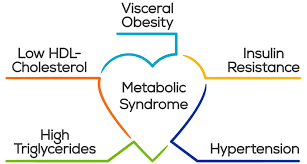
Metabolic Syndrome

A collection of health risks, including high blood pressure, altered blood lipids, high blood glucose and a large waist circumference, that increases the chance of developing heart disease, stroke, and diabetes. The condition is also called insulin resistance.

CLICK HERE.

Smolin, Grosvenor. Nutrition, Science and Applications, Third Edition

How Diet Affects the Brain

“Poor diets lead to a host of medical issues: obesity, cardiovascular disease, diabetes, and certain cancers. But diet also influences the brain and can increase the risk for mental disorders and neurodegenerative diseases. Researchers are uncovering the details of how the foods we consume affect our cravings, our moods, and even our memories.”

We hear so much these days about omega 3-rich fish oils as well as omega-6 rich oils. Today we consume ten to 20 times more omega-6 fats and have dramatically reduced our intake of omega-3 fats. This goes against our hunter-gatherer evolutionary history of a 1:1 ratio. Recent research indicates that people who regularly consumed omega-3-rich oils such as flax seed, olive and walnut oils were 60 percent less likely to develop dementia than those who did not regularly consume such oils. Y. Zhang, et al. “Intakes of Fish and Polyunsaturated Fatty Acids and Milk-to-Severe Cognitive Impairment Risks…. American Journal of Clinical Nutrition 71, no.2 (2016):330-40.

CLICK HERE.

Alert: Meat, coffee and chocolate?

Nearly 50% of food influencers are actively seeking more plant-based options. Major retailers are asking their suppliers for more plant-based products for their shelves and restaurants that have added vegan options to menus have seen an increase in business while the competition has struggled. These are all signs that point to plant-based being more than just a trend. It is a blossoming cultural movement and we are still in the earliest stages!”

Reference: Plant-based World Newsletter, 2021

CLICK HERE.

Has anyone noticed the emphasis on plant-based food in the food magazines lately? Interesting!! Just saying – stay tuned. SJF (my opinion).

Your Brain on Processed Food

https://eladsi.medium.com/ultra-processed-food-is-messing-with-your-brain-2da37c98a09e

A real-life experiment -that speaks for itself. There is a great need for studies that attempt to measure the actual effects of the Standard American Diet (SAD) on the body. This study is not a clinical trial, and the results are somewhat subjective. It was only one subject but maybe more effective to everyone than obtaining food records from study participants relying on memory. The best way would be to measure metabolic parameters like LDL or HDL cholesterol, liver enzymes, hormones, blood pressure, e.g. This study did rely on brain scans and some lab work.

Many studies are often funded by the industry and the results are only for Big Food promotion of their own products. “Without understanding who paid for the research, it’s hard for anyone to know what dietary advice to follow.” Source: Marion Nestle, Unsavory Truth: How Food Companies Skew the Science of What We Eat, 2018.

Neverthless, I find the above study interesting and worth a read. (my opinion, SJF)

Do you remember what you ate last Tuesday?

CLICK HERE.

The Blue Zones: A Short Course

Dan Beuttner has gathered some of the top scientists in the world to study these remarkable places called the Blue Zones  where many people live to 100 years or more. They not only live long, healthy lives, but serve as teachers to the rest of us on a series of “food rituals’ ‘ that along with other healthy lifestyle factors contribute to this scenario. 

In our evolutionary history, we as hunter-gatherers lived at a time where we sought calorie-loaded foods in order to simply survive. Needless, to say, many of us don’t have this added stress to simply feed our families. On the other hand, many of us in the world today are living in a time when obesity is now called a pandemic and we are faced with the possibility of dying from abundance and not scarcity. We refer to our food choices as part of a conglomerate of industries referred to as big Ag, big Food the Standard American Diet or more realistically as the SAD diet. 

What Can We Learn and How? 

Centenarians in the Blue Zones follow daily rituals around food and meals that help them stay on course – practicing them in your own lives are the keys to longevity. Here is a brief guideline. 

 MAKE BREAKFAST THE LARGEST MEAL OF THE DAY. 

“Include complex carbohydrates, healthy fats and plant or animal protein. 

Expand your choices beyond cereal or eggs. In certain Blue Zone countries, some include beans, tortillas, miso soup.”

COOK YOUR MEALS AT HOME. 

Plan and prep ingredients for dinner in the morning. Use your slow cooker often, so dinner cooks all day and is ready for you late afternoon. 

HARI HACHI BU 

Plan to stop eating when you’re close to 80% full, based on a 2500 year old Confucian adage and practiced by the Okinawans. “ Try saying it before a meal by simply pausing for a moment of silence or saying thanks is a way to recognize the appreciation of your food. 

FAST FASTS 

“Recent evidence shows that fasting, even for a day, can recalibrate insulin release, temporarily lower blood pressure and lower cholesterol. Research has suggested that calorie restriction may slow aging. 

Try eating only two meals a day; a big late-morning brunch and a second meal around 5 p.m.” 

  EAT WITH FAMILY AND FRIENDS 

“Most people in the Blue Zones often have three-hour dinner affairs with a succession of many small courses.  They never eat standing up or while driving. Avoid reading, watching TV or using your phone.”

Celebrate and Enjoy Food 

“We eat about 1100 meals a year. If we celebrate a couple of times a week and enjoy what we love to eat, that still leaves almost 1,000 meals a year to eat the Blue Zones way.”

 Pick one day of the week and make it your celebratory day to splurge on a meal with your favorite foods.” 

 Diets that use restrictions, limitations or deprivations never work.  

 Source: 

Dan Buettner. The Blue Zones Solution: Eating and Living Like the World’s Healthiest People, 2015,