All about omega-3 fats and the Brain : Source: Medical News Today

The following study presents an interesting connection between omega-3 fats, brain function and cognitive decline.

Erica Watts, Oct 7, 2022

Fact Checked by Alexandra Sanfins, PhD.

  • Omega-3 fatty acids have many benefits and play a role in heart health and cognitive functioning.
  • A new study demonstrates that there may be a connection between consuming omega-3 and an increase in brain functioning for people in midlife.
  • The cross-sectional study analyzed the omega-3 blood levels of people in their midlife and assessed their MRIs and thinking skills to see whether there was a difference in people with higher or lower omega-3 levels.

“According to the new study published in Neurology, the medical journal of the American Academy of Neurology, people who have higher omega-3 levels in their middle ages may have an edge over people who take in lower levels of omega-3.

The study was led by researchers at the University of Texas Health at San Antonio, TX, who were concerned about the lack of research on how omega-3 can impact people in their midlife.

Omega-3: Things to know

According to the National Institutes of Health (NIH)Trusted Source, omega-3 fatty acids “are a group of polyunsaturated fatty acids that are important for a number of functions in the body.” In addition to playing a role in heart health and cognitive functioning, omega-3 fatty acids are also part of the cell membraneTrusted Source and affect cell functioning.

As Professor Stuart Phillips noted during a Live Long and Master Aging podcast, “Some fats that we ingest, and particularly the omega-3 or long-chain polyunsaturated fatty acids are actually what we refer to as essential fats. We need to have them in our diet because we don’t have the ability to make them ourselves.”

Prof. Phillips is the director of the Physical Activity Center of Excellence at McMaster University in Ontario, Canada.

The NIHTrusted Source lists three types of omega-3 fatty acids: alpha-linolenic acid (ALA), eicosapentaenoic acid (EPA), and docosahexaenoic acid (DHA)..

While people can take omega-3 supplements, it is also in a number of foods. Some good sources of omega-3 include fish (such as salmon and tuna) nuts and seeds (chia seeds and flax seeds).

Studying Omega-3’s effect

The researchers studied 2,183 men and women with an average age of 46. They excluded people who had dementia or a history of having a stroke from their participant pool.

Omega-3s are present in the brain, particularly in the hippocampus. The hippocampus plays a role in learning and memory, and a reduction in the volume can point to possible dementiaTrusted Source.

The participants also underwent a neurological assessment. The tests measured the participants’ abstract thinking, processing speed, executive function, and delayed episodic memory.

Omega-3 and brain health 

Using blood samples, the researchers analyzed the fatty acid composition (omega-3’s) of each participant. The participants also consented to having their brains scanned using MRI technology. The researchers were also interested in the volumes of gray and white matter.

The researchers placed approximately 25% of the participants in the low group where the participants had omega-3 fatty acids blood levels falling under 4%. This group had an average count of 3.4%.

The rest of the participants were put into the high group; their average omega-3 level was 5.2%.

Comparing the blood samples, MRI results, and neurological assessments, the study authors determined that higher levels of omega-3 fatty acids correlate to a higher hippocampus volume and better abstract reasoning.

Researchers observed that the people in the high group also had higher gray matter volumes, better reading scores, and slightly higher logical reasoning scores.

In contrast, the people in the low group tended to be less likely to have a college degree and more likely to be smokers and have diabetes compared to the higher group.

“This exploratory study suggests that higher [omega-3 blood levels] are associated with larger hippocampal volumes and better performance in abstract reasoning, even in cognitively healthy middle-aged adults from the community, suggesting a possible role in improving cognitive resilience,” write the authors.

“These results need to be confirmed with additional research, but it’s exciting that omega-3 levels could play a role in improving cognitive resilience, even in middle-aged people,” said study author Prof. Claudia L. Satizabal, Ph.D.

Prof. Satizabal is an assistant professor at the Department of Population Health Sciences at UT Health San Antonio, TX.

Diet and brain health 

The authors noted that other researchers have conducted similar studies in older populations but believe that it is necessary to see what impacts omega-3 supplements have on people in their midlife because they start experiencing cognitive decline.

According to the authors, “One of the main challenges for some of these studies may be that dietary interventions are carried out perhaps too late for significant improvements in symptomatic participants, as cognitive changes may be well established over the previous 15 to 20 years.”

“Improving our diet is one way to promote our brain health. If people could improve their cognitive resilience and potentially ward off dementia with some simple changes to their diet, that could have a large impact on public health.”

– Prof. Satizabal

Dr. Natalie King, a neuroscientist and founder of Florae Beauty, not involved in the study, spoke with Medical News Today and discussed the importance of diets on brain health.

“Everything we do and consume affects our brain, and there have been numerous studies, including the one shared, that highlight the effects of food and drink on overall brain health and function,” said Dr. King.

“Omega-3 fatty acids, in particular, have been found to be beneficial when it comes to improving mental function as well as supporting an overall wellness plan when considering disease pathologies like mood disorders and others affecting learning and memory,” Dr. King continued.”

Until we know how much omega-3 fats are needed to improve optimal brain function in the meantime, adequate EPA and DHA dosage is often obtained by consuming 8 ounces of fatty fish weekly. Deep fried fish have been found to be a poorer source of EPA and DHA than baked or broiled fish. The top sources include: salmon, farmed and wild, anchovies, herring, whitefish, mackerel, and sardines. Tuna (light) canned in oil only provides lower amounts.

Judith E. Brown, Nutrition Now, 7th Edition.

Supplements are plentiful on the market; however, consult your physician for dosage and any conflicts with other medications such as blood thinners. It is important to remember that dietary supplements are produced and marketed with few regulations as to safety, quality or efficacy.

Do Seniors Need a Daily Boost?

Daily multivitamins help keep seniors’ brains sharp, may ward off dementia

September 14, 2022

by John Anderer

WINSTON-SALEM, N.C. — Could the secret to a sharp brain in old age be as simple as taking a daily multivitamin? New joint research from Wake Forest University and Brigham and Women’s Hospital suggests as much. Scientists conclude that multivitamins can improve thinking skills in older individuals and help stave off cognitive decline.

Study authors note that the findings are still preliminary and require further confirmation before any concrete health recommendations can be made. Nonetheless, establishing a new, affordable such as taking a daily multivitamin way to fight cognitive decline and dementia in old age could potentially benefit millions. Today, over 6.5 million Americans are living with Alzheimer’s disease (the most common form of dementia), and a staggering one in three senior citizens pass away with Alzheimer’s or another form of dementia.

“There’s an urgent need for safe and affordable interventions to protect cognition against decline in older adults,” says Dr. Laura D. Baker, a professor of gerontology and geriatric medicine at Wake Forest University School of Medicine and co-principal investigator of the trial, in a statement. Baker worked alongside Dr. Mark Espeland, also a professor of gerontology and geriatric medicine at Wake Forest.

Multivitamins versus cocoa extract

This project, named the COcoa Supplement and Multivitamin Outcomes Study for the Mind (COSMOS-Mind), was funded by the National Institute on Aging of the National Institutes of Health. Participants include 21,442 men and women living all over the United States.

Researchers investigated if taking either a daily cocoa extract supplement or a daily multivitamin-mineral supplement would influence health outcomes and risk profiles in relation to heart disease, stroke, cancer, and other health issues. Why cocoa extract? Prof. Baker explains cocoa extract is rich in compounds known as flavanolsPrior research suggests flavanols may have a positive influence on cognition. Moreover, deficiencies in several essential micronutrients and minerals among older adults may increase the risk for cognitive decline and dementia.

The research team tested the daily intake of a placebo versus a cocoa extract supplement, as well as the daily intake of a multivitamin-mineral versus a placebo. Over 2,200 participants, all aged 65 years and older, were tracked for a period of three years. Additionally, subjects completed memory and cognition tests over the phone at baseline and on an annual basis.

‘First evidence of cognitive benefit in large longer-term study’

“Our study showed that although cocoa extract did not affect cognition, daily multivitamin-mineral supplementation resulted in statistically significant cognitive improvement,” Prof. Baker explains. “This is the first evidence of cognitive benefit in a large longer-term study of multivitamin supplementation in older adults.”

Study authors estimate taking a multivitamin for three years roughly translates to a “60 percent slowing of cognitive decline (about 1.8 years)”. They also note the benefits were especially pronounced among those with significant cardiovascular disease.

“It’s too early to recommend daily multivitamin supplementation to prevent cognitive decline,” Baker concludes. “While these preliminary findings are promising, additional research is needed in a larger and more diverse group of people. Also, we still have work to do to better understand why the multivitamin might benefit cognition in older adults.”

The study is published in Alzheimer’s & Dementia: The Journal of the Alzheimer’s Association.

The Salem Witch Trials: Revisited

October brings thoughts of fall, Halloween, and witches and the witch trials that occurred in 1692 in a fragile Puritan Community, Salem Village, Massachusetts. The theory most often cited was that ergot poisoning from rye bread was to blame – on further evaluation, history “experts” disqualify this theory and others are brought to mind. The following article by Nik DeCosta Klipa explains:

The theory that may explain what was tormenting the afflicted in Salem’s witch trials

Omega 3 Fats and Cognition

In 2016 a large study confirmed findings from 21 cohort studies (181,000 people)that supported that fish consumption was protective against the risk of dementia and Alzheimer’s disease. It was published in the American Journal of Clinical Nutrition and recommended “fishery products” for a lower risk of cognitive impairment.

Source: Y. Zhang, et al., “Intakes of Fish and Polyunsaturated Fatty Acids and Mild-to-Severe Cognitive Impairment Risks: A Dose-Response Meta-Analysis of 21 Cohort Studies, American Journal of Clinical Nutrition 103, no 2 (2016):330-40.

CLICK HERE.

Ultra- Processed Foods and Cognition

In a study of 105, 159 adults over a period of 5 years, it was found that “even a 10% increase in the consumption of ultra-processed foods was associated with a higher risk of heart disease and stroke, the development of some cancers, and type 2 diabetes. In addition, some increased exposure to harmful chemicals from food packages was reported.” Source: Medical News Today, 2019.

CLICK HERE.

What Caused the Obesity Epidemic?

What caused the obesity epidemic? What are the consequences? 

HOUSTON – When it comes to the childhood obesity epidemic, the prevailing narrative is that overweight children — and their parents — lack the collective will power to put down the potato chips, pick up a jump rope and work at losing weight.

“… doctors specializing in obesity and weight loss say certain scientific and societal factors — including genetics, the rise of processed foods that include soybean oil and national overconsumption of sugar-sweetened beverages — are more likely to blame for childhood obesity than lazy kids or indulgent parents.

“Obesity is a disorder which, like venereal disease, is blamed upon the patient,” says obesity researcher Dr. George Bray, the opening lecturer at the first annual U.S. News Combating Childhood Obesity summit, held at Texas Children’s Hospital.

It’s the blame issue that stands in the way of progress in fighting obesity as a disease, when larger factors that can’t be controlled may be at the heart of the issue, says Bray, professor emeritus of the Pennington Biomedical Research Center at Louisiana State University, who has been studying obesity among children for several decades.

“Obesity isn’t a disease of willpower — it’s a biological problem,” he says. “Genes load the gun, and environment pulls the trigger.”

In a panel analyzing why weight is difficult to lose, Kevin Hall, an obesity and diabetes researcher, says a new study he co-produced points the finger at highly processed food.

His study, published Thursday in the medical journal Cell Metabolism, showed that patients who ate minimally-processed food with easily identifiable ingredients ate less, and lost weight without trying, when compared with a group that had highly-processed, prepackaged, ready-to-eat food, even though the diets prepared for both groups had the same number of calories and macronutrients.

“What we saw, on average, was that people consumed 500 calories more” on the processed-food diet than those who ate food that didn’t go through a factory, says Hall, chief of the integrated physiology section at the National Institute of Diabetes and Digestive and Kidney Diseases. “The ones on the unprocessed diet — they spontaneously lost weight.” It has been proposed that eating a diet for health (whole, “real” foods) can cause weight loss and maintenance of the loss compared to those who primary goal was simply weight loss alone.

In opening the summit, presenters tackled a question doctors and obesity researchers have grappled with a difficult question in fighting the disease: How did we get here?

Bray says studies trace the epidemic back to the ’60s and ’70s, when U.S consumption of soybean oil, most likely through processed-food production, spiked and, around the same time, Americans, including children, started to weigh more. Fats found in soybean oil, he says, were found in breast milk samples from the era.

“The fats in our food supply may well be playing a part in our inability to regulate” food intake, Bray says. However, this is just the tip of the iceburg. Likewise food portions have been shown graphically to double the size of those served beginning inn the 1970’s.

Meanwhile, the consumption of sugary soft drinks like Coke and Pepsi increased from just a few gallons per person per year to more than triple that by the end of the century. The rise of soft drink consumption between 1950 and 2000, he says, paralleled the increase in obesity; pregnant women who drank sugary soft drinks, Bray added, ended up passing the sugar on to their unborn children.

“It’s kind of maternal abuse of the fetus” where “the child has no control, only the mother has,” he says.

The U.S. News Combating Obesity summit convened top medical experts, hospital executives, pediatricians, community health leaders, advocates to exchange ideas and share practices that are helping to combat the nationwide obesity epidemic.

The percentage of children and adolescents affected by obesity “has more than tripled since the 1970s,” according to the Centers for Disease Control and Prevention. According to data from 2015-2016, the CDC reports, “nearly 1 in 5 school age children and young people (6 to 19 years) in the United States has obesity.”

Experts say the epidemic has long-term ramifications: Obese children who carry the weight can exhibit heart disease and type 2 diabetes as well as mobility and self-esteem issues. Unfortunately in order to reverse this trend, cultural changes will be required at many levels, to say the least. Can it happen?

U.S. News and World Report

Joseph P. Williams, Senior Editor

May 16, 2109

Scientific, Societal Factors to Blame for the Obesity Epidemic

Weight Gain? The Brain and Gut Disconnect?

“A good predictor of who will gain weight is who says they plan to lose some. Last year, 108 million Americans went on diets. Long-term studies of dieters find that they’re more likely to end up gaining weight in the next two to fifteen years than people who don’t diet.” Sandra Aamodt, Ph.D. Why Diets Make Us Fat. 2016.

Rebound’ Weight Gain: A Disconnect Between Brain and Gut May Be a Factor

Healthline. By Christopher Curley, September 15, 2022

Fact Checked: Jennifer Chesak

“Experts say weight gain after weight loss is common among adults and children.

  • Researchers say a new study indicates that a disconnect between the brain and the gut may be a reason that people tend to gain weight after initially losing weight.
  • They say in many people who have lost weight their gut will tell them they’re full after eating a meal, but their brain will try to tell them they’re still hungry.
  • Experts say the disconnect may be due to the body’s attempt to store fat during weight loss.

Nearly halfTrusted Source of adults in the United States try to lose weight each year, but many will not keep that weight off long-term.

In fact, only about one in five people who are overweight can maintain weight loss for a year or longer, research showsTrusted Source.

While there are many competing theories about why that is, ranging from psychological to biological, a new study of children with obesity suggests the answer might lie in a disconnect between gut hormones and brain signals.

Researchers at Seattle Children’s Hospital in Washington put children with obesity on a 24-week weight loss program, monitoring their brain activity and gut hormone responses before and after the trial.

At the end of the weight loss program, the researchers reported that after eating a meal the children’s gut showed normal levels of regulatory hormones indicating that they were full and satisfied.

Their brains, however, showed levels of activity signaling that they were still hungry.

The researchers also found that the more weight a child lost, the more likely they were to react to food cues after completing a meal —their brain essentially telling them they were still hungry while their gut was telling them the reverse.

“Our results imply that during weight loss intervention, your body acts to conserve fat through maintaining hunger responses in the brain and that this needs to be addressed,” Dr. Christian Roth, a lead study author and professor at Seattle Children’s Hospital, said in a press release.

Roth said larger, more extensive studies would be required to confirm these findings.

“It would also be useful to investigate how long the disconnect between central and local appetite regulation persists after maintained weight loss, to guide intervention plans,” he added.

“This is a very interesting study and I think that a lot of these findings are applicable to adults as well,” said Dr. Mir Ali, a bariatric surgeon and medical director of MemorialCare Surgical Weight Loss Center at Orange Coast Medical Center in California.

“I see in my patients that they feel the need to eat, even if their stomach feels full,” Ali told Healthline. “There is certainly a strong psychological component to eating behavior that surgery and medications cannot always address completely.”

“I feel this research is on the right track and we need to find a way to satisfy the brain as well as the gut,” he added. “This will require extensive research in both children and adults to find the right solution.”

Beyond hormones

One of the more notable aspects of the study is how it complicates our understanding of how hormones affect appetite and rebound weight gain.

Previous studies have shown that an increase in appetite hormones after weight loss might be a key driver of these rebound gains.

The results of this study paint a more nuanced picture where even if gut hormones are normal, the brain is out of sync.

“The study underscores our understanding of obesity and weight homeostasis as a chronic disease of the brain,” said Dr. Mert Erogul, an attending physician at Maimonides Medical Center in New York.

“The regulation of appetite is enormously complex and layered,” he told Healthline. “From the digestive tract, there are hormones that signal fullness, such as leptin, CCK, and peptide YY. There are also hormones that signal hunger, such as ghrelin. These are in constant interplay with seemingly subjective feelings that come from the brain such as food preference and liking as well as motivation to eat.”

Ultimately, experts say this may require a holistic approach to weight loss and maintaining a healthy weight.

“Rebound weight gain is very common and happens for many physiological, behavioral, and psychological reasons,” said Dr, Steve Patching, a medical director of bariatric surgery at Sutter Hospital in Sacramento, California.

“Believe it or not, weight loss actually sets up your body for weight gain,” he told Healthline. “This is because the body always strives for symbiosis. This is why we often still feel hungry or even starving after we eat a ‘normally satiating’ meal. It is also why correct weight loss should be done slower than we often want.”

Weight loss needs to occur in the context of a durable commitment to changes in diet and lifestyle,” he said. “Even then, obesity medicine specialists recognize that people who are overweight often need lifelong therapy with medications to maintain weight loss.”

Are Herbal Supplements Safe?

Are Herbal Supplements Helpful or Harmful?

 Herbal supplements are popular as “natural” remedies. Are they useful for health or are they a health risk? Today, about 1 in 6 Americans use herbs to treat everything from coughs, constipation, and poison ivy, and arthritis. They are widely available and affordable and don’t require a prescription. Advocates claim this makes people more in control of their own health care; opponents fear that self-dosing may lead to toxic interactions and prevent people from seeking traditional care and proven treatments offered by conventional practitioners.

Some herbs are derived from plants in the first place. For example, aspirin comes from willow bark and digitalis from foxglove flowers to treat certain heart problems.  The active ingredients may come from all the parts of the plant, so the amounts contained are affected by harvesting and processing and vary with the batch. This practice may further upset the balance of the ingredients and the doses are often affected. Herbs are made from unpurified plant material, and there is also a risk of contamination with pesticides, microbes, metals and other unnamed toxins.  

Another concern is that some herbs interact with prescription drugs and cause additional problems. For example, gingko biloba and garlic can interfere with blood clotting and should not be used with blood-thinners before surgery. St. John’s wort may interact with anesthetics and antidepressants.

 Herbs are medicines and like taking other medications has some advantages and risks. Whether they are helpful or harmful depends on the supplement, the dose, and the consumer. Education is essential in the pros and cons of any medication as well as herbal remedies. The best advice is “buyer beware”.  This advice applies to all dietary supplements due to a lack of much-needed regulations on safety and effectiveness.

Immunity and Metabolic Syndrome

The Metabolic Syndrome and the Immune System

The metabolic syndrome is not a disease alone but is a cluster of related disorders that include:

  • Excess fat around the waist (>40 inches or more (men)and >35 inches or more for women).
  • Blood pressure of 130 /85 mmHg or higher, or being on blood pressure medication
  • Triglycerides above 150 mg/dl
  • Fasting blood glucose greater than 100 mg/dl, or being on glucose-lowering medications
  • High density lipoprotein (HDL) less than 40 mg/dl for men or less than 50 mg/dl for women.

A person can be considered to have metabolic syndrome if they have at least three of these conditions.

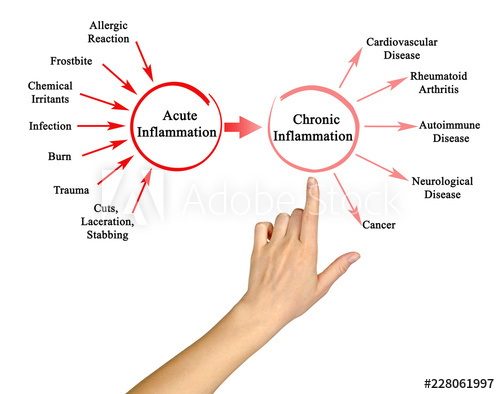
An important function of the immune system is to provide healthy, short-term (acute) inflammation that is normal in most situations. This is necessary for the immune function to battle injuries made from disease-causing bacteria, and viruses (antigens). What results is redness, swelling, heat, sometimes fever, and pain.

However, one of the unhealthiest conditions is paradoxically chronic inflammation that ultimately can result in complications, and even a greater risk of death. The greater overreaction of immune system components is often referred to a “cytokine storm”. Cytokines are small proteins that are used to convey information. I call them “messengers”. They play a crucial role in the development of diseases and how your cells are able to respond. In a sense, cytokines are the language of your immune system.

Chronic inflammation can come from the accumulation of belly fat as well as low levels of HDL cholesterol, which normally can have anti-inflammatory properties. (Scott Butsch, MD, Director of Obesity Medicine at the Bariatric and Metabolic Institute at Cleveland Clinic.)

“Those with metabolic syndrome typically have low levels of HDL and thus, have less of its beneficial properties to fight infection”, says Dr. Butsch. This can also occur with aging, poor diet, and other unhealthy practices.

How Does Obesity affect the Immune System?

“One of the many reasons obesity is such an unhealthy thing is that fat tissue produces loads of inflammatory cytokines. So even on a good day, an obese person has a lot of inflammatory biomarkers (signals) in their system. When infected by the coronavirus, for example, their starting point is already worse, they are already more inflamed than they should be. In any case, the coronavirus pandemic was a stark reminder of why your immune system is so incredibly important and why we should all benefit from understanding it better.” (Immune: A Journey into the Mysterious System that Keeps you Alive. Philipp Dettner. 2021).

According to Dr. Butsch, “obesity impairs the response of immune cells that “remember past viruses so you can attack that virus effectively the second time you may encounter it. This is why obesity is linked to an increased failure of vaccines”

How Can You Improve Immunity with Metabolic Syndrome?

“Losing weight is the key to improve your metabolic syndrome biomarkers as well as your immune system responses. When you lose some extra weight, your fat cells shrink and cause an improvement in systemic chronic inflammation,” Dr. Butsch says. Increasing your physical activity may also help. In this case, this is one time that eating less and moving more is primary to decreased inflammation, metabolic syndrome biomarkers and its complications from infectious diseases.