
Often wonder why some foods have a gender-specific connotation, e.g., “Real men don’t eat quiche” as well as the title of the following article. This and many other foodisms can be found in a book by Paul Freedman titled “American Cuisine: And How It Got That Way.” Enjoy!!!!
Category: Food and Culture
Ultra Processed Foods to Avoid

Ultra-processed foods are often thought as the nemesis of healthy eating. However, they are so ubiquitous in our food supply, it is so difficult to avoid them in the supermarket (they are displayed for our convenience and capture our cravings for sugar, salt, and fat as well.) The problem: If we tried to avoid all processed foods, there would be few choices in the supermarket. The best way for starters is to try to cut down on snack foods — they are highly processed and offer few nutrients.
Living Longer
The Blue Zones: A Book Review

By Sally J. Feltner, MS, Ph.D.
Ponce de Leon began his quest for the fountain of youth in 1531 and humans have been seeking magical solutions for keeping us younger and living our later years in relatively good health.
In 2009 with the backing of the University of Minnesota School of Public Health, AARP and the National Geographic, Dan Buettner established the Blue Zone Project and authored The Blue Zones: 9 Lessons for Living Longer from the people who lived the longest, He interviewed those who were either centenarians or those in their later years and began to investigate what factors may have contributed to five regions of longevity hotspots in the world that included:
- Sardinia in Italy with the highest concentration of centenarian men.
- Seventh Day Adventists in Loma Linda, California, where some residents live ten more healthy years than the average American.
- The Nicoya Peninsula in Costa Rica that has the world’s lowest rates of middle-age mortality and the second highest concentration of male centenarians.
- Ikaria, Greece that has one of the world’s lowest rates of middle age mortality and lowest rates of dementia. Only 20 percent of people over 80 showed any signs of dementia, whereas a similar study of long-lived people near Athens showed an almost 50 percent rate of dementia- a rate similar to that for older Americans.”
- Okinawa, Japan home to the world’s longest living women.
Remarkably, all the regions had common characteristics that included family and purpose, community and spirituality, stress reduction and physical activity. Mr. Buettner later published The Blue Zones Solution and coauthored with Ed Diener, The Blue Zones of Happiness.
One major practice was that all their diets, though not vegan, were predominantly based on plants. Meat and other animal products are either the exception or used as a condiment. Additionally, Okinawans, practice a philosophy called hara-hachi bu regarding food; they only eat until they are 80% full.
In the Costa Rican Zone, everyone feels like they have a plan “de vida” or life plan. Even at ages above 60 and 70, inhabitants don’t stop living. They keep themselves busy; they love to work. It provides them a “reason to waking up in the morning” called ikigai. There is no word for “retirement” in Okinawa.
The book introduces some very interesting longevity “superstars.”
- Marge Jones, at 100 years old from Loma Linda begins every day with a mile walk, a stationary bicycle ride, and some weight lifting. “I’m for anything that has to do with health”, she says
- Kamada Nakazitam, 102 years old from Okinawa says “To be healthy enough to embrace my great – great grandchild is bliss.”
- Ellsworh Wareham, age 91 from Loma Linda, assists during heart surgery procedures, something he does about two or three times a week
- Abuela Panchita, 100 year old Costa Rican woman whose 80 year old son, Tommy bicycles to see her every day, spends every day cooking, splitting logs and using a machine to clear brush from her garden.
- The notion of moai in Okinawa stands for “a social support network. Says 77 year old Klazuko Mann, “each member knows that her friends count on her as much as she counts on her friends.”
- From the author: “I once pressed a 101-year-old woman in Ikaria, Greece to tell why she thought people there lived so long. ‘We just forget to die,’ she said with a shrug. None of them went on a diet, joined a gym, or took supplements. They didn’t pursue longevity – it simply ensued”
The final chapters in the first book boil it all down into nine lessons and a cultural distillation of the worlds’ best practices in longevity a and how they can be applied to the American food culture.
However, there is a downside that is currently happening. From the Author: “Sardinians today have already taken on the trappings of modern life. For example, junk foods are replacing whole-grain breads and fresh vegetables traditionally consumed here. Young people are fatter, less inclined to follow tradition, and more outwardly focused.”
I’ve enjoyed these books immensely and have often referred to them in various tweets and posts. The first book concludes with a chapter on Your Personal Blue Zone. Other books such as “the Blue]Zones Solution” give us more explicit ways to establish Blue Zones in other areas such as the U.S.
From the back cover of The Blue Zones Solution – “Propagating the Blue Zones would not only prevent a rise in the prevalence of diabetes (and other misfortunes) it would allow us to eliminate more than 80 percent of the burden we have now. That’s revolutionary.” David Katz, M.D., Director of the Yale-Griffin Prevention Research Center
The Blue Zones are lessons in how lifestyles can affect our health and longevity. Prevention of chronic disease as we age is the primary goal. More attention needs to be paid to improve the American diet in order to “add years to your life and life to your years.”
The Pros and Cons of the Paleolithic Diet
The Paleolithic diet has been around for a few years and in my opinion is a pretty good diet, but alas as with every restrictive diet, there are caveats.
The following article comprehensively covers the pros and cons of this eating pattern. It is based on the facts (as we know them) that our ancestors only had access to certain foods and that our genetic development is presumed to have evolved from inclusion and exclusion of these foods into our current dietary pattern. Evidence for this is presumed to be accurate – however, we truly do not know what our Paleo ancestors really ate. Our ancestors lived in diverse environments; therefore, their diets were dependent on the foods found there. There is a great deal of controversy about the possibility that some ate a diverse plant-based diet, e.g. hunting was not so reliable.
Most evidence is based on our contemporary hunter-gatherer societies which exhibit less chronic disease than those populations that follow the current American diet. For example, there are no Hadza adults diagnosed with diabetes in Tanzania, while the Tsimané people in Bolivia have an 80 percent lower rate of atherosclerosis compared to people in the U.S. The Maasai community in Kenya that relies on red meat, blood and milk is also known for little to none cardiovascular diseases.
The Pros and Cons
Our ancestors and modern-day hunter-gatherers ate more animal-based foods, which contain good amounts of high-quality protein, calcium, iron, omega-3 fatty acids and vitamins B12 and K2. Such nutrients are commonly found in seafood, red meat, pastured eggs and liver.
An ancestral diet removes refined sugar, grains and seed oils from one’s daily meals. Avoiding these modern products helps reduce markers of inflammation, leading to improvements in blood pressure, waist circumference and lipid profiles, components of the metabolic syndrome.
One study showed that people who consumed less added sugar, refined grains and processed foods could significantly reduce weight in 12 months. The ancestral diets provide foods that are more satiating, which help people consume fewer calories.
The Paleo diet excludes extremely calorie dense foods (starchy foods) as well as many processed and snack foods.
However the diet eliminates two major food groups (dairy and grains (enriched or whole). This puts at risk adequate vitamin D and calcium levels as well as the other nutrients found within these foods.
The Paleo diet provides some essential nutrients and may appeal to some people that are not interested in a total plant based eating pattern, i.e., dedicated carnivores.
The Pima Indians: A Study of Lifestyle and Obesity
 By Sally J. Feltner, MS, Ph.D
The Pima Indians of Arizona have the highest rates of diabetes and obesity in North America. An estimated 50 percent of Pima adults are obese, and of those, 95% have diabetes type 2.
WHAT HAPPENED?
The story is not new – it more than likely began in the 1500’s when the Spanish explorers made contact with them in the New World. They and most Native tribes of that time were hunter-gatherers. They were lean, active and healthy people.
Pima Indians are believed to be descendants of people who crossed the Bering Strait from Asia to the Americas. Their traditional diet included meals made from the crops they cultivated including corn (maize), kidney beans, sunflower seeds, pumpkins and squash. Small game such as rabbit, was a staple part of their diet together with meat from their livestock such as sheep and goats. Larger game was also available such as deer, elk and bear. As they were in close proximity to rivers, fish, duck and many different types of shellfish were major elements of their diet, which was also supplemented with herbs, acorns and roots. Sadly, as the years went on, the Arizona group met with some unavoidable circumstances that changed their way of life considerably – especially their traditional diets, economics, and well-being.
- In 1859, the Arizona Pimas’ land along the Gila River was taken away by the U.S. government which left them to live on what land was left known as the Gila Reservation.
- In 1866, new settlers began to populate the Pima region and diverted the water from the Gila River for their own use.
- By 1869, the river had dried up and the Arizona Pimas were left with no water and less land to grow their food and crops resulting in an on – and – off – 40-year-old famine. As a result, the government exacerbated the problem again by providing subsidized foods to the tribe consisting of white flour, sugar, lard and canned goods, a far cry from their traditional diets of corn, beans and squash.
The timing of these significant changes in lifestyle and livelihood of the Arizona Pima population coincides with their development of diabetes type 2. At the turn of the nineteenth century, studies recorded only one case on the Gila River Reservation. In 1937, a study documented twenty-one persons with diabetes. By the 1950’s, however, the prevalence had increased ten-fold and a study initiated in 1965 documented in the Arizona Pima Indians the highest prevalence of diabetes ever recorded.
THE PIMA INDIANS IN MEXICO
The Pima Indians who had settled in Mexico resided in the small town of Maycoba. For decades they had been isolated until 1991 when a paved access to the town was constructed. Before that they grew a majority of their own food and still adhered primarily to their traditional diet that was similar to the Arizona tribe. Since they are genetically similar to the Arizona Pima, they present an opportunity to study and compare the two-lifestyle patterns of both tribes (diet and exercise) on their health statistics.
What Has Been Learned from Various Studies of these two Populations?
An Abstract from one study in 1994 that compared the two groups gives us the following details:
OBJECTIVE The Pima Indians of Arizona have the highest reported prevalence of obesity and diabetes type 2 In parallel with abrupt changes in lifestyle and the incidence in Arizona Pimas have increased to epidemic proportions during the past decades. To assess the possible impact of the environment on the prevalence of obesity and diabetes type 2, data were collected on members of a population of Pima ancestry living in a remote mountainous location in northwestern Mexico, with a lifestyle contrasting markedly with that in Arizona.
RESULTS The Mexican Pimas were significantly lighter and shorter with a lower Body Mass Index. They also had a significantly lower plasma total cholesterol level than the Arizona Pimas. Even more startling was that diabetes type 2 was less prevalent with only 2 women (11%) and 1 man (6%) in the Mexican group compared with a prevalence of 37% and 54% in male and female Arizona Pima Indians respectively.
CONCLUSIONS This preliminary investigation shows that obesity, and perhaps type 2 diabetes is less prevalent among people of Pima heritage living a “traditional” lifestyle than among Pimas living in an “affluent” environment. These findings suggest that, despite a similar potential genetic predisposition to these conditions, a traditional lifestyle, characterized by a diet including less animal fat and more complex carbohydrates and by greater energy expenditure in physical labor, may protect against the development of cardiovascular disease risk factors, obesity, and diabetes type 2.
DISCUSSION:
These results indicate that a more traditional lifestyle of the Mexican Pimas protects the group against obesity, diabetes and kidney disease, even though they may have a genetic predisposition for such health problems.
What explains the results of experiences of the Arizona Pima? One popular theory is one thing that drives obesity is a switch to a diet of highly refined carbohydrates that are so common in the Standard American Diet (SAD). When the Pima replaced traditional, unrefined carbohydrates with refined (sugar and flour), they became obese. It may not be the amount of food we eat but what kinds or quality we consume.
The lessons learned here support the theory that lifestyle factors appear to significantly influence the prevalence of obesity and diabetes type 2 in a population predisposed genetically to these conditions. Their story gives us all the opportunity to reassess our own current diets and lifestyle factors that may lead to healthier food environments and ultimately prevent our current situation of the diabesity dilemma.
SOURCES
Stephen Guyenet, Lessons From the Pima Indians. Whole Heath Source: Nutrition and Health Science.
Leslie O Schulz, PhD, Lisa S. Chaudhari, PhD. High-Risk Populations: The Pimas of Arizona and Mexico. Curr Obes Rep. 2015 March 1; 4(1): 92-98
Ravussin, et al. Effects of a Traditional Lifestyle on Obesity in Pima Indians, Diabetes Care 1994 September 17(9): 1067-1074
Dining Through the Decades: 1930’s
Stock Market Woes: The Depression
The Great Depression affected the U.S. more than other industrialized countries. Unemployment affected many including the middle class. Many people lost their homes, ate garbage and food scraps and lived in empty lots or in shacks made of cardboard.
The Great Depression lasted for most of the 1930 decade forcing people to conserve food and come up with innovative ways to limit food waste and making do with less. Popular dishes of the period were inexpensive, one-pot meals such as macaroni and cheese, chili, casseroles of all sorts. To maintain the illusion of an abundance of beef, meat loaf was stretched to its limit with filler. Accompaniments were usually inexpensive vegetables such as carrots, peas and potatoes. Others on the other hand, city dwellers were surviving on cheap meals of hot dogs and hamburgers at automats that had survived since their inception in the 1920s.
More Americans are hungry or ill fed than ever before in the nation’s history. The usual weekly relief check for a family of five in NYC is $6.00 in May, and the average weekly grant in Philadelphia that month is reduced to $4.39. Philadelphia’s relief funds will soon five will soon give out completely, leaving 57,000 families with no means of support.
The average U.S. weekly wage falls to $17, down from $28 in 1929, and 28 percent of households have no employed worker. U.S. employment reaches between 15 and 17 million by year’s end, 34 million Americans have no income of any kind and Americans who do work average little more than $16 per week.
“Saint” Al Capone? and Soup Kitchen

Private soup kitchens and bread lines were available for those in need. Ironically, the gangster Al Capone set up the first soup kitchen to paint himself as the “savior of Chicago”. However, they still sent him to jail for tax evasion. Accepting charity in those days was seen as shameful, so people did not relish standing in line for food and often hid their faces from public view. In 1930, New York has 83 breadlines, Philadelphia 80. Small towns in Arkansas and Oklahoma have food riots with hungry crowds shouting “We want food!” ” We will not let our children starve.”
The Ice Age

The most influential appliance during this decade was most likely the refrigerator. Until its appearance, people kept food from spoiling in streams, cellars, snow and ice. Food poisoning in the warmer months was rampant. The ice box was commonly used since the 1800’s. Harvested and cut ice was hauled home to home on a horse-drawn cart and put in the family’s icehouse where it lasted for months. City dwellers would place a card in the window to order their ice for delivery from the iceman.
By 1920, there were some 200 different refrigerator models on the market, but they were not for everybody, if anyone. The motors were so large that they were kept in a different room and cost about $700. The coolants were a problem that often leaked and killed people. In 1930, Frigidaire began cooling with chlorofluorocarbons and people began to use the small machines with more frequency. Before the refrigerator, “frozen desserts and frozen salads were nonexistent or just for wealthy people” wrote Sylvia Lovegren, author of Fashionable Food: Seven Decades of Food Fads. By 1937, more than 2 million Americans owned refrigerators.
Stuckey’s and Route 66

Williamson George ? Stuckey was born in Georgia in 1909. In 1929 he dropped out of college for lack of funds and in 1930 his grandmother loaned him $35. and with this money, he began buying and selling Georgia pecans. In 1936 he built a roadside stand on a two-lane highway in Eastman, Georgia. There he sold his pecans and later added pralines made by his wife, Ethyl. The first Stuckey’s Pecan Shoppe opened in Eastman, Georgia in 1937, selling pecan and praline products. Later he sold souvenirs, food and beverage service and much later gas pumps. By 1964, there were 160 stores and by 2002 Stuckey’s had two hundred franchises in nineteen states from Pennsylvania to Florida along interstate highways and travel plazas.

“When U.S. Highway 66 was completed in 1938, it became a vital 2,450 mile artery between Chicago and Los Angeles through eight states. It traveled along routes that did not bypass many rural communities in an effort to link them more with larger metropolitan areas. Thus, farmers had a pipeline to ship their food to the big cities. Along the route, it provided gas stations, motels, and quick-stop stores like Stuckeys to take care of the traveler’s needs.
Chain restaurants like Steak and Shake first served its steakburgers, milk shakes and shoestring french fries in 1934 in Normal, Illinois. As more Steak n’ Shake restaurants opened along the route, customers were happy to see a familiar name in an unfamiliar location, much like present day McDonalds along many interstate highways. You could see those Golden Arches somewhere in the distant along many of the unpopulated areas they served.” Bon Appetit, September, 1999.
The Dust Bowl: Agriculture Gone Wrong
The dust storms that terrorized America’s High Plains in the darkest years of the Depression were nothing like ever seen before. Timothy Egan has written a compelling book, The Worst Hard Time: The Untold Story of Those Who Survived the Great American Dust Bowl. The book graphically depicts a gritty piece of forgotten history.
In 1935, Western dust storms in May blow some 300 million tons of Kansas, Texas, Colorado, and Oklahoma topsoil into the Atlantic. At least 30 million acres lose all their topsoil, another 50 million are almost ruined, and 200 million are seriously damaged. The Western dust storms are an aftermath of imprudent plowing during the Great War, when farmers planted virgin lands in wheat to cash in on high grain prices. The dust storms were so severe that they stopped highway traffic, closed schools, and turned day into night. “Oakies” and “Arkies” from the dust bowl begin a trek to California that will take 350,000 farmers west within the next 5 years. The description of one of the worst days named Black Sunday (April 14, 1935) was heartbreaking. “it took an hour for the Black Sunday duster to travel from the border towns to Amarillo. At 7:20 P.M, the biggest city in the Texas Panhandle went dark, and its 42,000 residents choked on the same thick mass that had begun to roll in the Dakotas, clawing the barren plains, charring the sky in five states, producing static electricity to power New York, a fury that has never been duplicated” Source: The Worst Hard Tiime, Timothy Egan.
“The high plains never fully recovered from the Dust Bowl. The land came through the 1930’s deeply scarred and forever changed. After more that sixty-five years, some of the land is still sterile and drifting. The Indians never returned, despite New Deal attempts to buy range land for natives. The Comanche live on a small reservation near Lawton, Oklahoma”
America’s Greatest Treasure U.S. News and World Report
The hamburger’s origin is fraught with controversy as where exactly it evolved; some historians even trace it back to Genghis Kahn’s Mongolian warriors in the 13th century. Most offer more reasonable explanations that relates it to a seasoned ground beef dish popular in Hamburg, Germany in the early 1800’s. Americans like to attribute it to at least four credible creation ideas that involve Connecticut, Wisconsin, Ohio, and Texas. It’s prominence was associated early on to the 1904 St. Louis World’s Fair. But after that, its history fades. In 1921, it makes its presence again with the advent the first burger chain, White Castle in Wichita, Kansas that drew many imitators in the fast food business.
Americans have always had a taste for a sandwich and for meat – this satisfied both of those. Since it came wrapped in a bun with lettuce, meat and tomatoes, it fit the definition of a “meal” and a convenient portable one at that. There are other advantages – it comes with many creative with culinary construction. These are often under the supervision of a chef or a short-order cook. In a book by food writer, John Edge. Hamburgers & Fries he writes:
“Finding the right diner, and a burger isn’t just a meal – it’s dinner and a show. Dressed up or down, or tarted up with foie gras or truffles, ‘what we are left with is an abiding respect for the basic burger’.
Post Prohibition
America’s drinking habits did change during the prohibition age of the 20’s but not deterred. Home drinking became more prevalent and more women participated in the habit than ever before. Bar tenders found a niche at the patron’s favorite speakeasies and were put on the same level as master chefs. While Rural America and the temperance movement applauded its inception cleaning up the nation’s crime and brothel-infested cities, in the cities even the cops had grown accustomed to ducking into some saloons after work and enforcement was spotty. By 1928, the NYPD had counted nearly 32,000 speak-easies. Liquor quality was stretched as owners stretched Canadian whiskey with water and food coloring and home brewers produced crude – and sometimes toxic – bathtub gin.
It is likely that Prohibition’s most lasting damage was damage to the cocktail culture was the closure of America’s premier hotel bars. Some bartenders had become famous by inventing new drinks with fresh ingredients and embarking on international tours to London or Capri. Those so inclined complain that bartenders still haven’t recovered their pre-20’s artistry.
All in all, the results of prohibition had not produced the desired cultural results as expected by society – actually it was a big mistake.
TIDBITS and TRIVIA
Vitamin D is isolated as calciferol and will soon be used to fortify butter, margarine, and other foods. There are few natural food sources for this fat-soluble vitamin. This saves a lot of children from the dreaded cod liver oil, a common source of vitamin D given by parents. 1930
Hostess Twinkies are introduced by Continental Baking. A St. Louis sign advertising “Twinkle Toes Shoes” inspired the bakery manager, James A. Dewar at Chicago to call the cakes Twinkies. 1930
New York’s first White Castle hamburger stand opens with virtually no competition since its inception in 1921. Some restaurants serve them and hamburger sandwiches are sold also at carnivals, fairs, and amusement parks. Housewives who want to serve them to their families order top round or some other cuts of beef and ask the butcher to grind it for them. 1930
Physical culturist Bernarr MacFadden serves 1 cent meals called Penny Restaurants at his New York and Boston restaurants. 1931
Kraft rolls out Kraft Dinner – a boxed meal that sells for 19 cents with an advertising slogan of “A Meal for Four in Nine Minutes.” At the end of the century, 1 million boxes a day of Kraft Macaroni and Cheese are sold in the U.S. 1937
The diet movement picked up a little in the 1930’s. In 1930, the Hollywood Diet (aka the Grapefruit Diet) is introduced. The diet involves eating 585 calories a day for 18 days, only dining on grapefruit, hard boiled eggs, green vegetables and melba toast. Diet guru Victor Lindlahr inspires thousands of radio listeners to tune in to his regular broadcast, “reducing party”. 1936
The shopping cart makes its debut. 1937
Some 150 of the city’s dogs, augmented by a pet racoon and a Brazilian marmoset, took their mistresses and a few masters to a cocktail party at Jack Dempsey’s restaurant yesterday. It was all for a good cause, this first canine cocktail party in New York, for the Bide-A-Wee Home for destitute dogs received and estimated $300 from the proceeds. Predominant among the guests were Scotties and wire-haired terriors. The guests were exceptionally well-behaved, tirelessly posing and refraining from biting even one of the numerous photographers who keptThey confind flash bulbs popping. They confined their refreshments to cocktails of warm beef broth and canapes of minced meat and cottage cheese, tastefully stuffed in egg whites.”150 Dogs are Hosts at Cocktail Party”. New York Times, November 18, 1937.
Vitamin Frenzy: Nicotinic acid (niacin is found to prevent pellagra. Enriched bread contains thiamine, Vitamin E is synthesized and found to be an effective antioxidant, vitamin A was found to prevent night blindness. 1938
People began drinking again after 1933 and by the end of Franklin Roosevelt’s first year in office, all alcohol was legal again. The wine industry had suffered, and many had gone out of business or had been closed for thirteen years. In 1933, there were about 130 wineries left in California and 150 in the country down from 1,000 pre-Prohibition. Equipment rusted and casks rotted. The wine produced in 1934 so was terrible that it was often still fermenting when first shipped; some blew up on store shelves. All this affected the reputation of the quality of wine and it took decades to recover from it. 1939
Bon Appetit!
The Roaring Twenties: 1920’s
The Roaring Twenties

“If alcohol was banned, what made the roaring twenties so “roaring?”
“The young flapper with bobbed hair, short skirts, a slim silhouette, and a cocktail in her hand (and maybe a cigarette) presents the image of the Roaring Twenties, familiar in movies and novels such as F. Scott Fitzgerald’s The Great Gatsby. But it’s not the boozy cocktails that made the 1920’s such a rip-roaring time.
The Woes of Prohibition
“The Twenties came in “roaring” after several decades of subdued “Victorian mores. The music, dancing and the stock market appeared as if it was just waiting for its proper time. People had money and wanted to spend it on new electrical gadgets appearing in the marketplace such as toasters, refrigerators, and stoves that were in demand. Restaurants were eager to get their share by offering expensive rich cuisine. However, this party was short-lived.
Long term temperance movements fueled by religious fervor had been at play since the 1830’s to solve the real or perceived social problems that were occurring and keeping with its character, the Progressives wanted to solved these problems. Out of control Immigrant drinkers from Ireland and Germany who habitually visited pubs, taverns, and beer halls had offended some “native” Americans who also supported the temperance movements.
In 1920, a federal law and constitutional amendment was enacted to stop the manufacture, importation, and sale of alcohol. This act simply drove alcohol consumption underground. Commercial distilleries ceased operations; but new categories erupted, namely bootleggers and moonshiners. These new distillers often produced products far more dangerous than the commercial alcoholic distilleries had produced.
When Prohibition went into effect in America on January 16, 1920, it did more than stop the legal sale of alcoholic beverages in our country. Soft drink production increased and the wine industry, unable to sell its wines legally, tried to turn its vineyards over to juice grapes which became unprofitable. Restaurants and hotels went out of business and with them went the remnants of fine dining. They were replaced by the growth of tearooms, cafeterias and illegal speakeasies. The wine industry took long to recover.
Source: —Fashionable Foods: Seven Decades of Food Fads, Sylvia Lovgren [MacMillan:New York] 1995 (p. 29-30)
Speakeasies, Finger Foods, and Cocktails

One phenomenon that arose out of the Prohibition woes were called Speakeasies that sprang up everywhere in the cities. Many were drab saloons in basements or tenements and patrons slunk into these underground establishments by the millions to drink and to listen to the new music called jazz. “One exception was the 21 Club in New York City that featured two bars, a dance floor, dining rooms on two levels and underground passages leading to a secret wine cellar.”
The term speakeasy is thought to have come from the patrons having to whisper (or, speak “easy”) when attempting to enter the obscure and illegal bar.”
“To help drive up sales, some speakeasy bars began offering more than the popular cocktails of the day, e.g., the elegant martini. Rather than heavy meals, their inebriated customers were given small bites to snack on while mingling in the illicit dens’ loud, crowded rooms.”
The origin of the cocktail began in the 1910’s but the custom has continued to this day. “The rise of these events led to an increasingly wide array of finger foods. Hosts paraded out such culinary delights as lobster canapes, caviar rolls, crabmeat and shrimp cocktails, oyster toast, jellied anchovy molds, deviled eggs and cheese balls.”
“By some accounts, the cocktail had even earlier beginnings. At an Elmsford, N.Y. tavern in 1777, barmaid Betsy Flanagan decorates the bar she tends at Halls Corner with discarded tail feathers from poultry that has been roasted and served to patrons. An inebriated patron demands that she brings him “a glass of those cocktails” and Flanagan serves him a mixed drink garnished with a feather.” Source: Chronology, p. 175.
French diplomat Paul Morande, visiting New York for the first time in 1925, reported his experience at a speakeasy: “…the food is almost always poor, the service deplorable.”—The Encyclopedia of American Food and Drink, John F. Mariani [Lebhar-Friedman:New York] 1999 (p. 307)
Source: Prohibition, Speakeasies and Finger Foods. Suzanne Evans, History, http://www.history.com/news/prohibition-speakeasies-and-finger-foods. A&E Television Networks, July 13, 2012
The New Kitchen

Look at your kitchen and pretend the refrigerator, the pop-up toaster or toaster oven, and the gas or electric range were not there – that was the kitchen of the cook’s life before the 1920’s. Thankfully, during this decade a plethora of appliances became widely more available and affordable to the average cook. Refrigerators with small freezer sections gradually replaced iceboxes. In 1920, only 10,000 refrigerators were sold; by 1929, annual sales had risen to 800,000. Companies furnished recipes to tell cooks how to use these appliances like frozen desserts as frozen foods were not yet commercially widely available.
At the same time, gas ranges began to replace wood-burning stove in most homes. Pop up toasters provided some entertainment value. These appliances helped women who had recently joined the workplace or remained after World War 1 a great deal of convenience in the kitchen. Clarence Birdseye soon followed with frozen vegetables. Bon Appetit, September, 1999.
Calling Dr. Hay – Quack, Quack?
Many people (often doctors) believe in what legitimate nutritionists refer to what is called pseudoscience. An American physician, Dr. William Howard Hay wrote a book called Health via Food that claimed that the fermentation of undigested starch causes poisoning from within. (often referred to as autointoxication). Dr. Hay who recommends taking an enema or strong catharic every day, agrees with Dr.John Harvey Kellogg (refer to Dining Through the Decades, the 1900’s),that meat is not a desirable food and says, “Ideal heath cannot be attained with any other line of foods than those outlined by God to Adam and Eve in the Garden of Eden.”
Digestion of starch requires alkaline conditions all along the digestive tract” he writes, extrapolating from the fact that human saliva which contains a starch-digesting enzyme, amylase, is alkalilne. “Acid at any stage of starch digestion will permanently arrest this” “Arresting digestion means the onset of fermentation with disease not far behind. ” Don’t eat starchy foods with anything else and you’ll have no need for medicine of any kind,” says Dr. Hay, and his injunction against mixing starch and protein at the same meal and he warns at alkalines (meaning fruits and vegetables), should be consumed separately willl be proposed and promoted by other pseud-scientist for a number of years. Note: There is no research that supports this thinking that has persisted for decades under the name of “food combining,”
Diners
In 1872, a street vendor named Walter Scott from Rhode Island converted a horse-drawn freight wagon into a self-contained food service venue. He parked his wagon outside business offices and offered simple hot meals, sandwiches, pie, and coffee. By 1880, the street wagon had been banned so they were converted to larger wagons that offered sit-down service. From the 1920’s to World War II, the industry grew at a tremendous pace. For some reason, one new trend in the 1920’s was to to design them in the form of animals as shown in the picture below.

The Greatest Thing – White Bread?
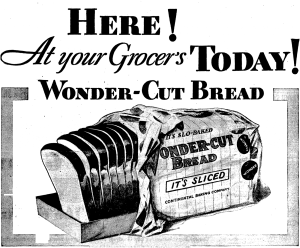
You’ve heard the expression, “it’s the greatest thing since sliced bread” which may be said, “the greatest thing, period”. Previously, an Iowa salesman named Otto Rohwedder had invented a machine that sliced loaves of bread, but bakers thought the bread would go stale and did not accept his idea. But in 1928, Frank Bench, a baker decided to give it a try and it suddenly became popular and women loved it. Sales at his bakery increased by 2000 percent in only a short time. Another invention by a St. Louis baker, Gustav Papendick created a machine that also wrapped the loaf to prevent it from drying out and the toaster became a perfect partner. Source: Oxford Companion to American Food and Drink
“Americans weren’t the first to buy into the idea that white bread was better. In Western civilization since the days of ancient Rome, people from all backgrounds associated soft white bread with upper-class eating habits. The whiter the bread, the better.” Source: The American Plate: a Culinary history in 100 bites, Libby H, O’Connell, p. 153
Betty Crocker – The Ideal Woman?

In 1921, The Washburn Crosby Company that was to become the largest predecessor of General Mills Inc. ran a promotion for Gold Medal Flour for any consumers who could correctly complete a jigsaw puzzle of a milling scene. The name Betty Crocker was created to personalize customer responses. Crocker came from the recently retired director of the company, William G. Crocker and Betty was chosen because it seemed like a friendly sounding name. “Female employees were invited to submit sample Betty Crocker signatures; the one judged most popular is still used today.”
The company began to sponsor cooking schools in the country and hired a staff of 21 home economists to devise ways to demonstrate their flour. Later they established the Home Service Department and ultimately, the Betty Crocker Kitchens.
Betty Crocker found a voice when the Washburn Company presented a daytime cooking show called “Betty Crocker Cooking School of the Air” on a local radio station. Due to its success and was later expanded to 13 stations and in 1927, the school became a program on the NBC network that continued for 24 years with more than one million listeners enrolled.
According to Fortune magazine in 1945, Betty was the second best-known woman in America, after First Lady Eleanor Roosevelt. Betty was also known as the First Lady of Food.
Betty became a TV personality in the early 1950’s and on one show viewers saw her teach George Burns and Gracie Allen how to bake a cake. Life was simple then. The name was coined in 1921, but the first portrait appeared in 1936. She was first depicted as a serious, unsmiling image, more of a housewife approach. She looked like someone’s grandmother or aunt until 1950 when she began to smile. It wasn’t until 1996 that she had the biggest smile. Over time she evolved from the housewife look and evolved to the look of a professional business woman who worked outside the home.
The Betty Crocker Red Spoon began appearing on packaging in 1954. It is the most recognizable symbol of Betty Crocker today. The logo appears on 200 Crocker products and appear on her famous 250 cookbooks, including the popular 11th Edition of Betty Crocker Cookbook.
Source: http://www.bettycrocker.com
Home cooking & family entertaining
In 1929, life was looking good. We had electricity, refrigerators, sliced bread. Convenience had arrived with canned foods and frozen foods were beginning to hit the market.
All these could now be purchased in new one-stop supermarkets. The Alpha Beta had everything in alphabetical order making everything easy to find. The A&P (the Great Atlantic and Pacific Tea Company) was doing about $1 billion a year in business. The USDA was finally inspecting meat and there was one car for every five people. Anyone who really wanted a drink could get one. Prohibition did not completely end until 1933, but it was realized that the “great experiment was not so great and was a big mistake. America was in a party mood, but it didn’t last long. In October 1929, the stock market crashed leading to another decade of another kind of misery – The Great Depression. The decade’s giddiness from unprecedented wealth — and a surfeit of Martinis, no doubt — came to a gut-crushing halt on October 29, 1929, when the Dow Jones plummeted a then staggering 30.57 points.
TIDBITS and TRIVIA
As a result of the immigration movement in the early years, San Francisco followed the ethnic movement by opening a restaurant called Far East Cafe, serving wonton soup (dumplings in chicken broth with shrimp, mushrooms, and bamboo shoots) and other Cantonese American dishes. 1920
“Americans heard their first radio broadcast. In 1926, the first advertising jingle was broadcast for a now familiar breakfast cereal, called Wheaties. All this in the midst of the passing of two important Constitutional Amendments – alcohol prohibition and granting the right to vote for women.” Source: Linda Civitello, Cuisine and Culture: A History of Food and People, 2nd Edition, p. 302 1920
Heart disease becomes the leading cause of death in American after 10 years of jockeying with the lead with tuberculosis. Coronary disease accounts for 14% of U.S. deaths, and the figure will increase to 39% in the next 50 years. 1921
Several states legislate sanitary dairy practices like pasteurization in order to deal with U.S. milk that often reaches consumers with a high bacterium count. Contaminated raw milk transmits undulant fever, infectious hepatitis, typhoid fever, tuberculosis and other diseases. 1921
The Popsicle has its beginnings in New Jersey, lemonade-mix salesman Frank Epperson is demonstrating his product. He accidently leaves a glass of lemonade on a windowsill overnight, wakes in the morning to find it frozen around a spoon in the glass, and applies for patent on his “Epsicle.” He then sells the patent to Joe Lowe, who will then market it under the name Popsicle. 1924
U.S. refrigerator sales reach 75,000, up from 10,000 in 1920, as prices come down and consumer incomes rise. 1925
“Mrs. [Esther Ford] Wait is a prohibitionist–that is, she believes in prohibition if it can be enforced. ‘But as it can’t,’ she said, ‘I have nothing against a drink or two at bridge parties or serving cocktails to my friends when they come to dine. Justice Ford…cited his daughter as an example of a nice, young modern girl who goes to cocktail parties…’Cocktail drinking and cigarette smoking by women are questions of manners, not morality.'”1925
—“Boys Need Chaperones Most, Says Mrs. Wait,” Washington Post, June 16, 1925 (p. 9)
California entrepreneur Julius Freed opens a fresh orange juice stand in downtown Los Angeles with sales of about $20 a day. His real estate broker, Bill Hamlin who found Fred his location, used his chemistry background to formulate an orange drink with a smooth, frothy texture. Patrons liked it and always said: “Give me an orange, Julius” and Freed’s sales leap to $100 a day. Hamlin quits the real estate business to develop the Orange Julius business and by 1929 had 100 Orange Julius stands nationwide, selling nothing bu the 10 cent drink and grossing nearly 3 million dollars. 1926
“I say it’s spinach and I say the hell with it,” reads E.B. White’s caption to Carl Rose’s New Yorker magazine cartoon December 8 showing a child refusing to eat broccoli. The vegetable has only recently been introduced into the United States from Italy by D’Arrigo Brothers, an enterprising grower in northern California’s Santa Clara Valley. 1928
Seventy-one percent of U.S. families have incomes below $2800, which is generally considered the minimum necessary for a decent standard of living. The average weekly wage is $28, and the nation’s economy worsens after Wall Street’s Dow Jones Industrial Average plummets in October. 1929
Bon Appetit!
Obesity on the Rise – Some Solutions?

The Obesity/Diabesity Pandemic
Obesity is a major risk factor for the development of type 2 diabetes mellitus, so much so that the epidemic is often called diabesity. It has been described as one of the most important crises that has invaded our public health system.
Global Statistics, Source: Lancet
- Since 1980, the number of adults with diabetes worldwide has quadrupled from 108 million to 422 million in 2014.
- Diabetes is fast becoming a major problem in low and middle-income countries.
- From 1980 to 2014, the prevalence of diabetes more than doubles for men in India and China.
- Half of adults worldwide with diabetes in 2014 lived in five countries: China, India, USA, Brazil and Indonesia.
So what are some solutions?
The standard American diet is in much need of an overhaul and our national food systems need to change if we wish to reverse or at least slow down this trend. Many say that it would take the same determination as the campaigns to change behaviors that were utilized during the campaigns against smoking. .
Prevention awareness should be first on the front lines of treating the people with prediabetes that can often be reversible using lifestyle modifications. There are already some prevention models in the community; however, these should be expanded so that they become more easily accessible to more people. The Diabetes Prevention Program (DPP) uses intensive behavioral therapy to help people lose a little bit of weight (typically 5-10%). When this program is followed, the number of people progressing to have diabetes comes down by more than half. In people over 60, the reduction was 70%.
Nutrition education should be incorporated into the school system in the early years to help young children understand the importance of knowing where our food comes from and why nutritious foods are the best choice. They can be taught about balanced eating, calories, reading labels and grocery shopping. Nutrition education can also be offered at the middle and high schools levels by returning to a revamped and modernized home economics course in the curriculum.
A lingering problem has existed for many primary care physicians for many years in that they say they were never adequately prepared in nutrition principles in medical schools. In a survey of family physicians (2009), two thirds said that dealing with extremely obese patients is “frustrating “and one-half said treatments are often ineffective. This is reflected by a lack off obesity training.
Shockingly, another survey in 2010 of 140 doctors revealed that nearly one-third were not even familiar with the American Diabetes Association (ADA) prediabetes guidelines. Only 6 percent were able to identify all 11 risk factors and on average, the doctors could only identify just eight of the warning signs. Only 17 percent knew the correct laboratory values for blood glucose and only 11 percent said they would refer a patient to a behavioral weight loss program..
There should be an increased access to professional treatments. Physicians in reality do not have the time to directly counsel their patients on the myriad of diets designed for healthy weights. Medical professionals not trained in obesity management should refer their patients to outside providers such as dietitians, exercise trainers, behavior therapists, psychologists, or a new concept of health coaches. These providers should be trained, certified, and credentialed to protect the public from unscrupulous treatments and to provide quality care. Reimbursement of qualified health professionals needs to be enhanced to keep out of pocket expenses reasonable for patients.
However, doctors can act as “cheerleaders” and in a support role encourage their patients to practice lifestyle behaviors (diet included) that can overall prevent the onset of chronic diseases that make up the leading causes of death. This new paradigm of medical practice has abeen recently called “lifestyle medicine”.
We have become a nation of non-cooks and prefer to have our meals prepared by someone else. Encourage home cooking and home kit meals to help to counter using fast foods and packaged highly processed meals loaded with calories, fat, sugar and salt.
Educate the public on food labeling including ingredient lists. Beware of food companies that promote products with a “health halo” meaning exaggerated claims are made that appear to make unhealthy foods seem healthy because of an added nutrient or ingredient. Corporations also mislead consumers with their labeling so they include four different types of sugar to keep sugar from being listed as the first ingredient. This is misleading to the consumer when attempting to make wise food choices.
Stop corporate-government partnerships and diminish lobbying.
The Academy of Nutrition and Dietetics (formerly the American Dietetic Association) is funded by a myriad of food companies such as Coca-Cola, PepsiCo and Kellogg’s. The dairy industry has a long history of influencing the food pyramid and Dietary Guidelines. A good example is the placing of a glass of milk on the MyPlate Logo.
Another health organization guilty of taking in millions from food companies is the American Heart Association. They offer a “Heart – Check logo for a price: $5, 490 to $7,500 that is renewable for another fee annually. The product has to be low in fat, saturated fat and cholesterol to gain this “honor.” However, some products such as Boar’s Head processed meats have the logo and still may still contain high levels of sodium. If the AHA were sincere in their efforts to help consumers choose healthier foods to rein in obesity/diabetes, they would realize that research has shown that a 1.8 oz. daily serving of processed meat raised the risk of diabetes by 19 percent and heart disease by 42 percent. Most current dietary recommendations emphasize a reduction in processed meats (my emphasis).
There is bad news on rising obesity rates – read about them HERE.
It will take a concerted effort from government, politics, industry, communities,consumers and the perpetrators of our obesigenic culture to begin to change this trend.
Nutrition Timeline: How the U.S. Diet Evolved
Nutrition Timeline:
Obviously, a lot has happened in nutrition since the first Thanksgiving in America. Many scientific discoveries have given us a better idea how foods can contribute to health and disease. At first, little was known about nutrition science and there is still a lot to know. Knowing our progression helps us to know how we got from there to here. The bottom Line: After all the science, we often still ponder on “what’s for dinner?”and “how do we lose weight”?
Note: Those events in Bold type tell the story of how our current food patterns evolved and have affected our present health status.
1621 First Thanksgiving Feast at Plymouth Colony
1702 First coffeehouse in America opens in Philadelphia
1734 Scurvy recognized
1744 First record of ice cream in America
Lind publishes “Treatise on Scurvy”and citrus is identified as cure.
Sandwich invented by the Earl of Sandwich
Potato heralded as famine food
Americans drink more coffee in protest over Britain’s tea tax
1775 Lavoisier (“the father of nutrition science) discovers the energy property of food (calories)
1816 Protein and amino acids identified followed by carbohydrates and fats
1833 Beaumont’s experiment on a wounded man’s stomach greatly expand knowledge about digestion
1862 U.S. Department of Agriculture founded by authorization of President Lincoln
1871 Proteins, carbohydrates, and fats determined to be insufficient alone to support life, there are other “essential” compounds in foods
First milk station providing children with un-contaminated milk opens in New York City
Pure Food and Drug Act passed by President Theodore Roosevelt to protect consumers against contaminated foods
Pasteurized milk introduced
Funk suggests scurvy, beriberi, and pellagra caused by deficiency of “vitamines” in the diet
1913 First vitamin discovered (vitamin A)
1914 Goldberger identifies the cause of pellagra (niacin deficiency) in poor children to be a missing component of the diet rather than a germ as others believed
1916 First dietary guidance material produced for the public released: Title is Food for Young Children
1917 First food groups published for the Five Food Groups: Milk and Meat, Vegetables and Fruits, Cereals, Fats and Fat Foods, Sugars and Sugary Foods. (Imagine: Sugar is a food group).
1921 First fortified food produced: iodized salt needed to prevent widespread iodine deficiency goiter in many parts of the U.S.
1929 Essential fatty acids identified
1930’s Vitamin C identified in 1932, followed by pantothenic acid and riboflavin in 1933 and vitamin K in 1934
1937 Pellagra found to be due to the deficiency of niacin.
1938 Health Canada issues nutrient intake standards
1941 First refined grain enrichment standards developed (Niacin, riboflavin, and iron added)
First Recommended Dietary Allowances (RDAs) announced by President Franklin Roosevelt on the radio
1946 National School Lunch Act passed
1947 Vitamin B12 identified
1953 Double helix structure of DNA discovered
1956 Basic Four Food Groups released by the U.S. Department of Agriculture
1958 The Seven Countries Study was conceived by Ancel Keys, a Minnesota physiologist, who brought together researchers from all over the world. It became a collective effort to study questions about heart and vascular diseases among countries having varied traditional eating patterns and lifestyles. This alone changed the U.S. food supply dramatically to emphasize low fat diets high carbohydrate foods that continued to dominate until around 1983.
1965 Food Stamp Act passed. Food Stamp program established
1966 Child Nutrition Act adds school breakfast to the National School Lunch Program
1968 First National nutrition survey in U.S. launched. (The Ten State Nutrition Survey)
1970 First Canadian national nutrition survey launched (Nutrition Canada National Survey)
1972 The “Atkins Diet” by Dr. Robert Atkins started as a fad, but quickly became a counter-conventional movement that reset people’s thinking of nutrition and weight loss, and its link to health. It promoted a low carbohydrate, high fat diet to replace and challenge the current conventional thinking that a low fat, high carbohydrate diet promoted by Keys was heart healthy.
1977 Dietary Goals for the U.S. issued
1978 First Health Objectives for the Nation released
1989 First national scientific consensus report on diet and chronic disease published
1992 The Food Guide Pyramid is released by the USDA that contained a food group recommending 6-11 servings a day from the Bread, Cereal, Rice, Pasta Group (High carbohydrate foods).
1994 The nutritional food label was put into effect by the Nutrition Labeling and Education Act.
1997 RDAs expanded to Dietary Reference Intakes (DRI’s)
1998 Folic acid fortification of refined grain products begins
2003 Sequencing of DNA in the human genome completed; marks beginning of new era of research in nutrient-gene interactions
2015 – 2020 The current U.S.Dietary Guidelines include the following:
- Follow a healthy eating pattern across the lifespan. Eating patterns are the combination of foods and drinks that a person eats over time.
- Focus on variety, nutrient-dense foods, and amount.
- Limit calories from added sugars and saturated fats, and reduce sodium intake.
- Shift to healthier food and beverage choices.
- Support healthy eating patterns for all.
2020 Obesity and diabetes have become global epidemics/pandemics with the highest rates in the U.S. The custom is for them to be revised every five years. The latest U.S. Dietary Guidelines are due to be published sometime in 2020 or early 2021.
The Rising Rate of Obesity and Its Consequences
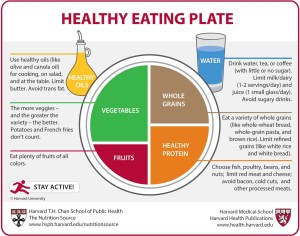
“The headlines this week broadcast the following research: Doctors at NYU Langone Health center conducted the largest study so far of US hospital admissions for COVID-19, focused on New York City. They found obesity, along with age, was the biggest deciding factor in hospital admissions, which may suggest the role of hyper-inflammatory reactions that can happen in those with the disease.”
Just what are the latest facts and implications about our obesity epidemic in the U.S.?
This data is from the U.S. Centers of Disease Control and Prevention in February 2020 and presented in Life Extension Magazine, May 2020.
- A startling result is that 42.4% of adults are obese. Additionally, 31.8% were overweight.
- This situation is expected to not improve statistically. A study in the New England Journal of Medicine estimates that by 2030, the percentage of obese American adults will rise to 48.9%. These percentages reflect a total of $446 billion dollars of medical costs annually.
- Women, African Americans, and those with a low socioeconomic status are affected at a significantly higher rate.
What are the medical implications?
- Excess body weight increases the risk of developing and dying from a broad spectrum of cardiovascular diseases, cognitive disorders (e.g. Alzheimer’s) and at least 13 different types of cancers.
- Obesity has been determined to be the underlying cause of approximately 20% of deaths in the United States.
- An analysis of 57 studies encompassing 900,000 individuals published in Lancet found that for every 5 point increment in Body Mass Index was associated with a 30% increased mortality risk.
- Additional negative effects of excess weight include fatty liver disease, sleep apnea, chronic pain syndromes like low back pain, IBS, osteoarthtis, depression, negative pregnancy outcomes, and chronic inflammation.
Foods that Kill
There are many factors that contribute to the rise in obesity rates; however, diet and lifestyle have recently been identified and collectively referred to as components of the Standard American Diet (SAD). One of these is processed food.
- Processed foods tend to be high in added sugar, salt, oil and unhealthy fats are often mentioned as well as ultra-processed foods that are so altered that they hardly resemble their original whole-food state.
- The food industry refers to them as an “industrial product” loaded with additives that attempt to enhance the food’s characteristics such as food stability, shelf life, textures, colors, and flavors. They are often referred to as emulsifiers, humectants, and sequestrants or others that have barely recognizable names. Ultra-processed foods are often ready-to-eat, require minimal preparation and are highly marketed. Ultra-processed foods account for more than 60% of dietary energy in the U.S.
- Populations that have the lowest intake of processed foods exist and have been recently studied and known as the Blue Zones. These are groups of individuals that live an average of 10 years longer than those in cultures who consume the SAD, otherwise known as the Western diet. These areas are found around the globe in Sardinia, Italy, Ikaria, Greece, Okinawa, Loma Linda, California, and Nicoya, Costa Rica.
- An observational study of Spanish university graduates followed participants for a median of 10.4 years. Consumption of an average of 5.3 servings of ultra-processed food per day, compared to an average of less than 1.5 servings per day, was associated with a 62% increase for all-cause mortality. For each additional serving, this risk increased by 18%.
What Is the Optimal Diet?
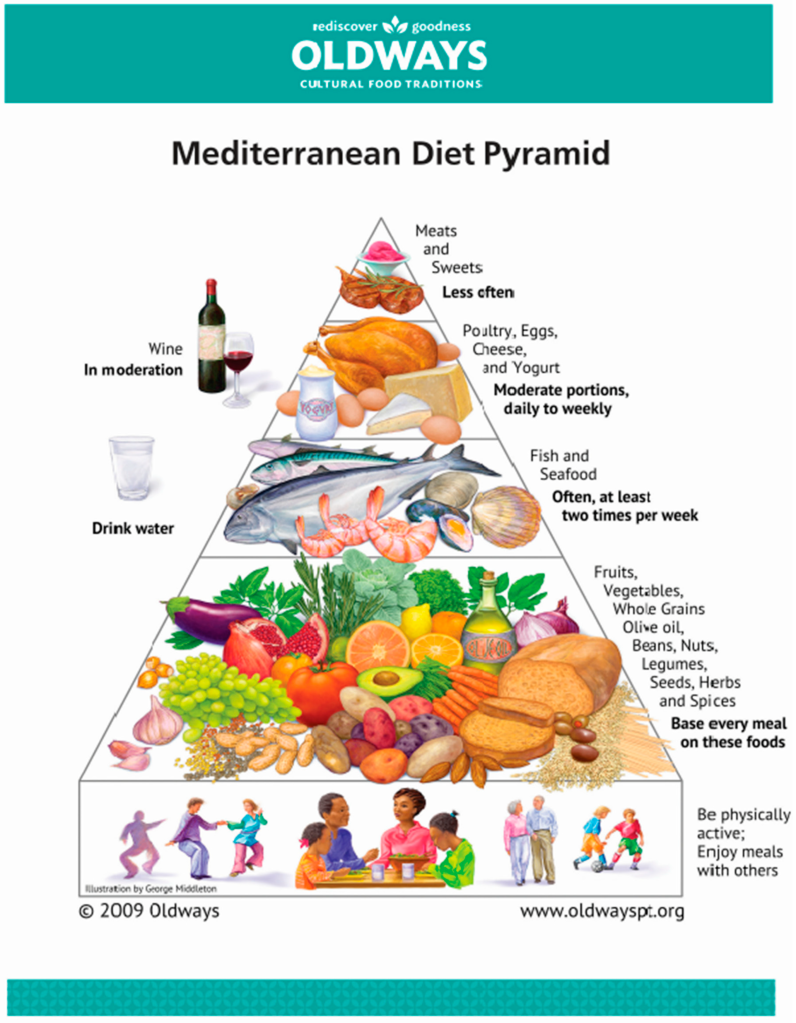
There are numerable reports on the health benefits of vegan, vegetarian, or plant-based diets. However, there is one diet that has been studied extensively for its healthy effects called the Mediterranean Diet. There is no one Mediterranean diet; however, it is usually associated with the intake of vegetables, fruits, whole grains, beans, nuts and seeds, extra-virgin olive oil, fish, seafood, moderate amounts of poultry, eggs, and dairy products. Red meat and sweets are limited as well as a low intake of processed foods. A moderate intake of wine is acceptable. (moderate = 1-2 glasses).
Conclusions:
A possible molecular explanation for why overweight is harmful has been discovered by researchers. They suggest that overeating increases the immune response. This response causes the body to generate excessive inflammation during the COVID-19 infection and that inflammation is at the core of many other chronic diseases.
University of Oslo. “Being overweight causes hazardous inflammations.” ScienceDaily, 25, August 2014.
If current trends continue and we find that 50% of our population is in the obese weight category, there will be alarming rates of catastrophic health consequences. Our health care costs will become unsustainable. It is a common belief that as long as you are not obese, you can be overweight and still be healthy. This is not always true. Many studies have found that a higher weight was associated with a higher risk of dying; however, this has remained a major debate issue among obesity experts.
 FOOD, FACTS and FADS