Trying a Plant-Based Diet?

The new trend is to switch your eating habits to a more plant-based diet for health and the environment. Sounds good, however, there are some considerations to be aware of when it comes to obtaining the nutrients we need for optimum health.  One of the most important is getting enough protein. Proteins are made up primarily of amino acids necessary for making body tissues, some hormones, and enzymes.

Animal products such as meat, eggs, and milk provide all the nine essential acids in sufficient quantity to qualify as complete sources of protein. Plant products such as quinoa and soy may also qualify. But most plant foods only provide some of the essential amino acids, but not all.  Since these nine amino acids are not made by  the body, they must be provided in the diet.  If  they are not available for protein synthesis, protein tissue synthesis ceases or is limited. They are not stored in the body for long so are used for energy instead.

Vegans eating no animal products can meet these needs by combining plant foods to yield complete protein. The goal is to eat a variety of plant foods regularly to provide all the nine essential amino acids necessary. Sources for protein for vegans include beans, peas, nuts, grains and soy products. Combinations to provide complementary amino acids to make a complete protein may include rice and black beans, hummus and bread, tofu and rice, a tortilla with refried beans (a burrito) and pea soup and bread.

Due to the rise in the recent marketing of plant-based burgers, here is the scoop from Harvard Health Publishing.

CLICK HERE.

The Pima Indians: A Study of Lifestyle and Obesity

By Sally J. Feltner, MS, Ph.D

The Pima Indians of Arizona have the highest rates of diabetes and obesity in North America. An estimated 50 percent of Pima adults are obese, and of those, 95% have diabetes type 2.

WHAT HAPPENED?

The story is not new – it more than likely began in the 1500’s when the Spanish explorers made contact with them in the New World. They and most Native tribes of that time were hunter-gatherers. They were lean, active and healthy people.

Pima Indians are believed to be descendants of people who crossed the Bering Strait from Asia to the Americas. Their traditional diet included meals made from the crops they cultivated including corn (maize), kidney beans, sunflower seeds, pumpkins and squash.  Small game such as rabbit, was a staple part of their diet together with meat from their livestock such as sheep and goats. Larger game was also available such as deer, elk and bear. As they were in close proximity to rivers, fish, duck and many different types of shellfish were major elements of their diet, which was also supplemented with herbs, acorns and roots. Sadly, as the years went on, the Arizona group met with some unavoidable circumstances that changed their way of life considerably – especially their traditional diets, economics, and well-being.

  • In 1859, the Arizona Pimas’ land along the Gila River was taken away by the U.S. government which left them to live on what land was left known as the Gila Reservation.
  • In 1866, new settlers began to populate the Pima region and diverted the water from the Gila River for their own use.
  • By 1869, the river had dried up and the Arizona Pimas were left with no water and less land to grow their food and crops resulting in an on – and – off – 40-year-old famine. As a result, the government exacerbated the problem again by providing subsidized foods to the tribe consisting of white flour, sugar, lard and canned goods, a far cry from their traditional diets of corn, beans and squash.

The timing of these significant changes in lifestyle and livelihood of the Arizona Pima population coincides with their development of diabetes type 2.  At the turn of the nineteenth century, studies recorded only one case on the Gila River Reservation. In 1937, a study documented twenty-one persons with diabetes. By the 1950’s, however, the prevalence had increased ten-fold and a study initiated in 1965 documented in the Arizona Pima Indians the highest prevalence of diabetes ever recorded.

THE PIMA INDIANS IN MEXICO

The Pima Indians who had settled in Mexico resided in the small town of Maycoba. For decades they had been isolated until 1991 when a paved access to the town was constructed.  Before that they grew a majority of their own food and still adhered primarily to their traditional diet that was similar to the Arizona tribe. Since they are genetically similar to the Arizona Pima, they present an opportunity to study and compare the two-lifestyle patterns of both tribes (diet and exercise) on their health statistics.

What Has Been Learned from Various Studies of these two Populations?

An Abstract from one study in 1994 that compared the two groups gives us the following details:

OBJECTIVE The Pima Indians of Arizona have the highest reported prevalence of obesity and diabetes type 2 In parallel with abrupt changes in lifestyle and the incidence in Arizona Pimas have increased to epidemic proportions during the past decades. To assess the possible impact of the environment on the prevalence of obesity and diabetes type 2, data were collected on members of a population of Pima ancestry living in a remote mountainous location in northwestern Mexico, with a lifestyle contrasting markedly with that in Arizona.

RESULTS  The Mexican Pimas were significantly lighter and shorter with a lower Body Mass Index. They also had a significantly lower plasma total cholesterol level than the Arizona Pimas. Even more startling was that diabetes type 2 was less prevalent with only 2 women (11%) and 1 man (6%) in the Mexican group compared with a prevalence of 37% and 54% in male and female Arizona Pima Indians respectively.

CONCLUSIONS This preliminary investigation shows that obesity, and perhaps type 2 diabetes is less prevalent among people of Pima heritage living a “traditional” lifestyle than among Pimas living in an “affluent” environment. These findings suggest that, despite a similar potential genetic predisposition to these conditions, a traditional lifestyle, characterized by a diet including less animal fat and more complex carbohydrates and by greater energy expenditure in physical labor, may protect against the development of cardiovascular disease risk factors, obesity, and diabetes type 2.

DISCUSSION:

These results indicate that a more traditional lifestyle of the Mexican Pimas protects the group against obesity, diabetes and kidney disease, even though they may have a genetic predisposition for such health problems.

What explains the results of experiences of the Arizona Pima?  One popular theory is one thing that drives obesity is a switch to a diet of highly refined carbohydrates that are so common in the Standard American Diet (SAD). When the Pima replaced traditional, unrefined carbohydrates with refined (sugar and flour), they became obese. It may not be the amount of food we eat but what kinds or quality we consume.

The lessons learned here support the theory that lifestyle factors appear to significantly influence the prevalence of obesity and diabetes type 2 in a population predisposed genetically to these conditions. Their story gives us all the opportunity to reassess our own current diets and lifestyle factors that may lead to healthier food environments and ultimately prevent our current situation of the diabesity dilemma.

SOURCES

Stephen Guyenet, Lessons From the Pima Indians. Whole Heath Source: Nutrition and Health Science.

Leslie O Schulz, PhD, Lisa S. Chaudhari, PhD. High-Risk Populations: The Pimas of Arizona and Mexico. Curr Obes Rep. 2015 March 1; 4(1): 92-98

Ravussin, et al. Effects of a Traditional Lifestyle on Obesity in Pima Indians, Diabetes Care 1994 September 17(9): 1067-1074


Can We Say What Diet is Best for Health?


Can We Say What Diet is Best for Health?
Over the past few decades, it has been reported that a lifestyle pattern of poor dietary choices is linked to a growing disparity between life span (longevity) and health span, defined as years of healthy life.  Globally, lifestyle-related chronic diseases constitute an enormous and growing burden of obesity, diabetes, hypertension, heart disease, cancer, all of which involve diet in some manner.

What are these dietary patterns that often claim successes over another pattern? This comparison offers a brief description of each pattern as well as the rationale for the claims.


Dietary Pattern Primary Characteristics Rationale
Low Carbohydrate Restriction of total carbohydrate to less than 45% calories

High protein or either animal or plant origin

Has recent and widespread interest. Can include a popular variation called the ketogenic diet (highly restrictive)
Low Fat (Vegetarian and traditional Asian) Restriction of total fat or 20% of daily calories. Some can include dairy and eggs, limited meat such as chicken and seafood Long-standing use, extensive research backup. Popularity is weak due to limited appeal; lack of taste


Low glycemic (blood sugar) Limits the glycemic load of certain vegetables and many if not all fruits. Relevant to diabetes and pertains to carbohydrate quality as to effects on blood glucose in the body.
Mediterranean Emphasis on olive oil, fruits and vegetables, nuts and seeds, whole grains, beans, limited meat, moderate wine included Mimics the traditional diets of Mediterranean countries. Associated with extensive research that emphasizes “healthy” fats


Mixed Balanced

Includes both plant and animal foods that conform to the Dietary Guidelines for Americans, DASH and Diabetes Prevention diets Long-standing, widespread use. Associated with extensive research and intervention trials to address chronic diseases.


Paleolithic Focus on diet of our Stone Age ancestors. Avoiding processed foods with emphasis on fruits and vegetables, nuts, seeds, lean meats.

Dairy and grains are excluded.

Native human diet emphasis with substantial research. Emphasis on lean proteins.
Vegan Often exclude all animal products, including dairy and eggs. If ill-conceived, can include plant-based junk food leading to nutrient deficiencies. Relevant to ethics, animal welfare issues, environmental sustainability


Claims for other dietary patterns exist in abundance. Many such practices such as juicing or fad dieting does not meet the requirements for a healthy diet pattern. Add to these raw food eating, detoxification schemes that enjoy media attention in the popular culture but only contribute to the confusion of those who seek existing  legitimate dietary advice.

Can we say what diet is best for health? It would be difficult based on individual needs for one thing. Ideally, It is often said that the best diet is one you decide for yourself based on some basic knowledge and your particular lifestyle. The diet should focus on health and weight control, not just weight loss.

Even if the healthy diet claims are made clear, we must learn somehow to navigate our way through the supermarket that constantly appeals to our senses with a myriad of some 40,000 products with the majority of them processed in bags, boxes, bottles, jars, and cans. Many are loaded with fat, sugar or salt. Often, many Americans are drawn to the appeal of convenience that many of these foods offer.

Here is what we think we know.  From assessing the diets presented in the table above,  compatible elements of these diets include: Limited refined starches, added sugars, processed foods, limited intake of certain fats, emphasis on whole plant foods (nuts, seeds, legumes) with or without lean meats, fish, poultry, and seafood.

To put this in its most simplest form,  Michael Pollan, author of In Defense of Food and The Omnivores Dilemma says:

Food, not too much, mostly plants.


All About Diabetes Type 2 in the U.S.

We may be approaching another healthcare crisis other than the pandemic.  In both crises, the numbers keep rising and no one really seems  to earnestly do much about it. Both can be frustrating and prevention can be a key factor.  Prevention always is the best medical advice but it’s difficult to find help due to a lack of interest or funding.  In my opinion, many cases of diabetes type 2 can be prevented if enough attention is paid to understanding certain aspects of the disease. Studies of previous prevention programs have shown to make a difference. One particular study compared lifestyle  modifications with the anti-diabetes drug, metformin and found that lifestyle modifications were just as effective as taking the drug. This finding is an important result in that it suggests that lifestyle can influence our health and help to prevent some of the chronic diseases that have become leading causes of death in the U.S.

Even weight loss of 5-10% of body weight  is the first line of defense against diabetes type 2 as well as learning about which foods you eat can help control blood glucose levels thus resulting in insulin secretion and/or insulin resistance.

CLICK HERE.

You can find the complete study HERE.

Is Fish Brain Food? The Omega Fats Explained

The major food sources for LA are sunflower, safflower, corn, and soybean oils. LA can also be converted to another fatty acid called omega 6 arachidonic acid (AA) found in meats and animal products. LNA is found in walnuts, dark, leafy green vegetables, flaxseed, canola and soybean oils.
LNA can be converted at various rates to other omega-3 fatty acids, eicosapentaenoic acid (EPA) and docosahexaenoic acid (DHA). You may have seen these on fish oil supplement labels. We can get EPA and DHA directly by eating fish and fish oils or by taking supplements.

So far the major lipid players consist of LA and AA that are omega-6 fats and LNA, EPA and DHA that are omega-3 fats. For those of you who are still with me, that’s the hard part. For keeping this simple, this post will mainly concentrate on the functions of the three and six families, with little to none of the nine family.

Is Fish a Brain Food?

The fact remains that nutrition science is becoming more aware of the impact of lifestyle factors in the prevention of chronic diseases. The overall number of Americans afflicted with dementia is expected to triple by the year 2050. Whether you become a victim has a lot to do with your health behavior patterns.

Recently there was a major study in 2019 that looked at the effects of certain foods and food components on cognitive function. A group of 116 elderly Americans with an average age of 69 underwent cognitive testing, MRI scans to assess brain function and structure, and blood tests to assess nutrient status.

The Results: The results identified six categories of  nutrients found in the blood associated with enhanced cognitive performance that measured general intelligence, executive function, and memory. The nutrients associated with improved cognitive performance included carotenoids (antioxidants), folate, B6, B12, Vitamin D, and a healthy balance  or ratio  of omega-3 to omega-6 fatty acids.

MRI imaging revealed enhanced brain network connectivity in those with healthy balances of omega-6/omega-3 fatty acids which will be the  focus of this post. For  those who had more vascular risk factors (smoking, high blood pressure, diabetes, and obesity) the MRI imaging showed greater brain shrinkage and less gray and white matter in brain tissues.

What is a  balanced ratio of omega 6 to omega 3 fats in the diet?

Most modern diets contain excessive amounts of omega-6s and insufficient amounts of omega-3s. Americans regularly eat processed food and vegetable oils but eat fish infrequently so we end up with many more omega-6s and fewer omega-3s.

The recommended ratio of omega-6 to omega-3 fatty acids in the diet is 4:1 or less, ideally 1:1.  On average in the U.S., the omega-6 to omega-3 ratio is a disastrous 16:1.

Therefore, although omega-6 fats are essential in the right quantities, most people in the developed world should aim to reduce their omega-6 intake. Refined vegetable fats such as soybean oil  are used in cookies, crackers, sweets, salad dressings and most fried foods.  For example, a meal from a fast food restaurant  consisting of a fried chicken sandwich and salad can result in over 17000 mg of omega-6 fats being eaten. And it gets worse. One serving of crunchy onion rings contain 30, 989 mg. of omega-6 (from Applebee’s). If you have a salad with soybean or safflower oil dressing, you’d consume about 7,200 mg of additional omega-6 fats. In contrast, a typical serving of wild salmon may provide 2,000 mg of omega-3.

Top 9 Foods with the Highest Omega 3 to Omega 6 Ratio (Try to get close to a 4:1 ratio)

Food Ratio of Three to Six 
Snow crab (3 oz) 61:1
Atlantic cod (6 oz) 29:1
Tuna (6 oz) 25 :1 
Mussels (3 oz) 25:1
Broccoli Rabe (1 cup) 7:1
Spinach (1 cup) 5:1 
Flax seeds (1 oz)  4:1
Mangos (1 cup) 3;1
Lettuce (1 cup) 2:1

The authors of this 2019 study advocate for drastic reductions in ingested omega 6 and increases in omega 3. They advise that for each milligram of omega 6 that you eat, consume about an equal amount of omega-3 fats. That may prove difficult in our current U.S. food environment. This is especially true if you are not a fish lover. Although not a fan of dietary supplements, in this case, a good quality supplement of fish oils (EPA and DHA) may be prudent.  Look for brands with the USP label or the Consumer Lab (CL) label for purity, safety and efficacy. A major supplement provider recommends 2400 mg a day of fish oils (EPA/DHA. (Life Extension)

But wait, there’s more!  What in the Heck are Eicosanoids and How Do they Function in the Body?

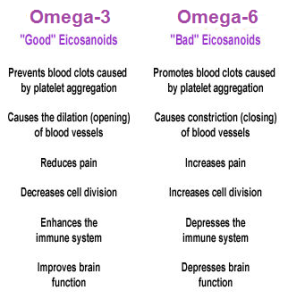
Omega-6 fatty acids produce compounds called eicosanoids from arachidonic acid (AA) that tend to favor higher blood pressure, more blood clotting, and inflammatory compounds in the body. These events are associated with a higher risk for heart disease. They are often referred to as “bad” eicosanoids.

Omega-3 fatty acids produce eicosanoids from EPA with opposing effects, i.e., lower blood pressure, less blood clotting, and anti-inflammatory effects.  They are often referred to a “good” eicosanoids.

effects-of-eicosanoids-derived-from-omega-3-and-omega-6-fatty-acids

How do you help block excess arachidonic acid formation? By making sure your body has an adequate amount of EPA and LNA that compete with AA  for an enzyme that acts as an inhibitor of the “bad” eicosanoids.   The higher the EPA and LNA in the diet, the more the enzyme is inhibited and the less “bad” eicosanoids are produced

The Bottom Line:

What to do? Using olive oil in salad dressings and coconut oil for cooking is recommended. Olive oil contains monounsaturated fat and coconut oil is more stable since it has more saturated fat content. Neither of these participate in the production of eicosanoids as well as olive oil contains neutral fats from the nine family of fatty acids.

Eating less processed foods and/or fast foods goes a long way to bring that ratio from 16:1 closer to a healthier 4:1. Your heart and your brain may thank you.

Sources:

Judith E. Brown. Nutrition Now Seventh Edition, 2013.

Life Extension, October 2019

Linus Pauling Institute, Oregon State University

Zwilling, CE, Talukdar T., Zamroziewicz, MK, et al. Nutrient biomarker patterns, cognitive function, and fMRI measures of network efficiency in the aging brain. Neuroimage. 2019, Mar;188:239-51.


Doctors and Diets?

So many times I have heard from people that tell me their doctors say:  “Watch your diet”.  What in  the heck does that mean?  Perhaps we hear this from many physicians because they do not receive much nutrition education in medical school.   There has got to be a better way to inspire people about their lifestyle choices.  My recommendation:  Consult a nutritionist (watch for credentials). There are many types of nutritionists that have dubious training and lack any reliable credentials. For diabetes help, look for the credentials “CDE” which tells us that  this person is a certified diabetes educator.  Many are also registered nurses or registered dietitians.  Read the related articles below for a comprehensive discussion of this problem.

CLICK HERE.

CLICK HERE.


Obesity on the Rise – Some Solutions?

Leave a comment

The Obesity/Diabesity Pandemic

Obesity is a major risk factor for the development of  type 2 diabetes mellitus, so much so that the epidemic is often called diabesity. It has been described as one of the most important crises that has invaded our public health system.

Global Statistics,  Source: Lancet

  • Since 1980, the number of adults with diabetes worldwide has quadrupled from 108 million to 422 million in 2014.
  • Diabetes is fast becoming a major problem in low and middle-income countries.
  • From 1980 to 2014, the prevalence of diabetes more than doubles for men in India and China.
  • Half of adults worldwide with diabetes in 2014 lived in five countries: China, India, USA, Brazil and Indonesia.

So what are some solutions?  

The standard American diet is in much need of an overhaul and our national food systems need to change if we wish to reverse or at least slow down this trend. Many say that it would take the same determination as the campaigns to change behaviors that were utilized during the campaigns against smoking. .

Prevention awareness should be first on the front lines of treating the people with prediabetes that can often be reversible using lifestyle modifications. There are already some prevention models in the community; however, these should be expanded so that they become more easily accessible to more people. The Diabetes Prevention Program (DPP) uses intensive behavioral therapy to help people lose a little bit of weight (typically 5-10%). When this program is followed, the number of people progressing to have diabetes comes down by more than half. In people over 60, the reduction was 70%.

Nutrition education should be incorporated into the school system in the early years to help young children understand the importance of knowing where our food comes from and why nutritious foods are the best choice. They can be taught about balanced eating, calories, reading labels and grocery shopping. Nutrition education can also be offered at the middle and high schools levels by returning to a revamped and modernized home economics course in the curriculum. 

A lingering problem has existed for many primary care physicians for many years in that they say they were never adequately prepared in nutrition principles in medical schools. In a survey of family physicians (2009), two thirds said that dealing with extremely obese patients is “frustrating “and one-half said treatments are often ineffective. This is reflected by a lack off obesity training.

Shockingly, another survey in 2010 of 140 doctors revealed that nearly one-third were not even familiar with the American Diabetes Association (ADA) prediabetes guidelines. Only 6 percent were able to identify all 11 risk factors and on average, the doctors could only identify just eight of the warning signs. Only 17 percent knew the correct laboratory values for blood glucose and only 11 percent said they would refer a patient to a behavioral weight loss program..

There should be an increased access to professional treatments.  Physicians in reality do not have the time to directly counsel their patients on the myriad of diets designed for healthy weights. Medical professionals not trained in obesity management should refer their patients to outside providers such as dietitians, exercise trainers, behavior therapists, psychologists, or a new concept of health coaches. These providers should be trained, certified, and credentialed to protect the public from unscrupulous treatments and to provide quality care. Reimbursement of qualified health professionals needs to be enhanced to keep out of pocket expenses reasonable for patients.

However, doctors can act as “cheerleaders” and in a  support role encourage their patients to practice lifestyle behaviors (diet included) that can overall prevent the onset of chronic diseases that make up the leading causes of death. This new paradigm of medical practice has abeen recently called “lifestyle medicine”.

We have become a nation of non-cooks and prefer to have our meals prepared by someone else. Encourage home cooking and home kit meals to help to counter using fast foods and packaged highly processed meals loaded with calories, fat, sugar and salt.

Educate the public on food labeling including ingredient lists. Beware of food companies that promote products with a “health halo” meaning exaggerated claims are made that appear to make unhealthy foods seem healthy because of an added nutrient or ingredient. Corporations also mislead consumers with their labeling so they include four different types of sugar to keep sugar from being listed as the first ingredient. This is misleading to the consumer when attempting to make wise food choices.

Stop corporate-government partnerships and diminish lobbying.
The Academy of Nutrition and Dietetics (formerly the American Dietetic Association) is funded by a myriad of food companies such as Coca-Cola, PepsiCo and Kellogg’s. The dairy industry has a long history of influencing the food pyramid and Dietary Guidelines. A good example is the placing of a glass of milk on the MyPlate Logo.

Another health organization guilty of taking in millions from food companies is the American Heart Association. They offer a “Heart – Check logo for a price: $5, 490 to $7,500 that is renewable for another fee annually. The product has to be low in fat, saturated fat and cholesterol to gain this “honor.” However, some products such as Boar’s Head processed meats have the logo and still may still contain high levels of sodium. If the AHA were sincere in their efforts to help consumers choose healthier foods to rein in obesity/diabetes, they would realize that research has shown that a 1.8 oz. daily serving of processed meat raised the risk of diabetes by 19 percent and heart disease by 42 percent. Most current dietary recommendations emphasize a reduction in processed meats (my emphasis).

There is bad news on rising obesity rates – read about them HERE.

It will take a concerted effort from government, politics, industry, communities,consumers and the perpetrators of our obesigenic culture to begin to change this trend.


Is Vitamin C a Valid Treatment for COVID19?

Just read an extensive article concerning the claims that intravenous vitamin C  therapy could be a valid treatment for COVID19. This therapy has been around for decades or at least since the 1970’s when the Nobel Prize winner, Linus Pauling promoted its oral use for curing or preventing the common cold and even as a cancer treatment. Proponents have once again emerged with the same claims concerning COVID19 virus treatment and/or cure with Intravenous vitamin C.

Bottom Line: There is no evidence that this occurs. According to one physician of Orthomolecular Medicine: “if you test people with pneumonia, Influenza or COVID19, you can measure and see that their vitamin C levels are low”; this tells us little if nothing.

Orthomolecular medicine promotes the premise that extremely high doses of natural substances help the body to address illness. For example, the Daily Value for vitamin C is only 90 mg/day (more than enough to prevent scurvy).  In orthomolecular medicine, at least 1500 mg/day would be required and more is better. Fortunately, vitamin C is a water-soluble vitamin and is commonly excreted from the body in urine. However, there are side effects at high doses that include diarrhea and other gastrointestinal issues.

A clinical trial in China is investigating the claim of intravenous vitamin C therapy and COVID19;  and it will be interesting if we hear any positive results when the study concludes next year.

Here are the facts as we know them.

CLICK HERE.

Intermittent Fasting: Help or Harm?


Intermittent fasting simply means that you don’t eat for a period of time each day or week. Some popular approaches include:
Alternate-day fasting. Eat a normal diet one day and either completely fast or have one small meal (less than 500 calories) the next day.

5:2 fasting: Eat a normal diet five days a week and fast two days a week.

Daily time-restricted fasting. Eat normally but only within an eight-hour window each day. For example, skip breakfast but eat lunch around noon and dinner by 8 p.m.

Some research suggests that intermittent fasting may be more beneficial than other diets for reducing inflammation itself, and improving conditions associated with inflammation such as Alzheimer’s disease, arthritis, asthma, multiple sclerosis, and stroke. Studies with a number of animal species have reported that fasting (or calorie restriction) leads to a longer and healthier lives.

There is a lot of confusing advice about whether intermittent fasting is a healthy eating pattern. The following article presents a common sense approach.

One thing is becoming certain. We eat too much and finding safe and healthy ways to combat this trend would seem practical in our society with its concomitant problem of the obesity/diabesity epidemics.

CLICK HERE.

What the Heck is the Microbiome?


What the Heck is the Microbiome?

Much attention has been spent lately describing the health contributions of the microbiome defined as “non-human cells that outnumber human cells and consists of our microbe residents in the human gut, skin, eyes and nasal passages.” These bacterial cells collectively can weigh as much as six pounds.

Another term for the microbiome is the microbiota.  The composition of the microbiota plays an important role during pregnancy and in early life and may affect our metabolic and immune functions later in life. The gut microbiota helps our digestive system efficiency, improves nutrient availability and absorption, and limits the presence of pathogens through competition for nutrients and space.

From the moment of birth, the newborn is exposed to microorganisms obtained from the birth canal of the mother or by exposure to the mother’s skin during a C-section delivery. This colonization is influenced by many factors such as genetics, breast-feeding or formula feeding and weaning to solid food as well as the presence of antibiotic therapy. It is thought that by 2 years of age, the young infant will have established its own stable microbiota. Recently stress and the mother’s diet during late pregnancy may play a role in this initial colonization of the young child.

From studies, it was shown that differences in the gut microbiome during the first year of life may later lead to the onset of obesity. In one study, the numbers of Bifidobacterium species (considered beneficial) were higher and the numbers of Staphylococcus aureus (potentially pathogenic) were lower in children who maintained a normal weight than in children who became overweight at 4 years of age suggesting this pattern may be protective against obesity. In other studies, it was observed that there is a link between the composition of the microbiome during pregnancy and body weight. More specifically, the presence of Staphylococcus and E. coli numbers were higher in women with excessive weight gain during pregnancy. Fecal transplant of an obese microbiome to germ-free mice resulted in a greater increase in total body fat than did colonization with a “lean microbiome” suggesting that the change in the intestinal microbiome environment can promote obesity and other metabolic diseases later in life.

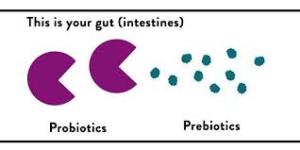
How can we control the content of the microbiome? Guess what – eating more fruits and vegetables have a prebiotic effect on the microbiome.  Prebiotics are nondigestible carbohydrates that reach the colon intact and are known to help the growth and activity of healthy (friendly) bacteria in the gut like Bifidobacterium species.

Increase your intake of unpasteurized fermented foods like fermented dairy products such as yogurt or kefir that contain probiotics. Probiotics are defined as live microbes that offer a health benefit to humans. Bifidobacteria and Lactobacillus species are the most common bacteria groups used.

Probiotics are found in foods such as yogurt, while prebiotics are found in whole grains, bananas, onions, garlic, honey and artichoke. In addition, probiotics and prebiotics are added to some foods and available as dietary supplements. So simply, the prebiotic foods help feed the probiotics.

Use more herbs such as garlic and leeks which contain the prebiotic inulin. Inulin is  a fermentable carbohydrate that is found in some fiber or protein bars. Inulin can cause digestive trouble or aggravate irritable bowel syndrome for some people as there is a threshold of tolerance for their intake. Look on ingredient labels for inulin or chickory root extract.

The study of the microbiome continues to fascinate scientists and its presence may be more involved in our health than previously thought.  But the research is still in its infancy and caution should be stressed so that people do not rush to buy probiotics or attempt self-treatment.  The transplants are experimental and should only be performed by professionals.  A limited number of studies have shown it to be an effective treatment for patients suffering from Clostridium difficile infection (CDI). CDI is a serious and difficult to treat infection causing inflammation of the lining of the abdomen; it is mostly found in  hospitalized elderly patients after excessive use of antibiotics but can affect an estimated 3% of healthy people.