“Hurrah for the Pumpkin Pie”

It’s Pumpkin time!! By the 1800’s, pumpkin pie was a necessity at most Thanksgiving celebrations. If you have ever heard the famous poem about Thanksgiving by Lydia Maria Child in 1842:

“Over the river and through the wood, to grandfather’s house we go” ends with “Hurrah for the pumpkin pie”.

Northeastern Indians used squash more than other Indians in early America and did favor pumpkin the most. They baked them by putting them in the embers of a fire, then moistened them with maple syrup or honey or some type of fat and then turned it into a soup. In 1705, the town of Colchester, Connecticut postponed the holiday for a week due to a molasses shortage to make the pies.

The first known American cookbook was American Cookery by Amelia Simmons in 1796 that included a recipe for “pompkin” pie. Later in 1805, a recipe for pumpkin pie appeared in the Art of Cookery Made Plain and Simple by Mrs. Hannah Glasse.

“Take the pumpkin and peel the rind off, then stew it till is quite soft and put thereto one pint of pumpkin, one pint of milk, one glass of malaga wine one glass of rose-water, if you like, seven eggs, half a pound of fresh butter, one small nutmeg, and sugar and salt to your taste:”

In 1929, Libby’s meat-canning industry made pumpkin preparation easier by offering its famous canned pumpkin with its traditional recipe on the label. My mother would have appreciated the Libby’s version. I remember her talking about making her first pumpkin pie and neglecting to strain the stringy pulp from the pumpkin itself. Next time you open a can, please think kindly of her and in her day, there may not have been canned pumpkin. Her first pie was probably around 1924.

The only problem is the sugar content found in pies – as for my pumpkin disaster, I forgot the sugar one year and it was awful. But who is counting sugar grams on Thanksgiving?  For the few that are – 1 serving has 253 cals, 3 grams of fiber, 32 grams of carbohydrate and about 19.7 grams of sugar (5 tsp). Pumpkin is also loaded with vitamin A in the form of beta-carotene (a powerful antioxidant). Happy Holiday!!!

Sally Feltner, www.foodfactsandfads.com
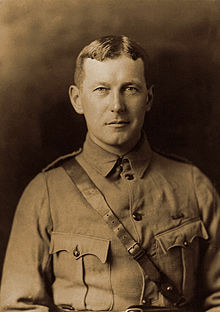
In Flanders Fields: Thank you for your service.

John McCrae

In Flanders Fields by John McCrae was first published in England’s Punch magazine in December 1915 . Within months, this poem came to symbolize the sacrifices of all who were fighting in the First World War. Today, the poem continues to be a part of Remembrance Day ceremonies in Canada and other countries throughout the world.

For some reason, I have remembered this great tribute and we thank all our veterans for their service.

“Flanders Fields ” is a poem about remembrance, a call for those living to not forget the dead who are buried in a foreign land. It demands that the living remember why the fallen died, so that they did not die in vain. Thus, it became one of the most famous poems of the First World War.”

In Flanders Fields and Other Poems, a 1919 collection of McCrae’s works, contains two versions of the poem: a printed text as below and a handwritten copy where the first line ends with “grow” instead of “blow”, as discussed under Publication:[9] Wikipedia

                 In Flanders Fields
    In Flanders Fields, the poppies blow
         Between the crosses, row on row,
       That mark our place; and in the sky
       The larks, still bravely singing, fly
    Scarce heard amid the guns below.

    We are the dead. Short days ago
    We lived, felt dawn, saw sunset glow,
       Loved and were loved, and now we lie,
                              In Flanders fields.

    Take up our quarrel with the foe:
    To you from failing hands we throw
       The torch; be yours to hold it high.
       If ye break faith with us who die
    We shall not sleep, though poppies grow
                                In Flanders fields.

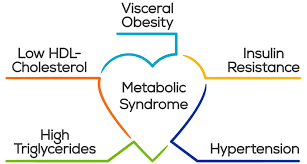
What is the Metabolic Syndrome?

Metabolic Syndrome

A collection of health risks, including high blood pressure, altered blood lipids, high blood glucose and a large waist circumference, that increases the chance of developing heart disease, stroke, and diabetes. The condition is also called insulin resistance.

CLICK HERE.

Smolin, Grosvenor. Nutrition, Science and Applications, Third Edition

Diet and Aging

“Most of us have more control over how long we live than we think. In fact, experts say that if we adopted the right lifestyle, we could add a good 10 years and suffer a fraction of the diseases that kill us prematurely.”

In his book, the Blue Zones, 9 Lessons for Living Longer, Dan Buettner and his team from the National Institute of Health set out to visit 5 regions on our globe that had a long record of longevity. From those lessons, a balanced diet became paramount in life extension. Here is what Robert Kane, MD, director of the Center on Aging at the University of Minnesota in Minneapolis said:

“One of the goals to a healthy lifestyle is moderation in all things. The best diet is basically one of moderation. You hear about all these people that live on legumes and plant foods and that’s probably okay, but I don’t think it’s necessary… as far as meat, it’s a question of eating meat a couple of times a week or are you eating it every day for two meals a day (typical of the Standard American Diet).  Are you eating processed meats that are filled with fat? Or are you eating good cuts of fairly lean meat?”

In Okinawa (one of the Blue Zones) “while centenarian Okinawans do eat some pork, it is traditionally reserved only for infrequent occasions and taken only in small amounts.”
 

Reference: The Blue Zones: 9 Lessons for Living Longer from the people who’ve lived the longest. Dan Buettner, 2012.

CLICK HERE. https://www.webmd.com/diet/features/is-your-diet-aging-you#1

FOOD CHOICES: A HISTORY

Origins of food choices

Bone marrow soup and sautéed snails, delicacies in France, passions to many are absolutely disgusting to others. Horsemeat is popular in a large area of North Central Asia, but rigidly avoided by many people in Islamic countries. Sautéed snails eyes are delicacies in France; kidney pie is traditional in England. Dog is a popular food in Borneo, New Guinea, and the Philippines where snake is a delicacy in China. In some countries, People enjoying insects are fit only for animal feed in other cultures. And then there steamed clams and raw oysters, food passions for some, but absolutely disgusting to others. When did you first say Yuck! to the above list?

 A 12th century scholar, Maimonides included pigs on his taboo and declared them “unlean” list due to rapid spoilage of pork in in hot climates and in their despicable habit of rooting garbage. However other animals such as goats have the same habit. Pork attained its unique status  in 165 B.C as a taboo and enraged the Jews leading to war. As a result, they retook Jerusalem celebrating Hanukkah in the Roman world.  

The fledging Christians pointed instead of Roman rules, to the book of Matthew in the New Testament.;” It’s not what goes into the mouth that defiles a man, but that what comes out”, the good book says.

“Burger chomping” Americans express incomprehension over the sacred status cattle in India, where the 1947 Constitution spells out the right of cows. Yet those same Americans would never think of eating whale, monkey, dog, cat or parrot  that Americans consider companion animals. Many Americans would consider that the deepest food taboo of all.”

“However, hunger still overrides food aversions from any origin. When German armies laid siege to Paris in 1870, cutting off the cities from country farms and gardens, many bourgeois restaurants offered delicacies such as rat ragu and saddle of cat.  “Many simply say – “tastes just like chicken”

Sources: Judith E. Brown, Nutrition Now, 7th Edition

Harris, David Lyon, Sue McLaughlin. The Meaning of Food: The Companion to the PBS Television Series Hosted by Marcus, Samuelsson, 2005.

In The NEWS

Aging, Activity and Telomeres

Researchers analyzed data from nearly 1500 women, ages from 64 to 95. Results reported that elderly women with less than 40 minutes of moderate-to-vigorous physical activity per day, and who remain sedentary for more than 10 hours a day, have shorter telomeres – tiny caps on the ends of chromosomes of DNA strands.

Telomeres protect chromosomes from deterioration and progressively shorten with age. As a cell ages, its telomeres naturally shorter and fray, but unhealthy lifestyles such as obesity and smoking may accelerate this process. Shortened telomeres are associated with heart disease, diabetes and major cancers. This study was funded, in part, by the National Institute on Aging and conducted at the University of California San Diego School of Medicine.

Tea May Protect Against Coronary Artery Disease

A review of randomized trials published in the journal Clinical Nutrition ESPEN, concluded that regular intake of green tea may help reduce the risk of cardiovascular disease.

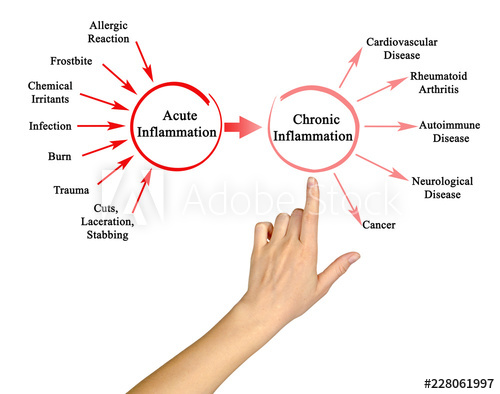
Regular tea consumption was associated with lower blood pressure and enhanced bioavailability of nitric oxide, which indicate a beneficial effect for tea on endothelial function. In some studies, tea was associated lower markers of oxidative stress and inflammation (C-reactive protein and oxidized low -density lipoprotein (LDL).

NOTE: ENDOTHELIAL= the tissue which forms a single layer of cells lining various organs and cavities of the body, especially the blood vessels, heart, and lymphatic vessels.

Clin Nutr ESPEN. 2021 Feb;41:77-87.

More Good News for Garlic Lover

Garlic supplementation Improves metabolic syndrome. Phytother Res. 2021, May 11.

I am not a promoter of supplements except in situations when you don’t want to smell like a raw garlic bulb every day.

Editors Note: Metabolic syndrome is becoming a marker for good health especially in the older population; however its presence can occur even in younger people. It is diagnosed as having three of the following disorders: high triglycerides, high blood pressure, elevated blood sugar and low levels of HDL cholesterol. These disorders collectively are thought to contribute to a higher risk of developing diabetes and/or heart disease

A randomized clinical trial included 90 men and women with metabolic syndrome were supplemented with tablets containing 1600 mg of garlic powder daily for three months, or a placebo.

In the garlic group, results were as follows:

All parameters were reduced along with appetite, fatty liver index,and waist circumference. Additionally,  beneficial HDL cholesterol was significantly higher than at the beginning of the study compared to the placebo group. 

“Then, there is cancer. Compounds in garlic have been shown in many laboratory studies to be chemoprotecive. Epidemiological studies shows a decreased risk in stomach and colon cancer in areas where consumption of garlic is high. An article In the Journal of Nutrition stated that “evidence continues to point to the anticancer properties of fresh garlic extracts, aged garlic, garlic oil.”

Source: Jonny Bowden, Ph.D., CNS. The 150 Healthiest Foods on Earth. 2007.

How Diet Affects the Brain

“Poor diets lead to a host of medical issues: obesity, cardiovascular disease, diabetes, and certain cancers. But diet also influences the brain and can increase the risk for mental disorders and neurodegenerative diseases. Researchers are uncovering the details of how the foods we consume affect our cravings, our moods, and even our memories.”

We hear so much these days about omega 3-rich fish oils as well as omega-6 rich oils. Today we consume ten to 20 times more omega-6 fats and have dramatically reduced our intake of omega-3 fats. This goes against our hunter-gatherer evolutionary history of a 1:1 ratio. Recent research indicates that people who regularly consumed omega-3-rich oils such as flax seed, olive and walnut oils were 60 percent less likely to develop dementia than those who did not regularly consume such oils. Y. Zhang, et al. “Intakes of Fish and Polyunsaturated Fatty Acids and Milk-to-Severe Cognitive Impairment Risks…. American Journal of Clinical Nutrition 71, no.2 (2016):330-40.

CLICK HERE.

Healthy Lifestyles and Longevity

Highlights from Healthy Habits can lengthen life.

Researchers found that people who maintained five healthy lifestyle factors lived more than a decade longer than those who didn’t maintain any of the five.

Americans don’t live as long as people in most other high-income countries.

Study led by Frank Hu at the Harvard T.H. Chan School of Public Health analyzed data from more than 78,000 women and 44,000 men who participated in two nationwide surveys (Nurses Health Study and Health Professionals Follow-up Study,)

Study was funded by NIH National Heart Lung and Blood Institute and National Cancer Institute and published in Circulation on April 30, 2018.

Data identified five different low-risk lifestyle factors and compared health outcomes for those who adopted all five with those who didn’t adopt any.

The factors:

1. Maintaining a healthy eating pattern (like the Mediterranean Diet)

Recommended daily amounts of vegetables fruit, nuts, whole grains, polyunsaturated fatty acids, omega-3 fatty acids.  

Limiting red and processed meats, moderately.

Limiting beverages with added sugar, trans fats, and sodium

2. Moderate drinking

3.  Not smoking

4.  Getting at least 3.5 hours of moderate to vigorous physical activity each week 

5. Maintaining a normal weight (18.5 to 24.9) BMI

Each participant’s medical history: heart disease, cancer, diabetes, age at death (when applicable).

Results:

At age 50, women who did not adopt any of the five healthy habits were estimated to live on average until they were 79 years old and men until they were 75.5 years.

 In contrast, women who adopted all five healthy habits lived to 91.1 years and men lived to 87.6 years.

Independently, each healthy lifestyle factor significantly lowered the risk of total death, death from cancer, and death from heart disease.

Note: Epigenetics: With its prefix from the Greek word epi, which means “addition to,” this word relates to factors in addition to DNA base sequence that influence the function of genes.

Please search “Epigenetics” on this blog for more information.

Source:

Tianna Hicklin, PhD. Healthy habits can lengthen life. National Institutes of Health (NIH).