Food for Thought

Ultra-processed food linked to 32 harmful effects to health, review finds

World’s largest review finds direct associations with higher risks of cancer, heart disease and early death

Andrew Gregory Health editor

@andrewgregoryWed 28 Feb 2024 18.30 ESTLast modified on Wed 28 Feb 2024 21.31 EST

Ultra-processed food (UPF) is directly linked to 32 harmful effects to health, including a higher risk of heart disease, cancer, type 2 diabetes, adverse mental health and early death, according to the world’s largest review of its kind.

The findings from the first comprehensive umbrella review of evidence come amid rapidly rising global consumption of UPF such as cereals, protein bars, fizzy drinks, ready meals and fast food.

In the UK and US, more than half the average diet now consists of ultra-processed food. For some, especially people who are younger, poorer or from disadvantaged areas, a diet comprising as much as 80% UPF is typical.

Energy drinks in a supermarket

Read more

The findings published in the BMJ suggest diets high in UPF may be harmful to many elements of health. The results of the review involving almost 10 million people underscored a need for measures to target and reduce exposure to UPF, the researchers said.

The review involved experts from a number of leading institutions, including Johns Hopkins Bloomberg School of Public Health in the US, the University of Sydney and Sorbonne University in France.

Writing in the BMJ, they concluded: “Overall, direct associations were found between exposure to ultra-processed foods and 32 health parameters spanning mortality, cancer, and mental, respiratory, cardiovascular, gastrointestinal, and metabolic health outcomes.”

They added: “Greater exposure to ultra-processed food was associated with a higher risk of adverse health outcomes, especially cardiometabolic, common mental disorders and mortality outcomes.

“These findings provide a rationale to develop and evaluate the effectiveness of using population-based and public-health measures to target and reduce dietary exposure to ultra-processed foods for improved human health.”

Ultra-processed foods, including packaged baked goods and snacks, fizzy drinks, sugary cereals, and ready-to-eat or ready meals, undergo multiple industrial processes and often contain colours, emulsifiers, flavours and other additives. These products also tend to be high in added sugar, fat, and/or salt, but are low in vitamins and fibre.

Previous studies have linked UPF to poor health, but no comprehensive review had yet provided a broad assessment of the evidence in this area.

To bridge this gap, researchers carried out an umbrella review – a high-level evidence summary – of 45 distinct pooled meta-analyses from 14 review articles associating UPF with adverse health outcomes.

The review articles were all published in the past three years and involved 9.9 million people. None were funded by companies involved in the production of UPF.

Estimates of exposure to ultra-processed foods were obtained from a combination of food frequency questionnaires, 24-hour dietary recalls, and dietary history and were measured as higher versus lower consumption, additional servings per day, or a 10% increment.

The researchers graded the evidence as convincing, highly suggestive, suggestive, weak, or no evidence. They also assessed the quality of evidence as high, moderate, low, or very low.

Overall, the results show that higher exposure to UPF was consistently associated with an increased risk of 32 adverse health outcomes, The BMJ reported.

Convincing evidence showed that higher UPF intake was associated with about a 50% increased risk of cardiovascular disease-related death, a 48 to 53% higher risk of anxiety and common mental disorders, and a 12% greater risk of type 2 diabetes.

Highly suggestive evidence also indicated that higher PF intake was associated with a 21% greater risk of death from any cause, a 40 to 66% increased risk of heart disease related death, obesity, type 2 diabetes and sleep problems, and a 22% increased risk of depression.

There was also evidence for associations between UPF and asthma, gastrointestinal health, some cancers and cardiometabolic risk factors, such as high blood fats and low levels of ‘good’ cholesterol, although the researchers cautioned the evidence for these links remains limited.

The researchers acknowledged several limitations to the umbrella review, including that they couldn’t rule out the possibility that other unmeasured factors and variations in assessing UPF intake may have influenced their results.

Some experts not involved in the research also highlighted that much of the research included in the umbrella review was weak and also cautioned that the findings do not prove cause and effect.

However, Dr Chris van Tulleken, an associate professor at University College London and one of the world’s leading UPF experts, said the findings were “entirely consistent” with a now “enormous number of independent studies which clearly link a diet high in UPF to multiple damaging health outcomes including early death”.

“We have good understanding of the mechanisms by which these foods drive harm,” he added. “In part it is because of their poor nutritional profile – they are often high in saturated fat, salt and free sugar.

But the way they are processed is also important – they’re engineered and marketed in ways which drive excess consumption – for example they are typically soft and energy dense and aggressively marketed usually to disadvantaged communities.”

In a linked editorial, academics from Brazil said UPFs were “often chemically manipulated cheap ingredients” and “made palatable and attractive by using combinations of flavours, colours, emulsifiers, thickeners and other additives”.

They added: “It is now time for UN agencies, with member states, to develop and implement a framework convention on ultra-processed foods analogous to the framework on tobacco.”

Meanwhile, a separate study published in the Lancet Public Health suggested that more than 9,000 heart disease-related deaths could be prevented in England over the next two decades if all restaurants, fast food outlets, cafes, pubs and takeaways put calories on their menus.

YOU ARE WHAT YOUR GRANDPARENTS ATE

The following post expresses the views of a blog titled Doctor’s Digest and not necessarily the views of Food, Facts and Fads. However, in the field of nutrition, there are always many controversies and it is wise to keep these in mind when seeking diet advice. The following article presents some concepts that are not yet proven by research; however, the future of epigenetics may provide more insight into these hypotheses. The source was based on the book, You Are What Your Grandparents Ate that was sent to me by the authors for review. See the Source below.

In other words:

Out on the edge you see all kinds of things you can’t see from the center. Big, undreamed-of things-the people on the edge see them first. Kurt Vonnegut

http://thedoctorsdigest.com/epigenetics-grandparents-ate

CLICK HERE.

Source:

You Are What Your Grandparents Ate: What You Need to Know About Nutrition, Experience, Epigenetics & the Origins of Chronic Disease. Judith Finlayson, 2019.

Foreword by Dr. Kent Thornburg, Professor of Medicine and Director of the Center For Developmental Health at the Knight Cardiovascular Institute, and Director of the Bob and Charlee Moore Institute for Nutrition and Wellness at Oregon Health and Science University in Portland, Oregon.

“This book explains why we are suffering the largest health epidemic in human history, why we need better wholesome foods to buy, why we need better food policy and why we must pay careful attention to the health and nutrition of our young women and men as they prepare to bear the next generation.”

Nutrition News: No Nonsense

Are those eggs OK to eat? 

Too many of us end up throwing out food that is still perfectly safe to eat. Eggs are often on the top of the list of things people think go bad quickly. But eggs are safe to eat up to five weeks after the sell by date. If you’re curious about when those eggs were packed just look at the number under the sell by date, the three-digit number in the middle.

The problem with potassium.

Many people load up on bananas and potatoes because they are high in potassium, which can help lower blood pressure. But more isn’t always better. Too much potassium can cause irregular heartbeat and other side effects. While the National Institutes of Health has not released an upper limit for potassium, the supplements in the US do not contain more than 99 milligrams. Taking more potent forms can have serious adverse side effects including confusion, temporal paralysis, low blood pressure, weakness, and coma.

Reduce Your Risk of Stroke

What is the biggest benefit of getting enough protein? If you said building muscles, you’d be close, but it might not be the biggest benefit. Recent studies show people who ate the most protein had higher levels of HDL ( good cholesterol) and those who eat the most protein (not including red meat ) were 20% less likely to suffer a stroke than those with the lowest intake. What’s more, people who ate more protein and fewer carbohydrates had better numbers for blood pressure, LDL cholesterol, and triglycerides.

Bacon as Bad as Smoking?

Is that slice (or two or three) of bacon on your BLT as dangerous as smoking a cigarette? Processed meats like bacon and cold cuts are listed as a Group One carcinogen, the same as smoking or asbestos. But that doesn’t mean they’re equally as dangerous. The classification reflects the strength of evidence linking processed meats – think: bacon, sausages, hot dogs, jerky, and cold cuts to cancer risk. Basically, any meat that’s been tweaked to enhance the flavor or improved preservation by salting, curing, fermentation or smoking is considered processed. Just one 0.75 ounces of bacon (about two slices a day) is linked to an 18% greater risk of colorectal cancer. That’s the equivalent of 1 hot dog or a couple slices of cold cuts. While it isn’t a good idea to load up on these foods, they’re often high in saturated fat and salt too, let’s put the risk in perspective. The lifetime risk of an average American of developing colorectal cancer is 5%. An 18% increase raises that number to about 6%, so an occasional ballpark dog or B LT should be fine.  Important note: simply choosing nitrate-free meats may not reduce your risk of cancer. High temperature cooking methods like pan frying and grilling may produce more carcinogens in meat. Choosing lower temperature cooking methods like braising or roasting may reduce your risk. Ever tried cooking bacon in the oven? Works well!

Zinc can help boost your immunity as you age.

A new study showed that 30% of nursing home residents have low blood levels of zinc, and those with low levels were at significantly higher risk of pneumonia. Ensuring adequate zinc consumption could reduce chances of deadly infections. Zinc helps to improve the function of T-cells, a special type of white blood cell that targets and destroys invading bacteria and viruses. Zinc supplementation not only increased the number of T- cells, but it improved effectiveness, too. Get more zinc in your diet with shellfish, pork, cashews, peanuts, and chickpeas.

SOURCE:

19 Health and Nutrition Secrets that Can Change Your Life: Tufts University Health and Nutrition Letter

Is All Sugar Equal?

Simple sugars are considered simple because they are small molecules that require little or no digestion before they can be used by the body. They come in two types: monosaccharides and disaccharides. First, here is a little sugar biochemistry.

Types of Carbohydrates

Carbohydrates are chemical compounds that contain carbon, hydrogen, and oxygen. Simple carbs, also called sugars include monosaccharides (fructose, glucose, and galactose)  and disaccharides (sucrose, lactose, and maltose). They are found in foods such as table sugar, honey, milk, and fruit.

Complex carbohydrate include oligosaccharides and polysaccharides. Glycogen is a polysaccharide found in animals, and starch and fiber polysaccharides are found in plants. Sugars and starches consumed in food are broken down in the digestive tract to monosaccharides which can be absorbed in the bloodstream.

The simple sugars the body uses directly to form energy are glucose and fructose. Galactose is readily converted to glucose by the body. So, basically, all sugars and starches (chains of glucose) end up as glucose in the body. When the body has more glucose  than it needs for energy, it converts the excess to fat and and glycogen. The glycogen is stored in the liver and muscles. When the body needs energy, glycogen is broken down making glucose available for energy formation. Glucose can also be obtained from certain amino acids and the glycerol part of fat. A constant supply is needed for the brain, red blood cells, white blood cells and some special cells in the kidney.

What are Added Sugars?

It is now a requirement to state the amount of added sugars on the Nutrition Facts Panel of most food products. Most of the simple sugars in our diet comes from foods and beverages sweeteners as sucrose and high-fructose corn syrup. Added sugars make up 15% of the total caloric intake of Americans.

High-fructose corn syrup is a liquid sweetener found in many soft drinks, fruit drinks, breakfast cereals and other food products.  It consists of 55% fructose and 45% glucose, compared to sucrose that contains 50% glucose and 50% fructose. For example, one 12 oz serving of a soft drink contains about 9 teaspoons of sugar. That’s a lot of sugar and far more than is good for health.

The American Heart Association recommends that women consume no more than 6 teaspoons a day and men only 9 teaspoons a day.

Source: Judith E. Brown, Nutrition Now,  7th Edition.

CLICK HERE.

Nutrition News in Brief


Drinking Tea and Healthy Brains

Tea has been a popular beverage since antiquity dating back to the dynasty of Shen Nong (2700 BC). Drinking tea has become increasingly popular in western countries today. It is assumed that the types of tea were both black and green teas; however, this was not designated in the abstract below.

A study from the journal Aging reported that drinking tea was associated with a healthy brain.

Method: The current study compared 15 tea drinkers aged 60 and older to 21 people in the same age group who did not regularly consume tea.

The researchers gave neuropsychological tests to the participants that evaluated cognitive function and used magnetic resonance imaging (MRI) to assess brain connectivity.

Results and Conclusion

The tea-drinking group had better organized brain regions and cognitive functions compared to those in the group who were not tea drinkers.

The authors stated: “Our results offer the first evidence of positive contribution of tea drinking to brain structure and suggest that drinking tea regularly has a protective effect against age-related decline in brain organization.”

__________________________________________________________________________________________________________________________

Blueberry Intake May Reduce Cardiovascular Risk

A study reported in the American Journal of Clinical Nutrition found a lower risk of cardiovascular disease among men and women with metabolic syndrome who consumed the equivalent of a cup of blueberries daily for six months. Metabolic syndrome is a collection of health risks, including high blood pressure, altered blood lipids, high blood glucose and a large waist circumference, that increases the chance of developing heart disease, stroke and diabetes type 2.

Method: A total of 138 individuals were randomized into groups that were given either 26 grams of powdered blueberries  (equivalent to a cup of fresh blueberries), 13 grams of powdered blueberries plus 1/2 cup of a mock blueberry placebo, or 26 grams of the placebo.

Insulin resistance, flow mediated dilatation (a measure of endothelial function), augmentation index (which measures artery stiffness), cholesterol and other factors were measured before and after the intervention. Endothelium refers to the cells that line the interior surface of blood vessels in the body as well as the lymphatic vessels

Results: The researchers observed an improvement in endothelial function and arterial stiffness in the group that received 26 grams of blueberry powder.

Conclusion: The authors stated: “The simple and attainable message to consume one cup of blueberries daily to consume one cup of blueberries daily should be given to those aiming to improve their cardiovascular health.”


.


How to Like Vegetables?


Americans need all the help they can get in eating more vegetables (nutrient dense, low in calories, loaded with fiber).  If you have children, It’s even more important  My personal advice?

Roast them – they caramelize and take on a whole new flavor and texture. Add a little honey and/or butter for more appeal. And it’s so easy on a foil-lined baking pan. Easy clean-up, too. – yes it can be done.

Enjoy the advice and bon appetit.

CLICK HERE.

Nutrition Myths

It is time to put to rest some nutrition misinformation that has dominated the media for a number of years now. Here is the nonsense and the sense of some of the most prevalent myths – it’s time to move away from them.

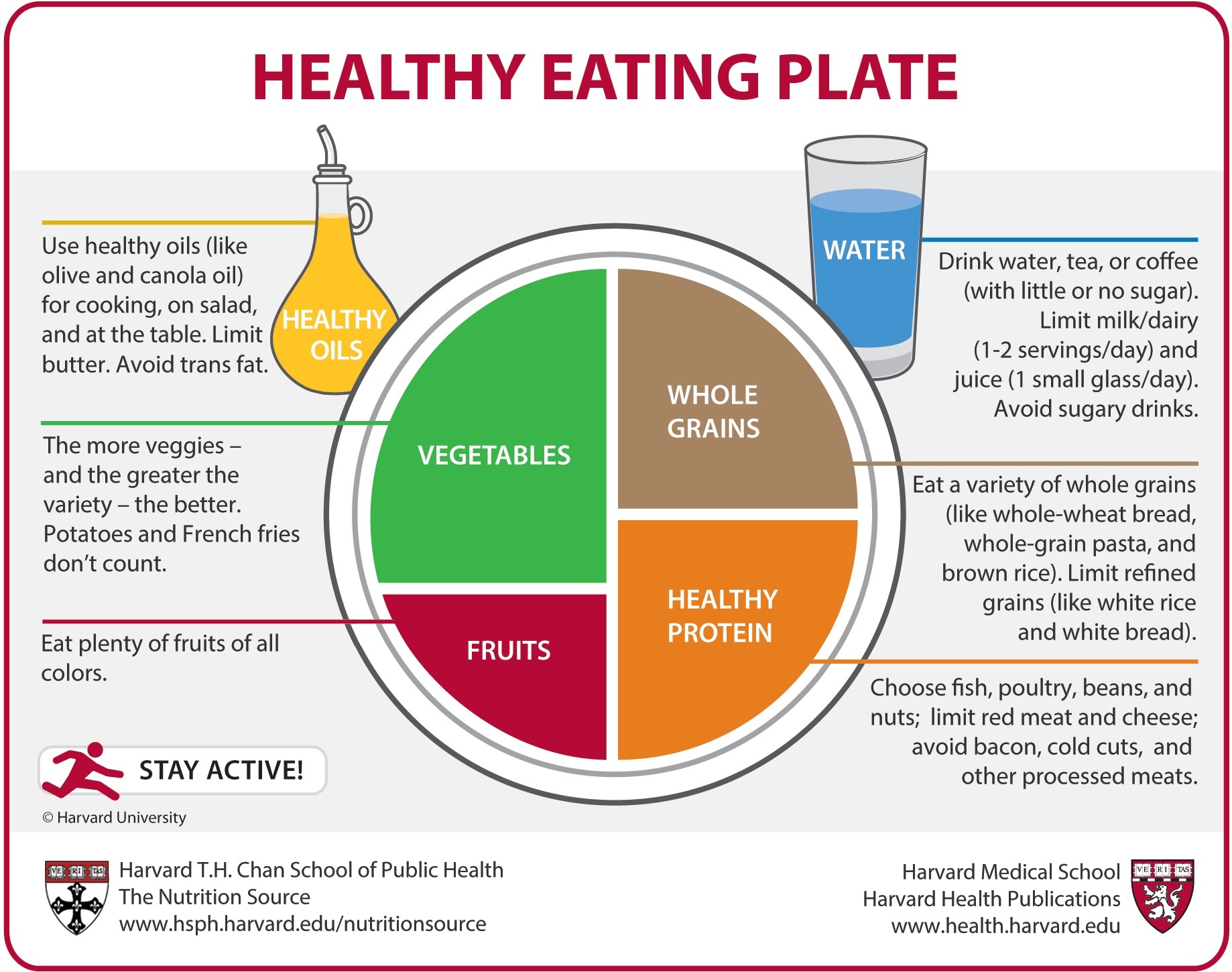
Gluten -Free Foods are Healthier. Unless you are truly sensitive to gluten or have been diagnosed with celiac disease,  you may miss out on some healthy whole grains if you choose gluten-free foods.

You only need to limit salt intake if you have high blood pressure. 90% of us will develop high blood pressure and some of us are sodium sensitive. We get plenty of sodium in processed foods and should try to limit our total intake to no more than 2,300 milligrams a day.

Sugar is toxic. There is no evidence that shows that sugar causes disease on its own. However, a high sugar intake can replace the healthier habits of  learning that carbohydrate intake can be healthier if we consume more complex carbs (fruits, whole grains, vegetables) and less highly refined  carbs (sugary drinks and foods with added sugars).

Fresh Produce is healthier than canned or frozen.  Foods which are picked fresh and immediately canned or  frozen may even have more nutrients than fresh produce. In fact, your body more easily absorbs nutrients like lycopene when they’ve gone through the canning process.

The term “natural” means healthier. The term natural on a food label has no FDA defintion, so it has no meaning in terms of health or that it is “organic.”

Farm-raised fish isn’t healthy. Today’s farm-raised fish has just as much and maybe more healthier omega-3 fats than wild-caught. Also farm-raised fish may have less mercury. They are now more sustainable and when from reputable farms can be raised with fewer antibiotics and no added coloration.

Margarine is loaded with unhealthy trans fats. This depends on whether the margarine is in stick form or tub form. A better choice is the softer tub margarine that is less hydrogenated and thus has less trans fat than the more saturated and trans fat content found in the stick form.

Source: Environmental Nutrition.

For more myths:

CLICK HERE.