What are the Blue Zones?

Introduction How Did the whole Blue Zone Concept Develop?

What Are the Blue Zones? Why are they called “blue”?
An epidemiologist, Pes from Sardinia, Italy began to study centenarians, he denoted those areas that appeared to be long-lived on a map He noted these areas with blue markers on a map, thus the Blue Zones. He used dietary surveys from the last century and noted that from the late 20th century, certain areas in the world had diets and similar social patterns that consisted primarily minimally processed plant foods-i mostly whole grains, greens, nuts, tubers and beans. Most people ate meat on average only five times a month They drank mostly water, herbal teas, coffee, and some wine. They drank little or no cow’s milk; sweetened sodas and fast foods. were largely unknown.

Processed foods began to penetrate these areas as well as animal products and fast foods began to invade the cultures. Not surprisingly, chronic diseases began to appear on their menus.

Sardinia, Italy: Home to the World’s Highest Concentration of Male Centenarians.
In the Years after WW2, 38 people the village of Arzana in Sardinia’s Gennargentu mountains – one out of every 100 of their peers- have reached a century

To illustrate, short bios or vignettes that describe how several members of the Blue Zones have lived and practiced the ways of the centenarians they have become. Each glimpse of them is reflected in the habits they swear have contributed and shown us the way that their lifestyles may contribute to their longevity. The purpose of this is to show how they lived in their culture with a hope that we as Americans can learn how to adapt to or adopt some of the components of this way of living and show us how to adopt them to the “American” way of life. It is also important to realize that it’s not always what we eat, but how to eat”. The information is based on a real life experiment called The Blue Zones by Dan Buettner or the Blue Zones Solution: Eating and Living Like the World’s Healthiest People are excellent EXAMPLES OF HOW TO USE THESE PRINCIPALS IN THE BLUE ZONES to adapt to American ways.

For example, Carbohydrates from Sardinian sourdough bread enter the bloodstream at a slower rate than those from plain white bread.”

“ Traditional diets with whole grains, greens, nuts and beans offer the promise of eluding disease and staying healthy.”

In the kitchen, ninety-year old Assunta Podda flashes a toothy smile while she vigorously stirs an earthen pot of the melange of beans, carrots, onions, garlic, tomatoes, fennel, kohlrabi, and various herbs – all of which had been doused with olive oil. On the table next to her sits the staples the evening meal: some sourdough loaves, forage greens, and a carafe of garnet red wine. With the steady hand of a younger woman, she pours wine into stout glasses and ladles the steaming soup into dishes. “Now eat”, she says with a grin.”

Bread making in Sardinia is a community affair. Women can be seen making the traditional bread served at most meals. In one village bakery. the octogenarian senior baker named Regina Boi had provided the starter dough that her family had cultivated for generations. The starter contains yeast and native Lactobacillus bacteria. From these ingredients carbon dioxide leavens the bread and the lactobacilli also break down the carbohydrates to produce lactic acid that provides tthe traditional sour taste of sour dough bread.

As Podda’s family dinner ends, a spirited exchange ensues with the local village gossip, Pes, one of the guests raises his glass in a sense of revelry and expresses the signature toast of the island, “a kent annos”. May you live to 100”. The remaining guests respond, “And may you be here to count the years”.

Nicoya, Costa Rica: Adults Here have the Longest Life Expectancy in the Americas.

Excess access to fruits such as pineapple and papayas from home gardens extends this plant-based diet year around.
Costa Rica’s blue zone is a roughly 30-mile long strip that runs along the spine of the Nicoya Peninsula; it doesn’t include the tourist resorts on the coast.

Surveys show that previous to the late 20th century, these diets consisted primarily of minimally processed foods – mostly whole grains, greens, nuts, tubers and beans. They ate meat on average only five times a month. They drank water, herbal teas, coffee, and some wine. They drank little cow’s milk and sweetened drinks was largely unknown. As processed foods became available, they ate more processed animal products, and began to eat fast foods. Not surprisingly, chronic diseases have been on the rise.

“A healthy diet is part of the practice that can support longevity, e.g. having a circle of friends, and a strong sense of purpose. Every morning, Maria Elena Jimenez, Rojaz in Santa Cruz gathers to make the perfect tortilla. Three women mix black beans with onions, red peppers, and herbs. The beans will cook until tender and then be nixed with rice and sauteed peppers, onions and garlic to produce a uniquely Costa Rican version of gallo pinto.

The region’s Chorotega people have influenced the food supply by simply eating the same food for a millennia. This may be partly the reason adults there have the longest life expectancy for Americans and men older than 60 have the lowest reliably measured rate of mortality for their age group in the world.

Corn tortillas might affect longevity. The wood ash the women add when they soak the corn breaks down the cell walls of the kernels and releases niacin which helps to control cholesterol. Black beans contain the same pigment-based antioxidants found in blueberries. They are also rich in colon-cleansing fiber. The secret is pairing corn with beans the beans that then can contribute all nine essential amino acids to make muscle in addition to less cholesterol and saturated fat. as meats.

By the way, Paulina serves this breakfast so typical in the Nicoya region to her 102 – year old father, Pachito and her nephew, Sixto every day. The meal includes coffee, eggs, rice and beans, and those famous tortillas cooked on a tradition wood-fired stove known as a fogon. By the way, this adds up to a relatively high carbohydrate diet.

How is Longevity Studied? A common way if possible is to use a little genetic science.
Telomeres are protective “caps”on the ends of DNA strands, which wear down over time. This effect becomes a marker of biological age. Research has shown us Nicoyans have longer telomeres (a good thing) on average than Costa Ricans overall. (Stanford Social epidemiologist, David Rehkopf and Costa Rican demographer Luis Rosero-Bixby).

Rehkopf has reported that Nicoyans seem to be up to a decade younger biologically than their chronological age.

Association of fish and long-chain 3 -omega fatty intakes with total and cause-specific mortality: prospective analysis of 421,309 individuals.

Association of fish and long-chain omega-3 fatty acids intakes with total and cause-specific mortality: prospective analysis of 421 309 individuals
Y Zhang  1 , P Zhuang  1 , W He  2 , J N Chen  1 , W Q Wang  3 , N D Freedman  4 , C C Abnet  4 , J B Wang  5 , J J Jiao  3

A study published in the Journal of Internal Medicine reported that both men and women who had a high intake of fish or long-chain omega 3 polyunsaturated fatty acids (PUFA) that included EPA, DHA, and DPA had lower risks of dying from any cause.

The study population included 240, 729 men and 180,580 women. They were given questionnaires concerning lifestyle and diet and followed up after 16 years.

Results (from Abstract)
“A total of 54 230 men and 30 882 women died during 6.07 million person-years of follow-up. Higher fish and LCn-3 PUFAs intakes were significantly associated with lower total mortality (P < 0.0001). Comparing the highest with lowest quintiles of fish intake,
men had 9% (95% confidence interval, 6–11%) lower total mortality, 10% (6–15%) lower cardiovascular disease (CVD) mortality, 6% (1–10%) lower cancer mortality, 20% (11–28%) lower respiratory disease mortality and 37% (17–53%) lower chronic liver disease mortality, while women had 8% (5–12%) lower total mortality, 10% (3–17%) lower CVD mortality and 38% (20–52%) lower Alzheimer’s disease mortality. Fried fish consumption was not related to mortality in men whereas positively associated with mortality from all causes (P = 0.011), CVD and respiratory disease in women. LCn-3 PUFAs intake was associated with 15% and 18% lower CVD mortality in men and women across extreme quintiles, respectively.”

Conclusion
“Consumption of fish and LCn-3 PUFAs was robustly associated with lower mortality from major causes. Our findings support current guidelines for fish consumption while advice on non-frying preparation methods is needed.
Discussion: “As the associations between long-chain omega-3 PUFAS intake and morality were similar to that of fish intake, the health benefits of fish is probably related to the abundant content of long-chain omega-3 PUFAS, which possess anti-inflammatory properties and may prevent the development of inflammation-driven disorders, including cardiovascular disease, cancer, and Alzlheimer’s disease,” Dr. Zhang and associates observed.”
“Overall, we provide new clinical evidence with which to address the role of fish and long-chain omega-3 PUFAs in overall health and contribute to updated dietary guidelines,” the authors concluded.”
A study reported on July 18, 2018 in the Journal of Internal Medicine reveals a lower risk of dying from any cause during a 16-year follow-up period among men and women who had a high intake of fish or long-chain omega-3 polyunsaturated fatty acids (PUFAs), which include EPA, DHA, and DPA.”

Keywords: AARP diet and health study; cardiovascular disease; long-chain omega-3 fatty acids; marine fish; mortality.
© 2018 The Association for the Publication of the Journal of Internal Medicine.

Before taking any PUFA supplement, check with your physician. Fish is better!!! SJF

From Eating Well:

The Bottom Line: “If you tend to eat a lot of fried food, the air fryer is definitely a good option for you. Still, the air fryer isn’t a magic machine that makes any food “healthy.” If you typically use the oven to cook food, the air fryer can be a great tool to add more variety to your cooking—start experimenting with our 30-Minute Recipes for Your Air Fryer! From Eating Well.”

Are Sitting Patterns Related to Diabetes?

Adults are sitting more than ever, and few pay attention to how they sit throughout the day.

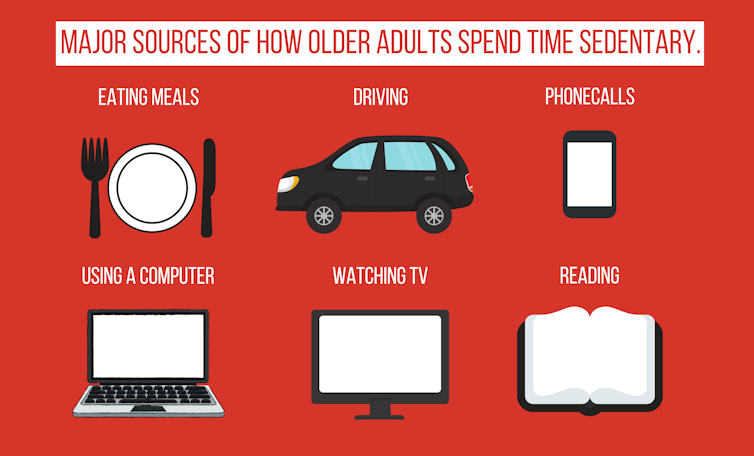
Take a moment to think about all the reasons we sit. First off, you’re probably sitting while reading this. Some of the most common sitting activities include eating meals; driving; talking on the phone; using a computer, television, or small device; and reading. Now take another moment to think about all the sitting done across your lifetime.

Older Americans spend a lot of time sitting.
Matthew Mclaughlin/Figshare, CC BY-SA

The fact is, the amount of time spent sitting has increased over time. And with innovations such as Alexa, delivered groceries, and pre-made meal services, we expect many older adults will sit longer and will do it more often. As of today, the average older adult spends between 56 percent and 86 percent of their waking day sedentary. That’s a lot of sitting.

Our research team studies healthy aging and is interested in how sitting too much might contribute to heart disease and diabetes. Our recent study suggests that the way older adults accumulate their sitting time might be important for aging without diabetes.

“…the way older adults accumulate their sitting time might be important for aging without diabetes.”

What happens while sitting?

When you sit for long periods without getting up, the large weight-bearing muscles of the legs remain dormant. With no action, these muscles are unable to efficiently use the sugars and fats that float around in your blood – and in theory, this could lead to weight gain and metabolic diseases such as diabetes.

At the same time, reduced blood flow in your arteries leads to hostile conditions that promote injury to the blood vessel walls. Over a lifetime, this injury likely contributes to heart disease and to peripheral artery disease. Furthermore, when your leg muscles remain shut off for long periods, blood collects in your veins which leads to an increased risk for blood clots, or deep venous thrombosis. Standing up and moving around can stop these processes, but all too often, we just keep sitting.

Blood flow can become ‘turbulent,’ causing damage to arteries.
www.pexels.com

Sitting patterns

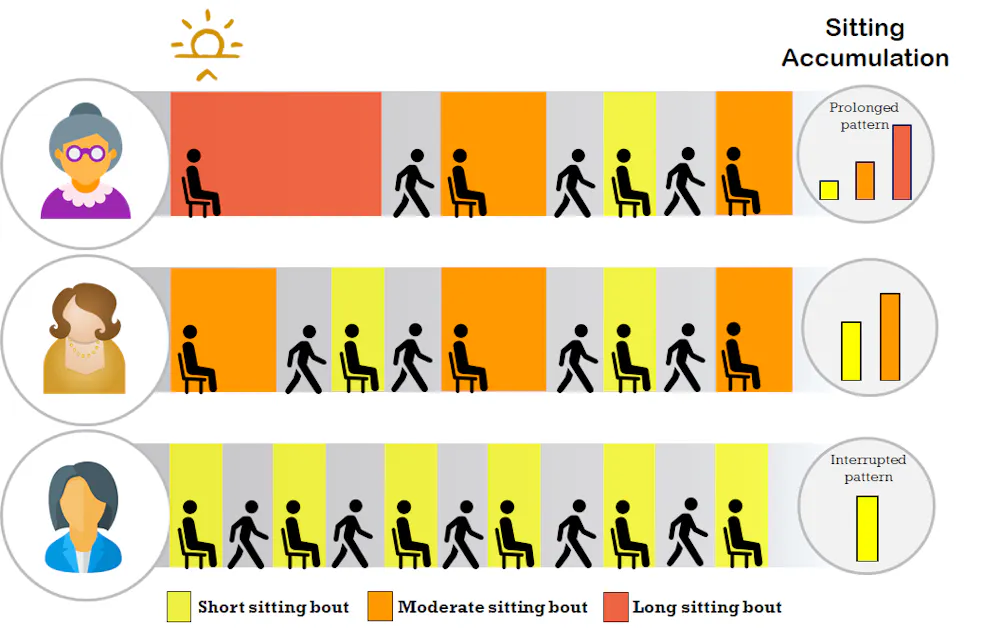
Sitting patterns describe how people sit throughout the day. Some people commonly sit for long periods at a time, rarely getting up. They are said to have prolonged sitting patterns. Others rarely sit still. They regularly get up after sitting for just short periods. These sitters are said to have interrupted sitting patterns. Where do you fit on the sitting pattern spectrum?

Sitting can be accumulated in different patterns.
John Bellettiere/figshare.com, CC BY-SA

Are sitting patterns important for metabolic health?

Emerging evidence suggests yes. From observational studies, we learned that adults with prolonged sitting patterns had larger waistlines, higher BMI, and in their blood had less good fats, more bad fats, and higher levels of sugar compared to adults with interrupted sitting patterns.

To test whether problems with fat and sugar metabolism were being caused by sitting patterns, researchers around the world conducted experiments. They brought adults into a laboratory at least two times each, having them sit continuously for about eight hours (an extremely prolonged pattern). On the second day, the participants were asked to get up every 20-30 minutes (a highly interrupted pattern). The interruptions lasted for two to five minutes and included standing still, light walking, simple resistance exercises or moderate-intensity walking, depending on the study.

When researchers synthesized evidence from most of the laboratory studies, the results were clear. On days with prolonged patterns, our bodies are not able to metabolize fats or sugar as well as they are on days with interrupted patterns. Blood pressure and fatigue were also higher on days with prolonged sitting compared to days with interrupted patterns.

These groundbreaking laboratory studies provided strong evidence that sitting patterns had an immediate effect on how the body processes fats and sugar, otherwise known as metabolism. This led to the idea that prolonged sitting patterns over a lifetime could contribute to metabolic diseases such as diabetes in later life. Since diabetes can take a long time to develop, this question cannot be feasibly tested in a laboratory. Instead, we turned to an observational study of the population to help answer the question.

Are sitting patterns related to diabetes?

We recruited over 6,000 women aged 65-99 from the Women’s Health Initiative and measured their sedentary patterns for seven days using research-grade activity monitors. We also had over 20 years of detailed health records, which included information on whether the women had ever been diagnosed by a physician with diabetes.

As expected, the group with the most prolonged sedentary patterns had the most women with diabetes. The group with the most interrupted patterns had the fewest women with diabetes.

We used advanced statistical procedures to account for differences in other factors such as dietary habits, physical activity, medication use, weight, age, alcohol and cigarette use, and overall health, giving us more confidence that the sitting patterns were, in fact, driving the findings. We should caution, however, that since we did not measure sitting patterns before the women were first diagnosed with diabetes, we do not know whether the sitting patterns contributed to diabetes or whether the diabetes changed their sitting patterns. We ran additional statistical tests to try to untangle that, which indicated that sitting patterns contributed to diabetes. However, additional studies specifically suited to answer the question of causation are needed.

While this was the first study of sedentary patterns and diabetes exclusively in older adults, our results were remarkably similar to recent findings in a younger cohort. Researchers from the Netherlands studied 2,500 adults ages 40-75 and found that prolonged sitting patterns were associated with Type 2 diabetes and with metabolic syndrome.

Conclusions and words of advice

Based on the findings from our study and those of the Dutch researchers, when viewed with the earlier epidemiologic data and findings from the laboratory experiments, it seems that sitting patterns may contribute to the growing international diabetes epidemic.

[Related: 20 Habits for a Healthier, Happier Life]

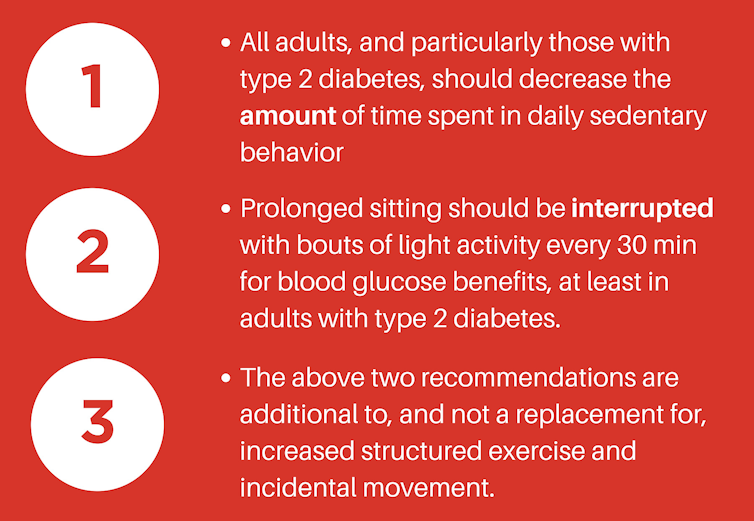
With that said, as with all science, these first few studies are only the beginning of the story. Much more work lies ahead. For the time being, there is a possibility that changing your sitting patterns might provide protection against diabetes, especially if long sitting bouts were always broken with light activity or even better, moderate-intensity activity, as recommended by the American Diabetes Association.

Recommendations from the American Diabetes Association.
Matthew Mclaughlin/figshare.com, CC BY-SA

The authors wish to sincerely thank Dr. Jonathan Unkart for his help with this story.

John Bellettiere is a postdoctoral scholar at the University of California San Diego studying Family Medicine and Public Health. Andrea LaCroix, PhD, is Professor and Chief of Epidemiology, Family Medicine and Public Health at the University of California San Diego. She received her PhD in Epidemiology from the University of North Carolina at Chapel Hill and completed a postdoctoral fellowship in cardiovascular disease at The Johns Hopkins University. Matthew Mclaughlin is a PhD student at the University of Newcastle in Australia and a research assistant at Hunter New England Population Health.

This article is republished from The Conversation under a Creative Commons license. Read the original article.

Food Addiction?

Fatty and sugary foods train your brain to hate healthier options: Yale study

By

Emily Lefroy

New York Post, March 22, 2023

“People crave fatty and sugary foods when they consume them daily — and the pattern can be hard to break, researchers at Yale University and the Max Planck Institute for Metabolism Research in Germany have determined in new research.”People crave fatty and sugary foods when they consume them daily — and the pattern can be hard to break, researchers at Yale University and the Max Planck Institute for Metabolism Research in Germany have determined in new research.

The study, published online Wednesday in the journal Cell Metabolism, found eating a snack high in fat and sugar every day alters the reward circuits in human brains to create lasting preferences.

Participants were divided into two groups and told to continue their normal eating habits, except for one major difference. Researchers gave one group yogurt high in fat and sugar twice daily for eight weeks, while the other group received a placebo.

At the end of the eight weeks, participants were offered puddings with varying fat contents and apple juice containing differing sugar levels and told to rate them for fattiness, creaminess, oiliness, sweetness, desire and satisfaction.

Scientists found the group that was used to eating the yogurt higher in sugar and fat didn’t enjoy the healthier options as much as they had before the study.

The participants also underwent MRI scans to track brain activity while drinking milkshakes, which showed increased activity for the high-sugar, high-fat group, but not for the other group.

“Let’s say a new bakery opens up next to your work and you start stopping in and having a scone every morning. That alone can rewire your basic fundamental dopamine learning circuits,” Dana Small, the study’s senior author and director of Yale University School of Medicine’s Modern Diet and Physiology Research Center, told NBC News.

The authors likened the findings to the effects of addictive drugs, saying exposure to foods high in sugar and fat indicates that habitual factors contribute to obesity — not just genetic and environmental influences, as previously thought.”

Close up of deep fried foo.
The study found those eating food higher in fat and sugar continued to crave it.

Small told NBC News the study is the first to show that even small human dietary changes can rewire brain circuits and increase the long-term risk of overindulgence or weight gain.

The findings support a rat study published in January in the Journal of Physiology, which showed that a consistent diet of high-fat and high-caloric foods can change the neurological pathways in your brain, reducing its ability to regulate calorie intake.

While a “brief exposure” of three to five days of fatty foods didn’t appear to affect the pathways between the brain and stomach, the researchers noted the decline with 10 to 14 days of high-fat and high-calorie diets.

Junk food has been linked to depression, with a study recently published in the Journal of Affective Disorders finding rates of depression are significantly higher in people whose diets include large amounts of ultra-processed foods.

Peanuts and Vascular Health

Here’s why eating peanuts is so important for good blood flow
March 28, 2023
by John Anderer
BARCELONA, Spain — When it comes to snacking, many studies already show peanuts are a healthy choice and great source of proteins, vitamins, and minerals. Now, new research out of Spain suggests people should be eating more peanuts and peanut butter — even if they’re young and healthy! Scientists from the University of Barcelona report that peanuts may have a beneficial impact on vascular health in young and healthy individuals.
Peanuts come from the leguminous plant Arachis hypogaea. They’re the most widely consumed nuts around the world. Peanuts are high in fatty acids, protein, fiber, and polyphenols — making them a convenient, accessible, and nutrient-rich snack that can contribute to a healthy lifestyle instead of hindering one’s fitness goals.

Traditionally, most nutritional studies focus on analyzing any and all significant differences among people with a high risk of suffering from a disease, especially older people. For this population profile, however, researchers say it is easier to observe potential beneficial effects by altering dietary patterns or introducing a healthy food into their usual diets.

This project included 63 healthy young people, all between ages of 18 and 33. They had to add a daily portion of peanut products to their regular diets for six months.
“In this study group, it is more difficult to see any effect of dietary changes on health,” says Professor Rosa M. Lamuela, from the UB Department of Nutrition, Food Science and Gastronomy, in a university release.

What do peanuts do for the blood?
This study is the first ever nutritional intervention to confirm that vascular markers improved in relation to both antithrombotic (reducing blood clots) and vasodilator (dilating blood vessels) effects among healthy young people after eating peanuts.
“The results reveal a significant increase in urinary levels of phenolic metabolites in those young people who had eaten a daily dose of peanuts and peanut butter compared to the control group, which had eaten a cream without fiber or polyphenols,” Prof. Lamuela explains. “Similarly, participants who ate peanuts or peanut butter also showed improved levels of prostacyclin I2 and the ratio between thromboxane A2 and prostacyclin I2, lipid molecules (eicosanoids) which are considered markers of vascular health.”

“Interestingly, some phenolic metabolites that increased significantly after the consumption of peanut products —especially hydroxycinnamic acids— also correlated with the improvement in both markers,” adds researcher Isabella Parilli-Moser (INSA-UB-CIBERobn), first author of the study.
These findings further reinforce a hypothesis often defended in scientific literature and previous studies by the research team regarding the protective effect of polyphenols on cardiovascular diseases in adults, as well as their effects on blood vessels. Polyphenols are the primary dietary antioxidants and anti-inflammatory compounds, according to the team.

Moreover, studies show eating nuts and peanuts has a link to a lower risk of developing both cardiovascular diseases and diabetes, especially due to the protective effect of the polyphenols in such foods. All in all, while this work suggests peanuts can benefit vascular health, more research is necessary before scientists can form a full understanding of all the factors at play.
“We need more studies to fully understand the mechanisms that explain the positive effects of peanut consumption on vascular health,” researchers conclude.
The findings appear in the journal Antioxidants.

Diet and Lifestyle

Healthy Eating Linked to Lower Risk of Total Mortality

— Lower risks of death due to cardiovascular disease, cancer, respiratory disease noted

by Kristen Monaco, Staff Writer, MedPage Today January 9, 2023

Share on Facebook. Opens in a new tab or window

Share on Twitter. Opens in a new tab or window

Share on LinkedIn. Opens in a new tab or window

email article

A photo of a couple serving dinner in their kitchen.

Adhering to healthy eating patterns was associated with lower risk of total and cause-specific mortality, a prospective cohort study with up to 36 years of follow-up showed.

Among 75,230 women from the Nurses’ Health Study and 44,085 men from the Health Professionals Follow-up Study, those who scored in the highest quintile for healthy eating patterns recommended by the Dietary Guidelines for Americans (DGAs) had a 14% to 20% lower risk of total mortality versus those in the lowest quintile, reported Frank Hu, MD, PhD, of the Harvard T.H. Chan School of Public Health in Boston, and colleagues in JAMA Internal Medicineopens in a new tab or window.

The pooled multivariable-adjusted hazard ratios of total mortality with four healthy eating patterns were (P<0.001 for trend for all):

  • Healthy Eating Index 2015 (HEI-2015): HR 0.81 (95% CI 0.79-0.84)
  • Alternate Mediterranean Diet (AMED): HR 0.82 (95% CI 0.79-0.84)
  • Healthful Plant-Based Diet Index (HPDI): HR 0.86 (95% CI 0.83-0.89)
  • Alternate Healthy Eating Index (AHEI): HR 0.80 (95% CI 0.77-0.82)

This lower risk was consistent across all racial and ethnic groups.

“This is one of the largest and longest-running studies that examine the associations of dietary scores for four healthy eating patterns recommended by the DGAs with the risk of total and cause-specific mortality in large cohort studies,” Hu told MedPage Today.

“Every 5 years, the U.S. Department of Agriculture (USDA) and U.S. Department of Health and Human Services (HHS) release an updated version of the Dietary Guidelines for Americans,” he explained. “It is important to evaluate adherence to DGA-recommended eating patterns and health outcomes, especially mortality, so that timely updating of DGAs can be made.”

Hu noted that these findings will be valuable for the 2025-2030 Dietary Guidelines Advisory Committee, which is being created by the USDA and HHS to evaluate the current evidence on different eating patterns and health outcomes.

Beyond total mortality, healthier diets were also significantly linked to lower risk of cause-specific mortality.

Across the four different dietary patterns, people in the highest quintile saw a 6% to 13% lower risk of death from cardiovascular disease versus those in the lowest quintile. Likewise, those in the highest quintile saw a 6% to 15% lower risk of death due to heart disease, a 7% to 18% lower risk of cancer-related death, and a 35% to 46% lower risk of respiratory disease-related death.

In addition, those with the highest scores on the AMED and AHEI also saw a modestly lower risk of death due to neurodegenerative disease (HR 0.94, 95% CI 0.90-0.99 and HR 0.93, 95% CI 0.87-0.99, respectively).

“Although previous studies have found an inverse association between healthy eating patterns and mortality, our study provides evidence that healthy eating patterns reduce the risk of cause-specific mortality including cardiovascular disease, cancer, respiratory, and neurodegenerative mortality,” said Hu. “The findings on respiratory and neurodegenerative mortality are novel.”

However, eating a healthy diet according to any of the four patterns did not appear to be protective against stroke-related deaths.

Hu said clinicians can recommend a “variety of healthy dietary patterns” to patients in order to reduce their risk for chronic diseases and premature death.

“These patterns such as the Mediterranean diet, DASH diet, vegetarian diet, or other versions of healthy diets can be adapted to meet individual health needs, food preferences, and cultural traditions,” he noted. “These healthy dietary patterns typically include high amounts of plant foods such as fruits, vegetables, whole grains, nuts, and legumes, and lower amounts of refined grains, added sugars, sodium, and red and processed meats.”

“It is also important to balance caloric intake with physical activity to maintain a healthy weight,” he added.

Among the women included in the analysis, mean baseline age was 50.2 and 98% were white; for men, mean age was 53.3 and 91% were white. In total, 31,263 women and 22,900 men died during follow-up. The leading cause of death was cancer, followed by cardiovascular disease, heart disease, neurodegenerative disease, respiratory disease, and stroke.

Dietary data were taken from semiquantitative food frequency questionnaires including more than 130 items, which were completed every 2 to 4 years.

  • author['full_name'] Kristen Monaco is a staff writer, focusing on endocrinology, psychiatry, and nephrology news. Based out of the New York City office, she’s worked at the company since 2015.

Disclosures

The study was supported by a grant from the National Heart, Lung, and Blood Institute.

Hu reported no disclosures. Other co-authors reported relationships with Kubara Honke, Grants-in-Aid for Scientific Research, the G-7 Scholarship Foundation, the Japan Diabetes Society, the LOTTE Foundation, Layer IV, the U.S. Department of Agriculture, the U.S. Highbush Blueberry Council, the National Institutes of Health, Mars Edge, and the National Heart, Lung, and Blood Institute.

Primary Source

JAMA Internal Medicine

Source Reference: opens in a new tab or windowShan Z, et al “Healthy eating patterns and risk of total and cause-specific mortality” JAMA Intern Med 2023; DOI: 10.1001/jamainternmed.2022.6117.

Vitamin D and Mortality – In the News

Improving vitamin D levels in Older Age is Linked to Lower risk of all-cause Mortality

Sources: BMC Geriatr 22, 245 (2022)
LIfe Extension, Feb. 2023

Judith E. Brown. Nutrition Now, 7th Edition

The participants in this study included 1,362 individuals in the Chinese Longitudinal and Health Longitudinal Survey, aged 60 to 113 whose serum vitamin D levels were measured in 2012 and 2014. Mortality data were collected in 2018.

Deficient vitamin D levels were detected in 67.5% of the participants in 2012 and 68.4% in 2014.

During follow-up, 420 deaths occurred. Individuals who were deficient in vitamin D in 2012 and 2014 had more than twice the mortality risk than those who maintained higher levels.

Among participants who maintained sufficient vitamin D were deficient in 2012 and not deficient in 2014, the risk of dying was 30% and 53% lower, respectively, compared to participants who were deficient at both points in time.

This highlights the need to address vitamin D deficiency in older individuals to support longevity and healthy aging.

Editor’s Note: The greatest benefit associated with improved vitamin D status was found among women and those people who were 80 years of age or older.

What are the primary functions of vitamin D? This fat-soluble vitamin is needed for absorption of calcium and phosphorus needed for bone formation and muscle activity. It inhibits inflammation and is involved in insulin secretion and blood glucose level maintenance. It can be toxic with the long term use of 10,000 IU daily. The RDA is 600 IU for adult women and men; the Upper Tolerable Intake (UL) is 4,000 IU.s or 100 ug.

This highlights the need to address vitamin D deficiency in older individuals. Based on the evidence for bone benefits, however, a nutrition panel recently increased the RDA for vitamin D to 600 IU for people up to age 70 and to 800 IU for those over 70. That’s a fairly sizable boost over the previous recommendations of 200 IU per day through age 50, 400 IU for ages 51 to 70, and 600 IU for ages over 70. They also raised the safe upper limit of daily intake for most age groups from 2,000 to 4,000 IU. to support longevity and healthy aging. 1 microgram vitamin D = 40 IU as both terms are used on supplement labels. It is primarily found only in vitamin D-fortified milk, cereals, and other foods such as fish.

The best way to measure effects of supplemental intake or vitamin D status is by a blood test. Vitamin D3 is the most active form and is made from a form of cholesterol in the skin cells upon exposure to ultraviolet rays from the sun. See your doctor for guidance.

Nutrigenomics

What is Epigenetics?

Epigenetics refers to the inheritable changes in your DNA that don’t change the actual DNA sequences. That means these changes are potentially reversible.

What is DNA Methylation?

Your DNA consists of four bases called cytosine, guanine, adenine, and thymine. A chemical unit called a methyl group (designated by CH3 or one carbon atom and three hydrogen atoms) can be added to cytosine.

When that happens, that area of the DNA is methylated. When you lose that methyl group, the area becomes demethylated.

DNA methylation often inhibits the expression of certain genes. For example the methylation process might stop a tumor-causing gene from “turning on”, preventing cancer.

Researchers are currently working to better understand the factors that affect DNA methylation. Based on some earlier findings, there is some evidence that diet plays a role. This opens up the potential to reduce genetic risk of developing certain conditions such as breast cancer or heart disease through simple lifestyle changes.

The patterns of DNA methylation change through out your life, from fetal development to end of life. Studies suggest thqt DNQ methylation slows down as we age. Genes that were once repressed by methylation start to become active and possibly result in a variety of diseases. Interestingly, another study found that participants”who consumed more alcohol were more likely to have decreased DNA methylation. In contrast, those who consume a lot of folate were more likely to have increased methylation.

“Can Diets Change Your DNA? The question is “are you really what you eat? The answer appears to be No. However, we have known for years that gene expression influences metabolism. A study published in Nature Microbiology in 2016 indicates that nutrition may play an important role in how some DNA sequences are expressed. The study that how genes behave is strongly influenced by the food we eat. Even so, we are still a long way from the kind of personalized medicine that will furnish nutritional therapies to treat a wide spectrum of conditions.” Stay tuned for the future. Source: You Are what Your Grandparents Ate. Judith Finlayson, 2019.

You may want to search my blog for a simple description of the association between nutrigenomics and diet with the Agouti yellow mouse.

CLICK HERE.

In the News: Vitamin D

Low levels of vitamin D linked to poor cognitive function

Source: Medical News Today, Sunday, December 11, 2022
<newsletter@newsletter.medicalnewstoday.com>
“There is growing evidence for how your body relies on vitamin D to ward off inflammation, cancer, and heart disease. Having enough of it in your blood is linked to a lower risk of dying prematurely. But what about vitamin D and the brain? What is its role in cognition, or dementia, if any? As one researcher told Medical News Today this week, “we did not know if vitamin D was even present in the human brain.”

The researcher, Kyla Shea, PhD, is lead author of a study offering the first evidence that vitamin D is not only present in the brain, a healthy level of it is associated with better cognitive function and a lower risk of dementia in older adults.

The evidence comes from the postmortem study of the brains of 290 individuals who had agreed to donate their organs after death. Researchers found that higher concentrations of vitamin D across the brain were associated with up to a 33% lower chance of developing dementia.

It is early days, so precisely how vitamin D supports healthy cognitive function is not yet understood. Dr. Shea sees signs that it is involved in cell-signaling pathways that may be part of neurodegeneration, but more research is needed to build on this groundbreaking study.” Stay tuned???

All about omega-3 fats and the Brain : Source: Medical News Today

The following study presents an interesting connection between omega-3 fats, brain function and cognitive decline.

Erica Watts, Oct 7, 2022

Fact Checked by Alexandra Sanfins, PhD.

  • Omega-3 fatty acids have many benefits and play a role in heart health and cognitive functioning.
  • A new study demonstrates that there may be a connection between consuming omega-3 and an increase in brain functioning for people in midlife.
  • The cross-sectional study analyzed the omega-3 blood levels of people in their midlife and assessed their MRIs and thinking skills to see whether there was a difference in people with higher or lower omega-3 levels.

“According to the new study published in Neurology, the medical journal of the American Academy of Neurology, people who have higher omega-3 levels in their middle ages may have an edge over people who take in lower levels of omega-3.

The study was led by researchers at the University of Texas Health at San Antonio, TX, who were concerned about the lack of research on how omega-3 can impact people in their midlife.

Omega-3: Things to know

According to the National Institutes of Health (NIH)Trusted Source, omega-3 fatty acids “are a group of polyunsaturated fatty acids that are important for a number of functions in the body.” In addition to playing a role in heart health and cognitive functioning, omega-3 fatty acids are also part of the cell membraneTrusted Source and affect cell functioning.

As Professor Stuart Phillips noted during a Live Long and Master Aging podcast, “Some fats that we ingest, and particularly the omega-3 or long-chain polyunsaturated fatty acids are actually what we refer to as essential fats. We need to have them in our diet because we don’t have the ability to make them ourselves.”

Prof. Phillips is the director of the Physical Activity Center of Excellence at McMaster University in Ontario, Canada.

The NIHTrusted Source lists three types of omega-3 fatty acids: alpha-linolenic acid (ALA), eicosapentaenoic acid (EPA), and docosahexaenoic acid (DHA)..

While people can take omega-3 supplements, it is also in a number of foods. Some good sources of omega-3 include fish (such as salmon and tuna) nuts and seeds (chia seeds and flax seeds).

Studying Omega-3’s effect

The researchers studied 2,183 men and women with an average age of 46. They excluded people who had dementia or a history of having a stroke from their participant pool.

Omega-3s are present in the brain, particularly in the hippocampus. The hippocampus plays a role in learning and memory, and a reduction in the volume can point to possible dementiaTrusted Source.

The participants also underwent a neurological assessment. The tests measured the participants’ abstract thinking, processing speed, executive function, and delayed episodic memory.

Omega-3 and brain health 

Using blood samples, the researchers analyzed the fatty acid composition (omega-3’s) of each participant. The participants also consented to having their brains scanned using MRI technology. The researchers were also interested in the volumes of gray and white matter.

The researchers placed approximately 25% of the participants in the low group where the participants had omega-3 fatty acids blood levels falling under 4%. This group had an average count of 3.4%.

The rest of the participants were put into the high group; their average omega-3 level was 5.2%.

Comparing the blood samples, MRI results, and neurological assessments, the study authors determined that higher levels of omega-3 fatty acids correlate to a higher hippocampus volume and better abstract reasoning.

Researchers observed that the people in the high group also had higher gray matter volumes, better reading scores, and slightly higher logical reasoning scores.

In contrast, the people in the low group tended to be less likely to have a college degree and more likely to be smokers and have diabetes compared to the higher group.

“This exploratory study suggests that higher [omega-3 blood levels] are associated with larger hippocampal volumes and better performance in abstract reasoning, even in cognitively healthy middle-aged adults from the community, suggesting a possible role in improving cognitive resilience,” write the authors.

“These results need to be confirmed with additional research, but it’s exciting that omega-3 levels could play a role in improving cognitive resilience, even in middle-aged people,” said study author Prof. Claudia L. Satizabal, Ph.D.

Prof. Satizabal is an assistant professor at the Department of Population Health Sciences at UT Health San Antonio, TX.

Diet and brain health 

The authors noted that other researchers have conducted similar studies in older populations but believe that it is necessary to see what impacts omega-3 supplements have on people in their midlife because they start experiencing cognitive decline.

According to the authors, “One of the main challenges for some of these studies may be that dietary interventions are carried out perhaps too late for significant improvements in symptomatic participants, as cognitive changes may be well established over the previous 15 to 20 years.”

“Improving our diet is one way to promote our brain health. If people could improve their cognitive resilience and potentially ward off dementia with some simple changes to their diet, that could have a large impact on public health.”

– Prof. Satizabal

Dr. Natalie King, a neuroscientist and founder of Florae Beauty, not involved in the study, spoke with Medical News Today and discussed the importance of diets on brain health.

“Everything we do and consume affects our brain, and there have been numerous studies, including the one shared, that highlight the effects of food and drink on overall brain health and function,” said Dr. King.

“Omega-3 fatty acids, in particular, have been found to be beneficial when it comes to improving mental function as well as supporting an overall wellness plan when considering disease pathologies like mood disorders and others affecting learning and memory,” Dr. King continued.”

Until we know how much omega-3 fats are needed to improve optimal brain function in the meantime, adequate EPA and DHA dosage is often obtained by consuming 8 ounces of fatty fish weekly. Deep fried fish have been found to be a poorer source of EPA and DHA than baked or broiled fish. The top sources include: salmon, farmed and wild, anchovies, herring, whitefish, mackerel, and sardines. Tuna (light) canned in oil only provides lower amounts.

Judith E. Brown, Nutrition Now, 7th Edition.

Supplements are plentiful on the market; however, consult your physician for dosage and any conflicts with other medications such as blood thinners. It is important to remember that dietary supplements are produced and marketed with few regulations as to safety, quality or efficacy.