Is Food Addictive?

Fatty and sugary foods train your brain to hate healthier options: Yale study

People crave fatty and sugary foods when they consume them daily — and the pattern can be hard to break, researchers at Yale University and the Max Planck Institute for Metabolism Research in Germany have determined in new research.

The study, published online Wednesday in the journal Cell Metabolism, found eating a snack high in fat and sugar every day alters the reward circuits in human brains to create lasting preferences.

Participants were divided into two groups and told to continue their normal eating habits, except for one major difference.

Researchers gave one group yogurt high in fat and sugar twice daily for eight weeks, while the other group received a low fat lowl-fat, low-sugar version.

At the end of the eight weeks, participants were offered puddings with varying fat contents and apple juice containing differing sugar levels and told to rate them for fattiness, creaminess, oiliness, sweetness, desire and satisfaction.

Scientists found the group that was used to eating the yogurt higher in sugar and fat didn’t enjoy the healthier options as much as they had before the study.

The participants also underwent MRI scans to track brain activity while drinking milkshakes, which showed increased activity for the high-sugar, high-fat group, but not for the other group.

“Let’s say a new bakery opens up next to your work and you start stopping in and having a scone every morning. That alone can rewire your basic fundamental dopamine learning circuits,” Dana Small, the study’s senior author and director of Yale University School of Medicine’s Modern Diet and Physiology Research Center, told NBC News.

Conclusion:

The authors likened the findings to the effects of addictive drugs, saying exposure to foods high in sugar and fat indicates that habitual factors contribute to obesity — not just genetic and environmental influences, as previously thought.The study found those eating food higher in fat and sugar continued to crave it.

In discussing food addiction, it’s the link between the gut and the brain. “When highly processed food is ingested, the body is flooded with heavy loads of salt, sugar and fat, as expressed in his book “Salt, Sugar Fat, by Michael Moss. Once ingested, they race along the same pathways, using the same neurological circuits to reach the brain’s pleasure zones…responsible for enjoyable feelings for what it thinks is the right thing for the body.”

Michael Moss, Salt, Sugar, Fat. How the Food Giants Hooked Us. Random House Trade Paperback Edition, 2014

Vitamin B12: The Facts At a Glance

Important Facts about Vitamin B12
Sally Feltner MS, PhD Diet and Health, General October 15, 2020 2 Minutes
March 27, 2019 by foodworksblog Leave a comment


Vitamin B12 is often overlooked as to its importance to human health. Vitamin B12 is needed for the metabolism of another vitamin, folate as well as fatty acids to maintain the insulating layer of myelin surrounding nerve fibers. When myelin degenerates, neurological symptoms occur that include numbness, tingling, memory loss and disorientation. If not treated, it can eventually cause paralysis and death. On the other hand, a deficiency is rare, but can be a public health concern due to marginal B12 status due to either low intake or problems with absorption as often found in the older adult. This deficiency may also occur in people who attempt to practice a strict vegan diet as this vitamin is found almost exclusively in animal products.Vegan diets are a concern due to B12 found only in animal foods. Severe deficiencies have been found in breast – fed infants of vegan women and marginal deficiencies for all vegans if supplemental or fortified foods are not consumed in the diet.

The absorption of B12 from food requires adequate levels of stomach acid, intrinsic factor (produced in the stomach) and pancreatic secretions. Even though it is a water-soluble vitamin, the body stores and reuses it more efficiently that it does other water soluble vitamins. Poor absorption of vitamin B12 can result from a condition called pernicious anemia. It is an autoimmune disease in which the cells in the stomach that produce intrinsic factor are destroyed. This can be treated by using injections or megadoses of the vitamin. When this occurs, intrinsic factor is not necessary since synthetic B12 found in supplements are used that bypass the digestive system.

Primary Food Sources
Fish, seafood
Meat
Milk and cheese
Ready to eat cereals

Highlights and Comments
Older people, those with previous stomach surgery, and vegans are at risk for deficiency.
Some people become B12 deficient because they are unable to absorb it (pernicious anemia).
Vitamin B12 is found in animal products and microorganisms only.

Source: Smolin, Lori A. & , Grosvenor, Mary B. Nutrition, Science and Applications, Third Edition
Judith E. Brown, Nutrition Now, 7th Edition

How Fish Oil Prevents Heart Disease?

Fat is a key nutrient in our diet and is often the first thing you may note on a food label. Most foods contain a mixture of many different types of fat: the commonest are saturated, monounsaturated, polyunsaturated and trans fats. Polyunsaturated fats are divided into two major families: omega-6 and omega-3’s. Are some good and some bad.? This conundrum is often debated among nutritionists and still a definitive answer remains elusive.

What exactly are the omega-6 and omega 3 fats?
We have to begin with the polyunsaturated essential fatty acids, linoleic (omega-6) (LA)  and alpha linolenic acids (omega-three) (ALA). They are called essential because they cannot be made in the body and must be acquired from the diet.
Linoleic acid (LA) is required for growth, healthy skin and normal functioning of the reproductive system and is a structural part of cell membranes.  Foods high in omega 6 fats include unhealthy foods like processed snacks, fast foods, cakes, fatty meats, and cured meats. Other omega 6 foods are healthy including tofu, walnuts, and peanut butter. They are also prevalent in vegetable oils, like corn oil, safflower, sunflower and soybean oils. Linoleic acid is converted in the body to another fatty acid called arachidonic acid (AA). Food sources of AA include meat, poultry, and eggs.
Alpha linolenic acid (ALA) is also a structural compound of cell membranes and found in high amounts in the brain. Alpha linolenic acid is found in walnuts, dark, leafy green vegetables, flaxseed and chia seeds, canola and soybean oils. However, this post is primarily associated with fish oil and heart risks.
ALA is converted in the body to two more fatty acids called eicosapentaenoic acid (EPA) and docosapentaenoic acid (DHA) which is what you find on fish oil supplement labels. This conversion rate of ALA to EPA can be slow and may depend on many factors, one being the ratio of omega-6 to omega-3 fatty acids.
EPA and DHA are found in fish, krill, and algae oil capsules as well as in fatty fish like salmon, tuna, sardines, mackerel, herring and trout. The AI for omega-3 fatty acids is 1.6 grams (men) and 1.1 g (women).
Arachidonic acid and EPA are necessary for making hormone-like compounds called eicosanoids, hormone-like compounds that participate in regulation of blood pressure, blood clotting, inflammation, and a host of other important body functions.

So, the major players so far are: LA, ALA, AA, EPA, and DHA.

What is the omega-6/omega-3 ratio?
It is not enough to consume adequate levels of omega-3 fats but to avoid over-consumption of omega-6 fatty acids. Most modern diets contain excessive amounts of omega-6s and insufficient amounts of omega-3s. Americans regularly eat vegetable oils but eat fish infrequently, so we end up with many more omega-6s and fewer omega-3s.
The optimal 6 to 3 ratio approaches 4:1 that may be difficult for some people in our current food environment to achieve, so we try for 4:1 in hopes of realistically attaining less than 10:1. On average in the U.S., the omega-6 to omega-3 ratio is a disastrous 16:1. Soybean oil, an omega-6 is so ubiquitous in the food supply that an astounding percent of calories from fat in the American diet (especially processed foods) are estimated to come from this single omega-6 source.

How Do Eicosanoids Affect Health?
Omega-6 fatty acids produce eicosanoids that tend to favor higher blood pressure, more blood clotting, and inflammatory compounds in the body.  They are often referred to as “bad” eicosanoids.
Omega-3 fatty acids produce eicosanoids with opposing healthier effects, i.e., lower blood pressure, less blood clotting, and anti-inflammatory effects.  They are often referred to a “good” eicosanoids.
Eicosanoids from omega-3 EPA can diminish the effects of the “bad” eicosanoids by producing opposing compounds that will help tip the ratio back to a more favorable eicosanoid environment in the cell.
Another way to improve the fatty acid ratio is to help block excess arachidonic acid formation. By making sure your body has an adequate amount of EPA that acts as an inhibitor of the enzyme that can produces the “bad” eicosanoids.   The higher the EPA in the diet, the more the enzyme is inhibited, and the less “bad” eicosanoids are produced.
The problem with vegetable oils
“Vegetable oils that turn rancid easily have been used since lard was designated as having a high saturated fat content when the low-fat craze to prevent heart disease was in full swing. The troubled history of these oils has never been resolved.  In a series of workshops in the 1980’s, it was observed that using diets high in soybean oil showed subjects dying of cancer at very high rates. Gallstones were also associated with diets high in vegetable oils. Subsequent research demonstrated that these oils that are high in omega-6, compete with the healthier omega-3’s found in fish virtually at important spots in every cell membrane throughout the body, including those in the brain.” (Nina Teicholz,

The Big Fat Surprise
The vast amount of omega-6 that has entered our food supply via vegetable oils appear to have literally swamped the omega-3’s (the supply of which has remained relatively constant over the past century. (Teicholz,  page 275-6). Conversely, the American Heart Association encourages Americans to eat more vegetable oils due to their ability to lower LDL-cholesterol (the bad cholesterol.)
Nonetheless, excessive intake of polyunsaturated fatty acids, including omega-3 and omega-6, has several risks. The double bonds in the fatty acid molecules are very reactive. They tend to react with oxygen, forming chain reactions of free radicals. These free radicals can cause cell damage, which is one of the mechanisms behind aging and the onset of cancer.

If you want to improve your ratio of omega-6 to omega-3, it’s probably a bad idea to eat a lot of omega-3 to compensate. Having a relatively low, balanced amount of each is best. Using olive oil in salad dressings and coconut oil for cooking is recommended. Olive oil contains monounsaturated fat and coconut oil is more stable since it has more saturated fat content. Neither are part of the omega-6 or omega-3 families.

What to Take Away from all this:
Linoleic acid (LA), an omega-6 fatty acid, and α-linolenic acid (ALA), an omega-3 fatty acid, are considered essential fatty acids because they cannot be made in the body by humans.
Both omega-6 and omega-3 fatty acids are important structural components of cell membranes, serve as precursors to eicosanoids and provide a source of energy. Long-chain omega-3 polyunsaturated fatty acids in particular exert anti-inflammatory effects; it is recommended to increase their presence in the diet.
The long-chain omega-3 fatty acids, eicosapentaenoic acid (EPA) and docosahexaenoic acid (DHA), can be synthesized from ALA, but due to low conversion efficiency, it is recommended to consume foods rich in EPA and DHA or consume fewer omega-6 foods.

Medscape News

Can taking vitamin D supplements help prevent dementia?

Scientists say there may be an interesting link between vitamin D supplements and dementia.

  • Researchers assessed the association between vitamin D supplementation and the incidence of dementia.
  • They found that vitamin D supplementation was linked to a lower dementia incidence.
  • Further studies are needed to certify the results.

Over 55 million people live with dementia worldwide, which is expected to rise to 139 million by 2050Trusted Source. There are currentlyTrusted Source no medications that can stop or reverse the condition.

Interventions that can affect dementia risk factors are being explored to slow disease progression. One such risk factor is vitamin D deficiency.

Some studies have found that vitamin D may aid the clearance of amyloid beta aggregates—one of the hallmarks of Alzheimer’s disease (AD). However, studies have produced conflicting results on whether vitamin D improves cognitive function.

Other studiesTrusted Source show that low vitamin D levels are linked to a greater risk of dementia and AD.

Further studying the link between vitamin D supplementation and cognitive decline could help develop preventative strategies for dementia.

Recently, researchers assessed the link between vitamin D supplementation and incident dementia. They found that vitamin D supplementation is linked to lower incidence of dementia.

The study was published in Alzheimer’s and Dementia: Diagnosis, Assessment & Disease MonitoringTrusted Source.

Note: A word of caution – please discuss news like this with your primary care physician or a certificated registered nutritionist. We also make Vitamin D from sun exposure. It is also found in fortified milk, some fish, and fortified cereals.

Vitamin D is a fat soluble vitamin and stored in the body. The consequences of overdose are: metal retardation in children, abnormal bone growth and formation, nausea, diarrhea, irritability, deposition of calcium in organs such as kidney, liver, and heart.

Toxicity is possible with long-term use of 10,000 IU daily. Judith E. Brown, Nutrition Now, 7th Edition.

Sally Feltner, MS, PhD.

Peanuts and Vascular Health

Here’s why eating peanuts is so important for good blood flow
March 28, 2023
by John Anderer
BARCELONA, Spain — When it comes to snacking, many studies already show peanuts are a healthy choice and great source of proteins, vitamins, and minerals. Now, new research out of Spain suggests people should be eating more peanuts and peanut butter — even if they’re young and healthy! Scientists from the University of Barcelona report that peanuts may have a beneficial impact on vascular health in young and healthy individuals.
Peanuts come from the leguminous plant Arachis hypogaea. They’re the most widely consumed nuts around the world. Peanuts are high in fatty acids, protein, fiber, and polyphenols — making them a convenient, accessible, and nutrient-rich snack that can contribute to a healthy lifestyle instead of hindering one’s fitness goals.

Traditionally, most nutritional studies focus on analyzing any and all significant differences among people with a high risk of suffering from a disease, especially older people. For this population profile, however, researchers say it is easier to observe potential beneficial effects by altering dietary patterns or introducing a healthy food into their usual diets.

This project included 63 healthy young people, all between ages of 18 and 33. They had to add a daily portion of peanut products to their regular diets for six months.
“In this study group, it is more difficult to see any effect of dietary changes on health,” says Professor Rosa M. Lamuela, from the UB Department of Nutrition, Food Science and Gastronomy, in a university release.

What do peanuts do for the blood?
This study is the first ever nutritional intervention to confirm that vascular markers improved in relation to both antithrombotic (reducing blood clots) and vasodilator (dilating blood vessels) effects among healthy young people after eating peanuts.
“The results reveal a significant increase in urinary levels of phenolic metabolites in those young people who had eaten a daily dose of peanuts and peanut butter compared to the control group, which had eaten a cream without fiber or polyphenols,” Prof. Lamuela explains. “Similarly, participants who ate peanuts or peanut butter also showed improved levels of prostacyclin I2 and the ratio between thromboxane A2 and prostacyclin I2, lipid molecules (eicosanoids) which are considered markers of vascular health.”

“Interestingly, some phenolic metabolites that increased significantly after the consumption of peanut products —especially hydroxycinnamic acids— also correlated with the improvement in both markers,” adds researcher Isabella Parilli-Moser (INSA-UB-CIBERobn), first author of the study.
These findings further reinforce a hypothesis often defended in scientific literature and previous studies by the research team regarding the protective effect of polyphenols on cardiovascular diseases in adults, as well as their effects on blood vessels. Polyphenols are the primary dietary antioxidants and anti-inflammatory compounds, according to the team.

Moreover, studies show eating nuts and peanuts has a link to a lower risk of developing both cardiovascular diseases and diabetes, especially due to the protective effect of the polyphenols in such foods. All in all, while this work suggests peanuts can benefit vascular health, more research is necessary before scientists can form a full understanding of all the factors at play.
“We need more studies to fully understand the mechanisms that explain the positive effects of peanut consumption on vascular health,” researchers conclude.
The findings appear in the journal Antioxidants.

Covid and Fish Oil?

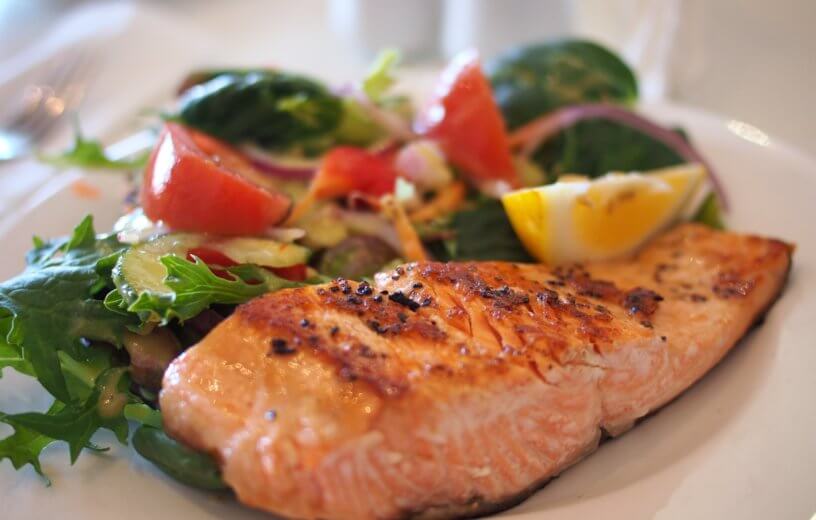
Salmon and vegetables on a dinner plate
Salmon and other seafood types are one of the best foods for protein.(Photo by cattalin on pixabay.com)

Covid-19 News

Still worried about COVID? Eating more oily fish may protect you

March 17, 2023

by Shyla Cadogan

SIOUX FALLS, S.D. — Oily fish are a part of many healthy diets, mainly because of the omega-3 fatty acids they carry. Studies show they have the ability to boost brain health and may even reduce the risk of heart disease. Now, there’s even more reason to add salmon or sardines to your diet. Scientists report that omega-3 fatty acids can also help protect against severe cases of COVID-19.

A team of researchers from the Fatty Acid Research Institute and the University of South Dakota designed a study that compared the risk for three COVID-19 scenarios: testing positive, hospitalization, and death as a function of baseline plasma DHA levels. DHA is an omega-3 fatty acid, which is abundant in fish like salmon. EPA is another fatty acid also found in oily fish. The team examined the implications of adding both to someone’s diet.

https://b5c290d7f3674d0d7b0e2b3e92ef07e7.safeframe.googlesyndication.com/safeframe/1-0-40/html/container.html

They measured the percent of total fatty acids (DHA levels) using Nuclear Magnetic Resonance (NMR) spectroscopy and converted them into an Omega-3 Index, which includes the percentages of red blood cell EPA and DHA for actual analysis. Their work included information from a sample of 110,584 people (COVID hospitalizations and deaths), as well as 26,595 individuals with just a positive test result, pulled from the UK Biobank. The outcomes were assessed from January 2020 to March 2021.

High omega-3 levels cut down COVID risk by a fifth

After fully adjusting their models to account for other variables that could affect the results, the team found that those with the highest omega-3 index were 21 percent less likely to test positive for COVID than those with the lowest levels. The risk for a positive test was actually eight percent lower for every standard deviation increase in plasma DHA percentage. Additionally, patients with the highest omega-3 index were 26 percent less likely to need hospitalization than those with the lowest.

https://b5c290d7f3674d0d7b0e2b3e92ef07e7.safeframe.googlesyndication.com/safeframe/1-0-40/html/container.html

Among patients who died of COVID-19, trends weren’t as significant. Risk of severe infection was lower in those with the second highest omega-3 index. In the highest bracket, the risk reduction was actually minimal and statistically insignificant.

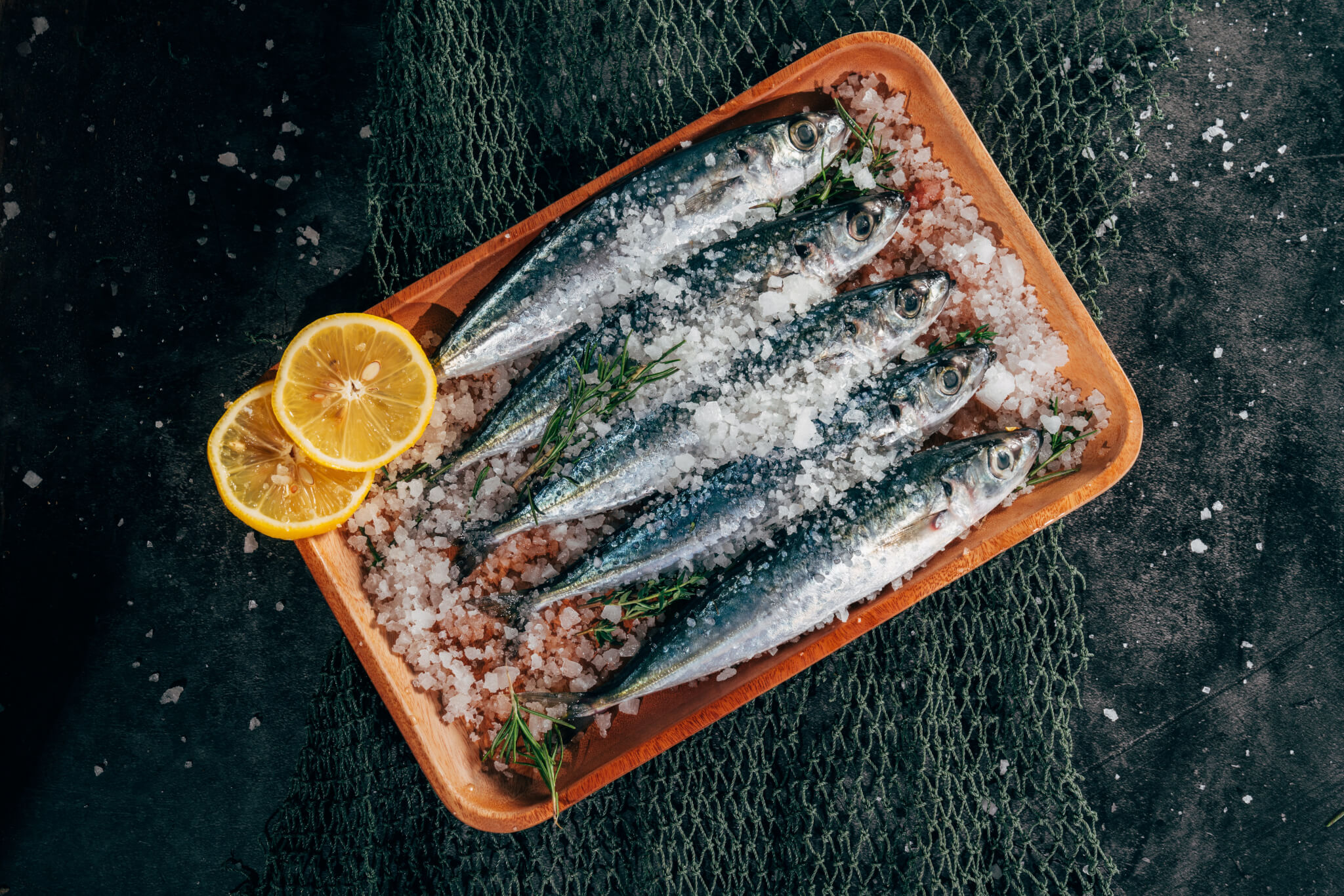
Sardines packaged on ice
(Photo by Harris Vo on Unsplash)

https://b5c290d7f3674d0d7b0e2b3e92ef07e7.safeframe.googlesyndication.com/safeframe/1-0-40/html/container.html

“This study confirms previous findings that low omega-3 status is associated with increased risk for hospitalization with COVID-19. We extended these findings by also showing reduced risk for testing positive with the infection and by providing evidence that the risk for death may also be reduced,” says Dr. William S. Harris, President of Fatty Acid Research Institute, in a media release. “Furthermore, we identified the Omega-3 Index levels associated with the least and greatest protection from COVID-19. Altogether these results support the practice of increasing consumption of oily fish like salmon or omega-3 fish oil supplements as a potential risk reduction strategy when it comes to COVID-19.”

Certain countries enjoy even great protection

The team adds that there seems to be a global pattern as well, as found in previous work. South Korea and Japan have both reported very low severity of COVID-19. Although these countries are very diligent about masking, social distancing, and other spread mitigation practices, there is a fascinating connection between Omega-3 Index values of healthy South Korean and Japanese individuals and COVID-19 outcomes. In these nations, indexes are about 8-12 percent and 7-11 percent respectively, which is significantly higher than the 4-5 percent in Western countries like the United States.

“A worldwide pattern linking higher omega-3 fatty acid intakes with lower rates of death with COVID-19 was documented by Vivar-Sierra et al. Although only suggestive, this observation adds further support for a potential role of omega-3s EPA and DHA in the prevention of fatal COVID-19 disease,” the study authors report.

https://b5c290d7f3674d0d7b0e2b3e92ef07e7.safeframe.googlesyndication.com/safeframe/1-0-40/html/container.html

These findings back the notion that including omega-3 fatty acids in your diet is essential for a well-rounded, healthy diet. However, they also show that by possibly reducing severe infections from COVID-19, there may be even more of an incentive to getting enough in your daily diet.

The findings are published in the American Journal of Clinical Nutrition.

Tags: coronavirus, COVID-19 symptoms, fish oil, oily fish, omega-3

Random ArticleNext Article

Leave a Comment

About the Author

Shyla Cadogan

Shyla Cadogan is a recent graduate from the University of Maryland, College Park with a Bachelor’s of Science in Nutrition and Food Science. She is on her way to becoming a Registered Dietitian, with next steps being completion of a dietetic internship at the University of Maryland Medical Center where she currently is gaining experience with various populations and areas of medical nutrition such as Pediatrics, Oncology, GI surgery, and liver and renal transplant. Shyla also has extensive research experience in food composition analysis and food resource management.

Mediterranean Diet and Dementia?

“There are around 50 million dementia cases globally, with around 10 million new cases discovered by doctors every year. Alzheimer’s disease makes up 50 to 70 percent of those cases. Its development and progression have links with both genetic and environmental factors, including diet and lifestyle.”

The Mediterranean Diet scores have high marks again when assessed for dietary effects on dementia.

https://studyfinds.org/mediterranean-diet-dementia-alzheimers-disease/

Why do some people get Covid more severely than others?

COVID-19 strikes with alarming inconsistency. Most recover quickly while others die. The disease devastates some communities and spares others. Understanding why and how COVID-19 preys on some and not others is essential to limiting its spread and mitigating its impact.

Prevention, averting, detecting, and restricting disease, is always better than even the most effective treatment. In the first place, We need answers to verify the findings of any new promising study.

Ever wonder why some places on the globe suffer from the virus so differently than others? Can the Blue Zones populations give us some answers?

https://www.bluezones.com/2020/05/why-covid-19-hits-some-people-and-places-differently/#

Can Ultraprocessed Food Contribute to Dementia?

 Is Eating Fast Food a Dementia Risk? 

The health risks of eating ultraprocessed foods —including sausages and burgers as well as pizza and ice cream — are well documented. They have been shown to raise the risk of obesity, diabetes, and cancer among other ailments. (CNN.com). 

In a new study, researchers followed more than 10,000 Brazilians with an average age of 51 for more than 10 years. They found that people who consumed more than 20% of their daily calories from ultra processed foods had a 28% faster cognitive decline compared with those whose intake was less than 20%.  Unfortunately, that 20% is not a high threshold: just 400 calories out of the 2000 calorie diet. And most Americans are well over that, getting on average a whopping 58% of their calories from ultraprocessed foods.

 “The sample size is substantial and the followup extensive,” says Dr. David Katz, a nutrition specialist who was not involved in the study. While short of proof, this is robust enough that we should conclude ultraprocessed foods are probably bad for our brains,” 

Source: The Week. December 23, 2022, Volume 22, Issue 110.

Why Is Epigenetics Important?

“The epigenome is a network of compounds surrounding our genes, which interacts with our environment, altering gene expression to external influences.”

“Although our DNA code does not change, the epigenome is flexible and reacts to our environment. Beyond helping cells know what to do, the epigenome also responds to things like diet, stress, toxins, behavior, and lifestyle. Our experiences help shape how genes are expressed. It is often referred to as an “on and off switch” that turns on or off certain genes. It is what makes even identical twins different over time.”

CLICK HERE.