A Diet History Timeline

 by foodworksblog Leave a comment

1850

In England, William Banting consulted Dr. William Harvey for weight loss who recommended he cut most sugar and starch from his diet since foods containing those substances tend to create body fat.  He lost 50 pounds and wrote the first diet book, “Letter on Corpulence Addressed to the Public” in 1862.

1898

 Horace Fletcher loses 42 pounds by advocating that we need to chew food about 32 to 80 times before being swallowed and it should be in liquid form. He later became known as “The Great  Masticator”.

1918

Dr. Lulu Hunt writes the first best selling diet book, “Diet and Health with a Key to the Calorie”.   She promoted calorie counting over her entire life.

1919

The Continental Scale Company produces the first bathroom scale called the “Health O Meter”. 

1929

A cigarette advertisement tells women to “reach for a Lucky instead of a sweet”.  Another slogan says:  “Light a Lucky and you’ll never miss sweets that make you fat”. 

1930

The “grapefruit diet” also known as “The Hollywood Diet” is promoted which involves eating only 585 calories a day for 18 days with boiled eggs, green vegetables and Melba toast.

1936

Self-proclaimed diet guru Victor Lindlahr reaches thousands via the radio to produce his regular broadcasts entitled “reducing party”. He wrote the book You Are What You Eat, one of the earliest texts of the health food movement in the United States, which sold over half a million copies and introduced the phrase still used today.

1942

The Metropolitan Life Insurance Company published standard weight tables for “ideal weight”.  The charts used weight, height, frame size, and gender but only used data from life insurance policyholders.

1948

Amphetamines were first prescribed for some obese patients but later research determined that these were dangerous.  Amphetamine –like drugs are still used today in a limited fashion.

1958

Saccharin, the first manufactured artificial sweetener is produced and becomes a popular sugar substitute.  It is still used today after years of research that absolved critical reports of its cancer connection.

1961

Weight Watchers was born as a result of Jean Nidetch and several friends who met in her apartment to offer each other support about dieting. 

1967

Twiggy, 5’7” and weighing about 92 pounds becomes a supermodel and icon for the slender female.   

1972

Dr. Atkins introduced his first “Diet Revolution”, a high protein, high fat, low carbohydrate diet.

Richard Simmons opens Ruffage and the Anatomy Asylum, a Beverly Hills restaurant and exercise studio.  He quickly becomes known as a fitness and diet guru.

1978

Dr. Herman Tarnover introduces the “Complete Scarsdale Medical Diet”, another version of the high protein, low-carb diet.

1979

The Pritikin Diet answers the trend of the high protein, low – carb diets with a high fiber, very low fat diet.  The system was originally designed for heart patients but became popular for those who followed the newer trend of the low –fat diet approach.

1981

The Beverly Hills Diet is introduced – it recommends eating nothing but fruit for the first 10 days.

1982

Aspartame is introduced as another alternative sugar substitute. It was marketed as NutraSweet and is still used today in many products. 

Liposuction is performed in the U.S. for the first time and now becomes a popular cosmetic procedure for the obese.

1983 

Jenny Craig is formed which sells their own line of diet foods and offers diet counseling.   Nutrisystem soon followed.

1988

Oprah Winfrey loses 67 pounds on the liquid diet Optifast.

1994

The FDA mandates that food labels must include detailed information about calories, fat, and fiber. We must thank Dr. Lulu Hunt Peters for this.

1995

“The Zone Diet” is introduced by Dr. Barry Sears. He promotes eating lots of fruits and vegetables and protein, while cutting back on breads and pastas.

1996

It is reported that 40% of nine and ten-year-olds are dieting and trying to lose weight.

2000

Experts are stating that there is now a global epidemic of obesity and that for the first time in history, this number of overweight people equals the number of underfed and undernourished.

2002

Dr. Atkins introduces his second diet book, the “New Diet Revolution” to a new generation of dieters. The Low-carb diet is back after multitudes of diet books promoting low fat diets. 

2013

It appears we may have come full circle – we are now promoting cutting sugars and counting calories (again).  We have progressed from low carbohydrate, low fat, and low carbohydrate diets again along with some pretty scary schemes, e.g. the tapeworm diet.  Many weight loss books, gimmicks and pills have come and gone over and over again and many still exist, but with no real breakthroughs.  I doubt they will not end at least in the near future – what do you think? 

2023

For the last 10 years, we as a culture have waged a new diet war – Keto diet, paleo diets are the latest “experiments,” trending to the low carb side with higher fat – right back where we started. According to Bittman and Katz, “everything we learned in the late 20th century, the range for fat is considerably broader.” There are claims for good outcomes with diets that have 10% or less of calories from fat (like in Okinawa); those would be the low fat-diets. There are the Mediterranean diets that get well over 40% of their calories from fat and seem to produce the same great health outcomes.” (Mark Bittman and David L. Katz, M.D. How to Eat: All Your Food and Diet Questions Answered.)

Source:

James Trager(1995) The Food Chronology: A Food Lover’s Compendium of Events and Anecdotes, From Prehistory to the Present.

www. foodworksblog.com
Are Sitting Patterns Related to Diabetes?

Adults are sitting more than ever, and few pay attention to how they sit throughout the day.

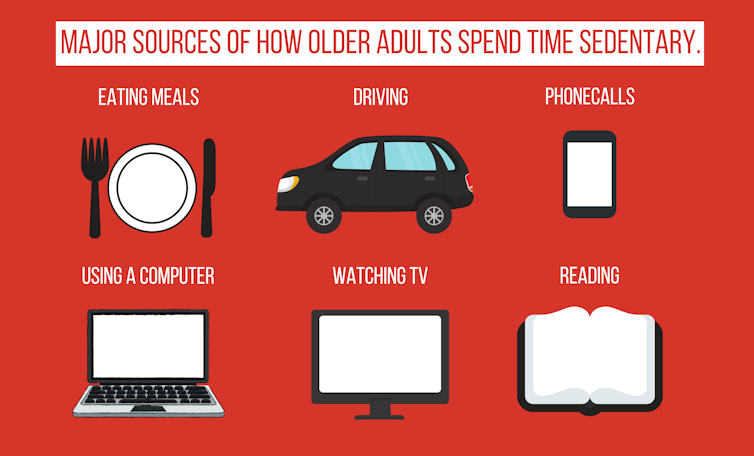
Take a moment to think about all the reasons we sit. First off, you’re probably sitting while reading this. Some of the most common sitting activities include eating meals; driving; talking on the phone; using a computer, television, or small device; and reading. Now take another moment to think about all the sitting done across your lifetime.

Older Americans spend a lot of time sitting.
Matthew Mclaughlin/Figshare, CC BY-SA

The fact is, the amount of time spent sitting has increased over time. And with innovations such as Alexa, delivered groceries, and pre-made meal services, we expect many older adults will sit longer and will do it more often. As of today, the average older adult spends between 56 percent and 86 percent of their waking day sedentary. That’s a lot of sitting.

Our research team studies healthy aging and is interested in how sitting too much might contribute to heart disease and diabetes. Our recent study suggests that the way older adults accumulate their sitting time might be important for aging without diabetes.

“…the way older adults accumulate their sitting time might be important for aging without diabetes.”

What happens while sitting?

When you sit for long periods without getting up, the large weight-bearing muscles of the legs remain dormant. With no action, these muscles are unable to efficiently use the sugars and fats that float around in your blood – and in theory, this could lead to weight gain and metabolic diseases such as diabetes.

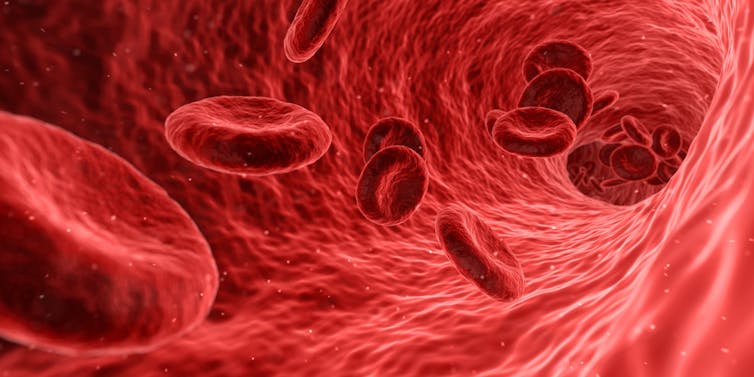
At the same time, reduced blood flow in your arteries leads to hostile conditions that promote injury to the blood vessel walls. Over a lifetime, this injury likely contributes to heart disease and to peripheral artery disease. Furthermore, when your leg muscles remain shut off for long periods, blood collects in your veins which leads to an increased risk for blood clots, or deep venous thrombosis. Standing up and moving around can stop these processes, but all too often, we just keep sitting.

Blood flow can become ‘turbulent,’ causing damage to arteries.
www.pexels.com

Sitting patterns

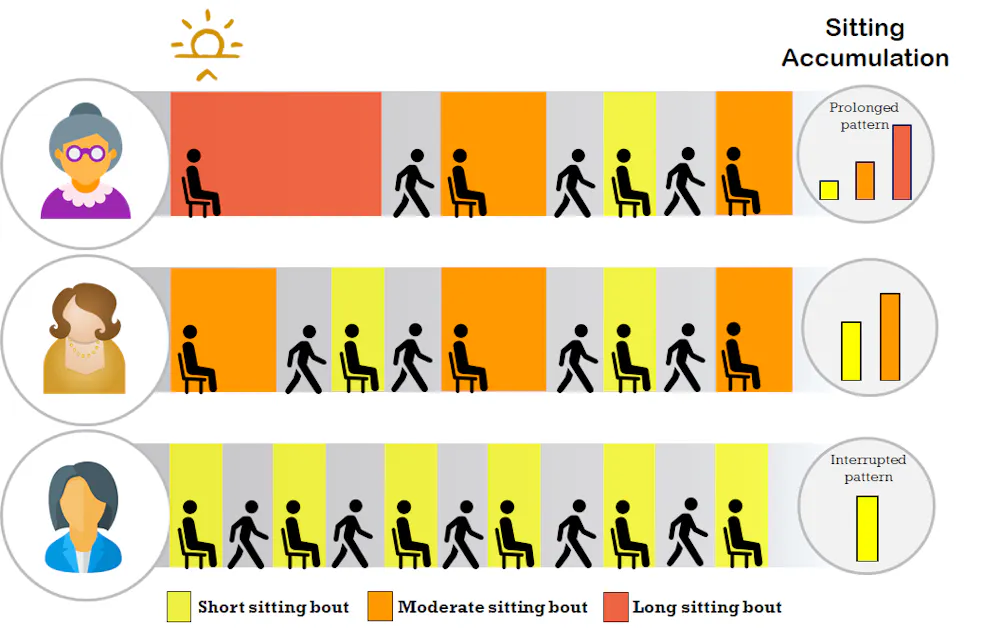
Sitting patterns describe how people sit throughout the day. Some people commonly sit for long periods at a time, rarely getting up. They are said to have prolonged sitting patterns. Others rarely sit still. They regularly get up after sitting for just short periods. These sitters are said to have interrupted sitting patterns. Where do you fit on the sitting pattern spectrum?

Sitting can be accumulated in different patterns.
John Bellettiere/figshare.com, CC BY-SA

Are sitting patterns important for metabolic health?

Emerging evidence suggests yes. From observational studies, we learned that adults with prolonged sitting patterns had larger waistlines, higher BMI, and in their blood had less good fats, more bad fats, and higher levels of sugar compared to adults with interrupted sitting patterns.

To test whether problems with fat and sugar metabolism were being caused by sitting patterns, researchers around the world conducted experiments. They brought adults into a laboratory at least two times each, having them sit continuously for about eight hours (an extremely prolonged pattern). On the second day, the participants were asked to get up every 20-30 minutes (a highly interrupted pattern). The interruptions lasted for two to five minutes and included standing still, light walking, simple resistance exercises or moderate-intensity walking, depending on the study.

When researchers synthesized evidence from most of the laboratory studies, the results were clear. On days with prolonged patterns, our bodies are not able to metabolize fats or sugar as well as they are on days with interrupted patterns. Blood pressure and fatigue were also higher on days with prolonged sitting compared to days with interrupted patterns.

These groundbreaking laboratory studies provided strong evidence that sitting patterns had an immediate effect on how the body processes fats and sugar, otherwise known as metabolism. This led to the idea that prolonged sitting patterns over a lifetime could contribute to metabolic diseases such as diabetes in later life. Since diabetes can take a long time to develop, this question cannot be feasibly tested in a laboratory. Instead, we turned to an observational study of the population to help answer the question.

Are sitting patterns related to diabetes?

We recruited over 6,000 women aged 65-99 from the Women’s Health Initiative and measured their sedentary patterns for seven days using research-grade activity monitors. We also had over 20 years of detailed health records, which included information on whether the women had ever been diagnosed by a physician with diabetes.

As expected, the group with the most prolonged sedentary patterns had the most women with diabetes. The group with the most interrupted patterns had the fewest women with diabetes.

We used advanced statistical procedures to account for differences in other factors such as dietary habits, physical activity, medication use, weight, age, alcohol and cigarette use, and overall health, giving us more confidence that the sitting patterns were, in fact, driving the findings. We should caution, however, that since we did not measure sitting patterns before the women were first diagnosed with diabetes, we do not know whether the sitting patterns contributed to diabetes or whether the diabetes changed their sitting patterns. We ran additional statistical tests to try to untangle that, which indicated that sitting patterns contributed to diabetes. However, additional studies specifically suited to answer the question of causation are needed.

While this was the first study of sedentary patterns and diabetes exclusively in older adults, our results were remarkably similar to recent findings in a younger cohort. Researchers from the Netherlands studied 2,500 adults ages 40-75 and found that prolonged sitting patterns were associated with Type 2 diabetes and with metabolic syndrome.

Conclusions and words of advice

Based on the findings from our study and those of the Dutch researchers, when viewed with the earlier epidemiologic data and findings from the laboratory experiments, it seems that sitting patterns may contribute to the growing international diabetes epidemic.

[Related: 20 Habits for a Healthier, Happier Life]

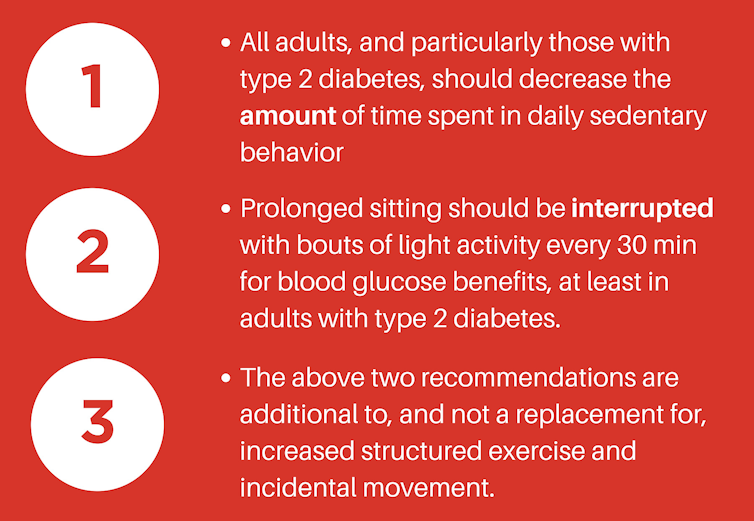
With that said, as with all science, these first few studies are only the beginning of the story. Much more work lies ahead. For the time being, there is a possibility that changing your sitting patterns might provide protection against diabetes, especially if long sitting bouts were always broken with light activity or even better, moderate-intensity activity, as recommended by the American Diabetes Association.

Recommendations from the American Diabetes Association.
Matthew Mclaughlin/figshare.com, CC BY-SA

The authors wish to sincerely thank Dr. Jonathan Unkart for his help with this story.

John Bellettiere is a postdoctoral scholar at the University of California San Diego studying Family Medicine and Public Health. Andrea LaCroix, PhD, is Professor and Chief of Epidemiology, Family Medicine and Public Health at the University of California San Diego. She received her PhD in Epidemiology from the University of North Carolina at Chapel Hill and completed a postdoctoral fellowship in cardiovascular disease at The Johns Hopkins University. Matthew Mclaughlin is a PhD student at the University of Newcastle in Australia and a research assistant at Hunter New England Population Health.

This article is republished from The Conversation under a Creative Commons license. Read the original article.

Weight Loss?

Intermittent fasting and traditional calorie counting about equal for weight loss

A shadow on a tablecloth of a fork in a hand
Researchers report that intermittent fasting as well as calorie counting are both effective in weight reduction. meredith adelaide/Stocksy
  • In a new study, researchers say intermittent fasting and calorie counting were both effective in helping people lose weight.
  • They added that fasting did seem to produce better results for insulin sensitivity.
  • Experts say diets affect each person differently, so it’s important to figure out which method works best for you.
  • Weight loss should include a diet that is one that you can follow and be comfortable with. No one else can tell you what to eat – with some education, you can decide what is the best for you.

Intermittent fasting has become a popular weight loss strategy, but a new study suggests that whether you prefer that or traditional calorie counting methods, both may be equally effective.

Looking at a group of 90 adults with obesity divided into two study groups and a control group, researchers from the University of Illinois Chicago reported that those who engaged in time-restricted eating — also known as “intermittent fasting” — lost an average of 10 more pounds than the control group after a year and consumed an average of 425 fewer calories per day after one year.

The second group, which participated in calorie-restricted eating via calorie counting, lost around 12 more pounds than the control and ate 405 fewer calories daily.

The intermittent fasting and calorie counting groups also received regular consultations with a dietician, whereas the control group did not.

The new research was published in the Annals of Internal Medicine.

“This novel research is immensely encouraging,” said Kelsey Costa, a registered dietitian and health research specialist with the National Coalition on Healthcare, who was not involved in the study. “It highlights that comparable results could be achieved with intermittent fasting or caloric restriction, improving adherence and long-term outcomes. This information is empowering and transformative for those seeking to improve their health and wellness.”

“Calorie counting is not the only way to lose weight and is difficult to sustain long-term,” Dr. Florence Comite, an endocrinologist and founder of the Center for Precision Medicine and Health in New York City who also was not involved in the study, told Medical News Today. “Restricting eating during a shorter ‘eating window’ versus unrestricted eating throughout the day is effective as an alternative. The latter approach may also contribute to optimizing metabolism and hormone regulation through sleep. That’s good news as those outcomes will contribute to optimizing fat loss and muscle gain, with a positive impact on sleep and future weight loss.”

One metabolic difference the study did find with the intermittent fasting group compared to the calorie-restriction group was increased insulin sensitivity, a positive effect of intermittent fasting affirmed by several previous studies.

Study limitations 

Experts noted some limitations to this study, mostly having to do with its small size — less than 100 participants — and the fact that it wasn’t a double-blind study, meaning participants knew which weight loss group they were in.

“That does influence outcomes and could introduce bias,” Comite said. “A larger sample size would also provide more statistical power and enhance the findings. Additionally, the duration of the study followed participants for one year, which is a relatively short-term period for evaluating the long-term effectiveness and sustainability of weight loss interventions.”

Which weight loss method should you choose? 

Experts say one of the benefits of this research is that if the results hold, people don’t have to take a “one-size-fits-all” strategy toward weight loss.

“This is an important consideration,” Comite said. “We are all unique individuals, even identical twins are not the same. A diet or weight loss strategy for one person may not work for another.”

Costa agreed.

“Calorie counting has some strengths regarding aiding weight management, as it allows for precise quantification of calorie intake. By tracking calories, people can ensure they stay within their recommended caloric intake while still getting sufficient nutrition from all food groups,” she explained. “However, the main limitation of calorie counting is that it requires much effort and attention to maintain accuracy in tracking food intake and energy expenditure. Accurately estimating calorie intake can be difficult without specialized food-tracking apps or other tools. This type of precision can be challenging to maintain over extended periods.”

Intermittent fasting, on the other hand, “can produce similar levels of weight loss to that seen with caloric restriction while making adherence easier due to reduced meal frequency, thus providing a more sustainable approach for long-term weight management,” she added.

Having options is good, she said. But having a support network is even better.

Approaching weight loss from an overall health perspective and focusing on positive lifestyle changes is the best way to ensure long-term success,” Costa said. “Building a support system of friends, family, and healthcare professionals who can help you stay motivated and offer guidance and advice when needed is essential, as is setting realistic goals that are specific and measurable will help you keep track of your progress and provide the motivation to stay on track.”

Eating Processed Food?

 Is Eating Fast Food a Dementia Risk? 

The health risks of eating ultraprocessed foods —including sausages and burgers as well as pizza and ice cream — are well documented. They have been shown to raise the risk of obesity, diabetes, and cancer among other ailments. (CNN.com). 

In a new study, researchers followed more than 10,000 Brazilians with an average age of 51 for more than 10 years. They found that people who consumed more than 20% of their daily calories from ultra processed foods had a 28% faster cognitive decline compared with those whose intake was less than 20%.  Unfortunately, that 20% is not a high threshold: just 400 calories out of the 2000 calorie diet. And most Americans are well over that, getting on average a whopping 58% of their calories from ultraprocessed foods.

 “The sample size is substantial and the followup extensive,” says Dr. David Katz, a nutrition specialist who was not involved in the study. While short of proof, this is robust enough that we should conclude ultraprocessed foods are probably bad for our brains,” 

Source: The Week. December 23, 2022, Volume 22, Issue 110.

Snacks: Try Walnuts?

Snacking has become a national pastime in the U.S. The snack aisles in the supermarkets have expanded to include major parts of the store that act as a huge vending machine from one end to another. Nuts have had the reputation of being unhealthy due to their fat content; now they are considered healthy for many reasons.

Although they are so many varieties, walnuts often stand out as an example of how nuts can be easily incorporated into a healthy diet.

Most nuts contain healthy antioxidant compounds called polyphenols, which improve cholesterol scores and help lower rates of oxidative stress and vascular disease. But of all nuts, walnuts pack the greatest punch of polyphenols according to a 2011 study from the Royal Society of Chemistry journal, Food and Function. Also, they come in first when it comes to their stores of polyunsaturated fatty acids, essential for improved metabolism, satiety, and prevention of Type 2 diabetes.

It is interesting to encourage walnut consumption when possible to support your brain, thanks to those antioxidants, various vitamins and other nutrients, and a type of plant-based omega-3 fat called alpha-linolenic acid.
In a recent published study, Lenore Arab, a professor of disease prevention at UCLA and her colleagues examined diet and lifestyle habits of thousands of adults. In terms of memory, concentration and “information processing speed”, the people who ate more walnuts signficantly outperformed their counterparts that eat less walnuts. These results held solid even after the results controlled for age, ethnicity, exercise and other lifestyle factors.

Note: I use chopped walnuts, dried cherries or cranberries on salads. There are two common kinds of walnuts – the English from California and the black walnut, which is native to America. They differ slightly in their nutrition – the English has slightly less protein and slightly more fat. Both are great! Time Special Edition, The Science of Nutrition)

Note: Walnuts are ironically shaped like a brain. Look carefully and you will see the resemblance (similar examples are “kidney beans are shaped like a kidney”. “The Doctor or Signatures is a concept in herbalism that’s been around for centuries based on the idea that God marked everything with a sign which was a signature or indication of the item’s purpose. In this particular case certain foods had a purpose and resembled the food itself.(The 150 Healthiest Foods on Earth, Jonny Bowden, PhD, CNS.)

The American Plate: The 50’s

The Decade of Conformity

“The 1950s was an era of great upheaval in the United States. By the millions, Americans who had just survived two decades of economic depression and war left the cities for the greenery and open spaces of the suburbs. Suburban towns sprang up like crabgrass across the country. With these instant communities came a new American lifestyle that included suburban malls, fast-food restaurants, TV dinners, drive-in movies, and an oversized, gas-guzzling car in every garage.

“The decade was a time in which the roles within the “ideal” American family were clearly defined. The father was the breadwinner. Five days a week, fifty weeks a year, he donned his gray flannel suit, hopped into his car or on a commuter train, and headed off to earn money to support his wife, his ever-growing family, and their materialistic lifestyle. Meanwhile, his “little woman” remained home and raised the kids. Life was simple and ordered, and the cornerstone of society was authority. Teachers, police officers, politicians, and clergy were respected, and their pronouncements went unchallenged.

During previous generations, young people had been required to take jobs as soon as they were able, in order to contribute to the family income. Now, their parents indulged them with toys, games, and clothes. Girls collected dolls and stuffed animals, while boys amassed shoeboxes filled with baseball cards. The 1950s, like all other decades, saw its share of fads. In mid-decade, children wore coonskin caps. At the end, they played with hula hoops. When they became adolescents, they bought records; they also sipped malts and downed hamburgers at the local ice cream parlor. Teens and young adults dated, paired off, and “went steady,” which were preludes to becoming engaged, marrying, and beginning families of their own.

However, the decade was not without its nonconformity and rebellion. Parents were none too pleased when their adolescent children embraced rock ‘n’ roll music. Not all teens were clean-cut preppies; greasers sported longish hair and leather jackets and exuded a disdain for authority. On a more telling note, blacks, who had been systematically excluded from the burgeoning middle class, began demanding equal opportunity. But to the majority of Americans in the 1950s, adolescents with attitude and complaining minorities seemed little more than a ripple on the national landscape. There seemed to be no end to the nation’s prosperity.”

Life Was Good

If Happy Days taught us anything, it’s that life was better in the fifties. People left their door unlocked at night, kids respected their elders and a guy who lived above his best friend’s garage could still be cool so long as he owned a leather jacket. (AUTHOR UNKNOWN) – BUT TRUE!!! If you were alive, just remember Fonzy. 

Note: from SJF. Women were still thought of as “being in the kitchen” “During an interview for college, the so-called counselor said: “home Ec is always good for a girl.” Needless to say, I switched to Arts and Sciences.”

However, kitchens featured all new appliances and refrigerators loaded with convenience products from the new supermarkets. Westinghouse unveils the first fully automatic defrosting refrigerator-freezer. In Corbin, KY, Colonel Harland Sanders closes his fried chicken restaurant and goes on the road with his secret blend of 11 herbs and spices, on his way to building a new chicken global empire, designated as “finger-licking good.

Men found their cooking skills at the barbecue in the backyard, some with swimming pools at suburban ranch-style homes. In 1952, George Stephen, decided to develop a new type of BBQ grill that is not an open grill.  His sales go well and at the end of the decade, he buys out the BBQ division at Weber Brothers Metal Works and creates Weber-Stephen Products Co.  Weber grills are still popular today.

TV Dinners

After WWII, America’s economy boomed, women entered the workforce as never before and food got a little strange. Housewives spent less time in the kitchen, so food companies came to the rescue with a buffet of processed foods. Foods were purchased in a can, package or pouch. Soups were available as liquids or in dry form. Tang landed on supermarket shelves and frozen dinners laid on trays in front of TV sets. TV dinners were introduced in 1953 by Swanson and with a flick of a wrist you could turn back the foil to display turkey in gravy, dressing, sweet potatoes, and peas ready in about 30 minutes – all with no dishes to wash.

Better Living Through Chemistry

“Better Living through Chemistry” was the slogan of the times along with “I like Ike” referring to the popular Dwight D. Eisenhower, the 5-star general from WWII winning the U.S presidency from 1953 to 1961.
This change in processing came from the demand of the Army during WWII to provide needed ready-to-eat meals. The food industry responded by ramping up new technologies in canning and freeze-drying to feed the troops. The marketing of these foods presented a challenge, however. At first, many of them were less than palatable, so food companies hired home economists to develop fancy recipes and flooded magazines, newspapers and TV with ads to broadcast their virtues. Actually the first cake mix was available in 1931, but was met with disdain due to the use of dehydrated eggs, e.g. Women later would respond more favorably if they could crack their own eggs into the batter so they would feel like they were doing something positive in the kitchen.

People rushed to buy appliances, houses, cars, dishwashers, washing machines, dryers and backyard barbecue grills and new home freezers.  They also bought television sets in record numbers and watched shows that represented their new idealized lives like Ozzie and Harriet and Leave It to Beaver. Beaver’s mother, June Cleaver was depicted as a housewife freed from household chores and often was serene and perfectly dressed with pearls and high heels pushing a vacuum cleaner and putting meals on the family table, all before solving the family problems.

Fast Food Nation

The birth rate soared and created what is known as the Baby Boomer Generation. Fifty million babies were born from 1945 to 1960. Food marketing shifted to kids with Tony the Tiger and fish sticks leading the campaign. Fast food had its beginnings strengthened in 1955 when Ray Kroc bought a hamburger stand from the McDonald’s brothers in San Bernadino, California. Disneyland opened in 1955 and was so popular they ran out of food on the first day.

The Seven Countries Study

In 1958, the American scientist, Ancel Keys started a study called the Seven Countries Study, which attempted to establish the association between diet and cardiovascular disease in different countries. The study results indicated that in the countries where fat consumption was the highest also had the most heart disease. This suggested the idea that dietary fat caused heart disease. He initially studied 22 countries, but reported on only seven: Finland, Greece, Italy, Japan, The Netherlands, United States, and Yugoslavia.

The problem was that he left out:

  • Countries where people eat a lot of fat but have little heart disease, such as Holland and Norway and France.
  • Countries where fat consumption is low but the rate of heart disease is high, such as Chile.

Basically, he only used data from the countries that supported his theory. This flawed observational study gained massive media attention and had a major influence on the dietary guidelines of the next few decades, i.e. cut the fat out of our diets.

The First Artificial Sweetener

In the diet world, Saccharin was manufactured in granules and became a popular sugar substitute for dieters. It was first produced in 1878 by a chemist at Johns Hopkins University, but became popular after sugar shortages in WWI and WWII. In the United States, saccharin is often found in restaurants in pink packets as “Sweet’n Low”. It was banned later but it remains on the market today. The basis for the proposed ban was a study that documented an increase in cancer in rats being fed saccharin. The “Delaney clause” of the Food Additive Amendments to the Federal Food, Drug, and Cosmetic Act states that no substance can be deemed safe if it causes cancer in humans or animals. In suspending the proposed saccharin ban, Congress ordered that products containing the popular sweetener must carry a warning about its potential to cause cancer. The FDA formally lifted its proposal to ban the sweetener in 1991 based on new studies, and the requirement for a label warning was eliminated by the Saccharin Notice Repeal Act in 1996.

1954 Employee Gerry Thomas from the C.A. Swanson Co, has an idea (although fellow workers nearly laughed him out of the Omaha  plant): package the left-over turkey, along with some dressing, gravy, cornbread, peas and sweet potatoes into a partitioned metal tray, sell it frozen, and consumers could heat it up for dinner. His name for the leftover meal: TV Dinner.

1955 Milkshake-machine salesman, Roy Kroc tries to persuade Dick and Mac McDonald (owner of the original McDonald’s in California) to franchise their concept.  They aren’t interested but  tell Kroc to go ahead and try his hand. Kroc opens his first restaurant in Des Plains, ILL., and eventually buys out the McDonald’s.

1958 Eighteen- year-old Frank Carney sees a story in the Saturday Evening Post about the pizza fad among teenagers and college students. With $600 borrowed from his mother, he and his fellow Wichita State classmate, opens the first Pizza Hut in Wichita, KS.

Nutrition was beginning to gain some attention as healthy eating became new a topic of discussion. Gaylord Hauser. Author of Look Younger, Live Longer, who promoted such “wonder” foods as yogurt, wheat germ and brewer’s yeast… Adelle Davis and her book Let’s Eat Right to Keep Fit but claims she can cure cancer – she died of bone cancer at age 70.

1955 President Dwight D. Eisenhower had a heart attack. His doctor suggests he follow a low fat diet.

Citations:

Bon Appetit. September 1999.  America’s Food and Entertaining Magazine, Text by Katie O’Kennedy.

The Century in Food: America’s Fads and Favorites, Beverly Bundy, 2002.

The Oxford Companion to American Food and Drink. Edited by Andrew F. Smith Oxford University Press, 2007.

Eating Processed Food

 Is Eating Fast Food a Dementia Risk? 

The health risks of eating ultraprocessed foods —including sausages and burgers as well as pizza and ice cream — are well documented. They have been shown to raise the risk of obesity, diabetes, and cancer among other ailments. (CNN.com). 

In a new study, researchers followed more than 10,000 Brazilians with an average age of 51 for more than 10 years. They found that people who consumed more than 20% of their daily calories from ultra processed foods had a 28% faster cognitive decline compared with those whose intake was less than 20%.  Unfortunately, that 20% is not a high threshold: just 400 calories out of the 2000 calorie diet. And most Americans are well over that, getting on average a whopping 58% of their calories from ultraprocessed foods.

 “The sample size is substantial and the followup extensive,” says Dr. David Katz, a nutrition specialist who was not involved in the study. While short of proof, this is robust enough that we should conclude ultraprocessed foods are probably bad for our brains,” 

Source: The Week. December 23, 2022, Volume 22, Issue 110.

What is Epigentics?

What is Epigenetics?

Epigenetics refers to the inheritable changes in your DNA that don’t change the actual DNA sequences. That means these changes are potentially reversible.

What is DNA Methylation?

Your DNA consists of four bases called cytosine, guanine, adenine, and thymine. A chemical unit called a methyl group (designated by CH3 or one carbon atom and three hydrogen atoms) can be added to cytosine.

When that happens, that area of the DNA is methylated. When you lose that methyl group, the area becomes demethylated.

DNA methylation often inhibits the expression of certain genes. For example the methylation process might stop a tumor-causing gene from “turning on”, preventing cancer.

Researchers are currently working to better understand the factors that affect DNA methylation. Based on some earlier findings, there is some evidence that diet plays a role. This opens up the potential to reduce genetic risk of developing certain conditions such as breast cancer or heart disease through simple lifestyle changes.

The patterns of DNA methylation change through out your life, from fetal development to end of life. Studies suggest that DNA methylation slows down as we age. Genes that were once repressed by methylation start to become active and possibly result in a variety of diseases. Interestingly, another study found that participants”who consumed more alcohol were more likely to have decreased DNA methylation. In contrast, those who consume a lot of folate were more likely to have increased methylation.

“Can Diets Change Your DNA? The question is “are you really what you eat? The answer appears to be No. However, we have known for years that gene expression influences metabolism. A study published in Nature Microbiology in 2016 indicates that nutrition may play an important role in how some DNA sequences are expressed. The study that how genes behave is strongly influenced by the food we eat. Even so, we are still a long way from the kind of personalized medicine that will furnish nutritional therapies to treat a wide spectrum of conditions.” Stay tuned for the future. Source: You Are what Your Grandparents Ate. Judith Finlayson, 2019.

Nutrition and Gene Interactions: Epigenetics

NUTRITION AND GENE INTERACTIONS

Little is known about the etiology of cancers or the origins of chronic diseases. “The precipitous rise of chronic diseases is now the subject of genetic and environmental influences. Poor nutrition and stress, we now know, can alter susceptible genes. This is the basis of epigenetics, a recently recognized mechanism underlying health and disease.” (Judith Finlayson, Robert Rose, Inc. You Are What Your Grandparents Ate, 2019.)

The Human Genome Project

The Human Genome Project has identified millions of gene defects and variants in human DNA. The average person has 250 to 300 defective genes, plus an average level of 75 variants associated with disease. Nutrient availability, particular in early life, can modify the functional level of specific genes thereby influencing disease risks. Increased understanding of epigenetic processes as well as a person’s genetic status without changing gene structure is becoming an interesting phenomenon. Gene activity can be shut off or turned on, or slowed or sped up by epigenetic mechanisms, many of which are environmental. Refer to FFandFads on epigenetics.

Diseases Resulting from Multiple Gene Variants

Cancer
Most types of cancer are related to environmental exposures such as high fat and alcohol intakes, low fruit and vegetable intakes, high levels of body fat, smoking and other toxins. A number of research studies suggest that a diet rich in cruciferous vegetables may lower rates of a variety of cancers, including breast, pancreatic, bladder, lung, prostate and colon cancer. This family of vegetables is led by broccoli, cauliflower, Brussels sprouts, and cabbage to mention a few.

Certain enzymes in cruciferous veggies may help protect cell DNA from damage, and others may have antioxidant properties. Crucifers may also help to counteract cancer-causing nitrosamines and polycyclic aromatic hydrocarbons that are found in charred, cured or barbecued fish or meats.

Obesity
“Over 40 gene variants have been related to obesity development in people exposed to Western-type diets and low levels of physical activity. The current obesity epidemic appears to be driven by a mismatch between multiple components of our 400,000 year old genetic endowment (i.e., what our ancestors ate) and current food and activity environments.

Genetics traits that helped our early ancestors survive times of famine and that encouraged food intake rather than discouraged it, and that set up metabolic systems around unrefined and unprocessed foods are at odds with much of today’s food supply and physical activity requirements.” Nutrition Now, Judith E. Brown, 7th Edition

Reversing the world wide trend in obesity rates will not be easy. We need to lessen our triggers that favor food intake and increase environments that favor physical environments – how about just increased walking environments. No need to go to the gym.

Expanding availability of healthier foods and increasing earlier nutrition education to encourage healthier lifesytes is desperately needed and the earlier the better. As Michael Pollan suggests: Eat food (unprocessed), (Not too much), Do not diet. Mainly plants (fruits and vegetables). See how easy it is???

Try the Mediterranean Way

“The Mediterranean Diet is often referred to as “the best diet in the world.” The Mediterranean diet is not a diet in the fad sense, but a traditional way of living — the same can be said for the “diets” practiced by the countries that make up the “Blue Zones” that work for health and often longevity. (Mark Bittman and David L. Katz, MD. How to Eat: All your Food and Diet Questions answered.)

History gives us clues about the development of the cuisines of the Mediterranean. European explorers would bring back spices and foods from their travels to Asia in the East and the New World, introducing them into their native countries. Conquering armies from Rome, France, Spain and Britain brought their own foods and cooking techniques with them, leaving marks on the cuisines of their Mediterranean neighbors. Today, although you will find McDonalds’s in Mediterranean countries, native cuisines are still apparent as you walk through the markets still selling local spices, produce, meats, cheeses, and seafood. For many, it becomes necessary for some people to shop daily for ingredients due to lack of refrigeration and is a way of life for them.

This is the way people work the land and feed themselves with seasonal ingredients grown in their small plots outside the kitchen. Again, this is the back to basic cuisine and the basis of many of the “diets” of the countries of the Blue Zone and Mediterranean regions. It is more than a diet, and is shown to be worthy of saying “it is a way of life”. The best advice for Americans is to buy a basic Mediterranean cookbook and try its many foods that emulate this way of living and hopefully – Skip the fast food!!!!

Try this very simple recipe.

Tomatoes with Olive Oil
As with the all foods found as part of the Mediterranean diet, a tomato is no exception. These bright and juicy fruits are often categorized as a vegetable. The science is back and forth of these gems but the fact remains is that they are a healthy addition to the Mediterranean diet. For extra health, make a basic salad dressing with a tablespoon or two of extra virgin olive oil with a little garlic to your tastes.

A serving (1 cup of raw, cut up tomatoes) provides us with 2 grams of fiber and relatively little calories. In addition to that, they are a great source of vitamins, minerals and antioxidants. Just by eating a single serving, you’ll be getting –25% of your daily Vitamin C. Vitamin C is needed to form blood vessels, muscles, and collagen in bones; It helps the body absorb iron, and is involved in the healing process.

10 % of potassium – a mineral and electrolyte that helps kidneys remove excess sodium, helps muscles contract and your heartbeat regularly.

In addition, tomatoes are chock full of powerful antioxidants like lycopene, beta carotene, and lutein.

These antioxidants may protect your arteries from atherosclerosis and other cardiovascular diseases, decreases blood pressure and reduces the risk of prostate cancer in men. What a nutrition bargain!!